Private: Recontextualization Painting : Moon


Private: Recontextualization: Barnet Newman



Private: Recontextualization Painting: Exhibition: Yves Klein ” Into the Void”
Exhibition: Into the Void
Exhibition: Into the Void
To paint the following painting, 43 in x 40 in, as 10 feet x 10 feet, then exhibit eight in a large gallery room.
To exhibit eight 10 foot by 10 foot minimal black paintings in a large white gallery room with 12/15 foot high and 40 to 50 foot long walls.
Then exhibit the paintings in a matte mid red/black gallery room.
Then exhibit the paintings in a primary cad yellow gallery room.
Then exhibit the paintings in a primary mid ultramarine gallery room.
Then exhibit the paintings in a primary mid cad red gallery room.
Then exhibit the paintings in a mid matte grey gallery room.
Then exhibit the paintings in a mid magenta gallery room.
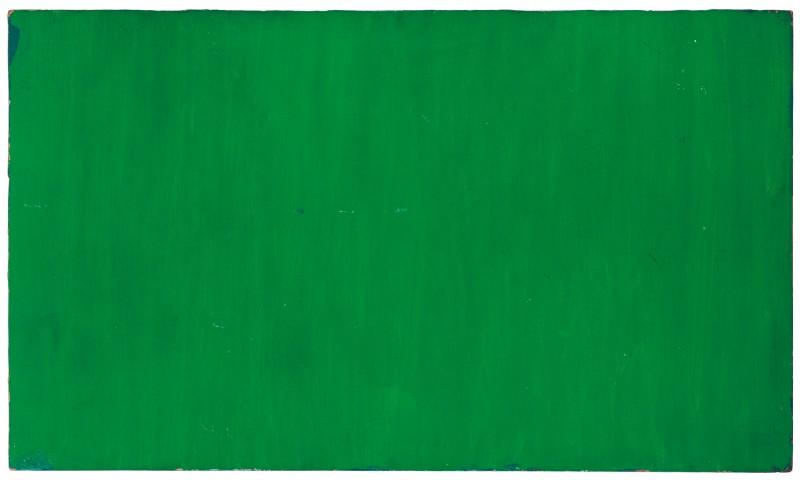
Then exhibit the paintings in a mid green gallery room.


Yves Klein Into the Void # 1 , Acrylic on canvas, 40 in x 40 in, 2016
Yves Klein Into the Void # 2 , Acrylic on canvas, 40 in x 40 in, 2016
Yves Klein Into the Void # 3 , Acrylic on canvas, 40 in x 40 in, 2016
Yves Klein Into the Void # 4 , Acrylic on canvas, 40 in x 40 in, 2016
Yves Klein Into the Void # 5 , Acrylic on canvas, 40 in x 40 in, 2016
Yves Klein Into the Void # 6 , Acrylic on canvas, 40 in x 40 in, 2016
Yves Klein Into the Void # 7 , Acrylic on canvas, 40 in x 40 in, 2016
Yves Klein Into the Void # 8 , Acrylic on canvas, 40 in x 40 in, 2016
Artist Statement
This exhibition is an exploration of Yves Klein’s work, Into the Void, where he leaps of a wall in a photo. A void is a sometimes an empty space or full space. It is an act, It is an idea. It is an expression. A void can not exist without something that is not a void. The void is an existential and romantic and idealist notion. I am painting the void, which is impossible, as the void can never be represented.

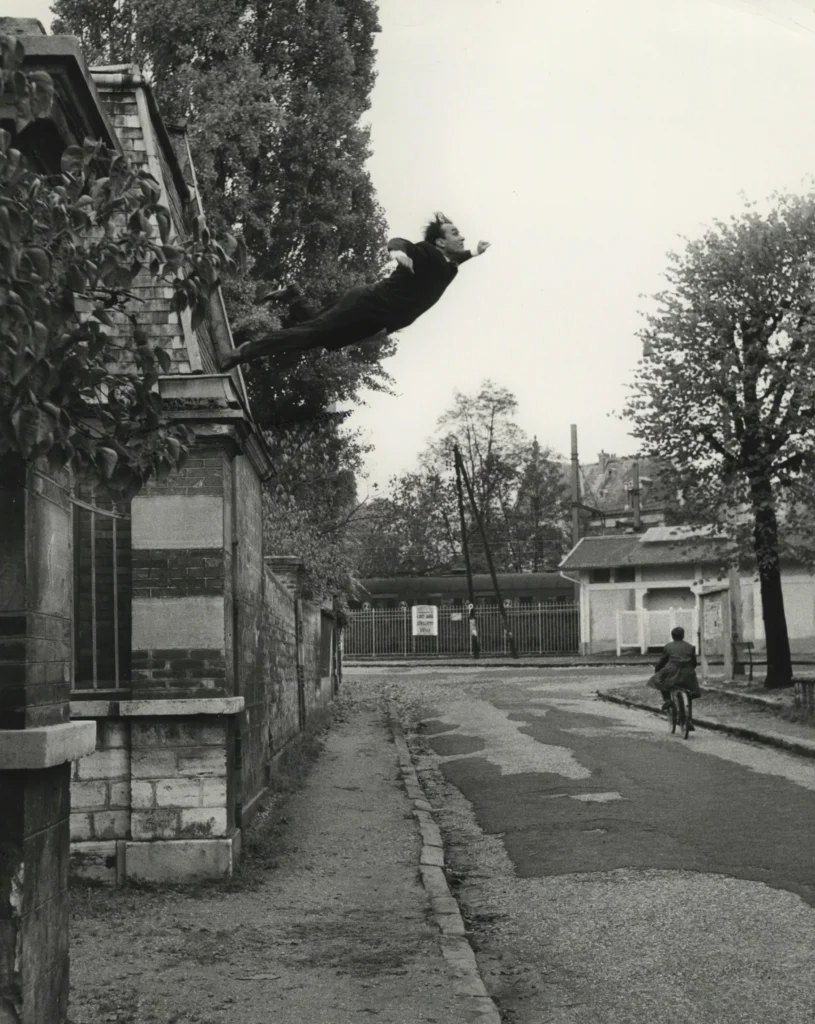
Leap into the Void
Artistic action by Yves Klein French
Photographed by Harry Shunk German
Photographed by János (Jean) Kender Hungarian
1960
https://www.metmuseum.org/art/collection/search/266750
Leap into the Void
Artistic action by Yves Klein French
Photographed by Harry Shunk German
Photographed by János (Jean) Kender Hungarian
1960
Not on view
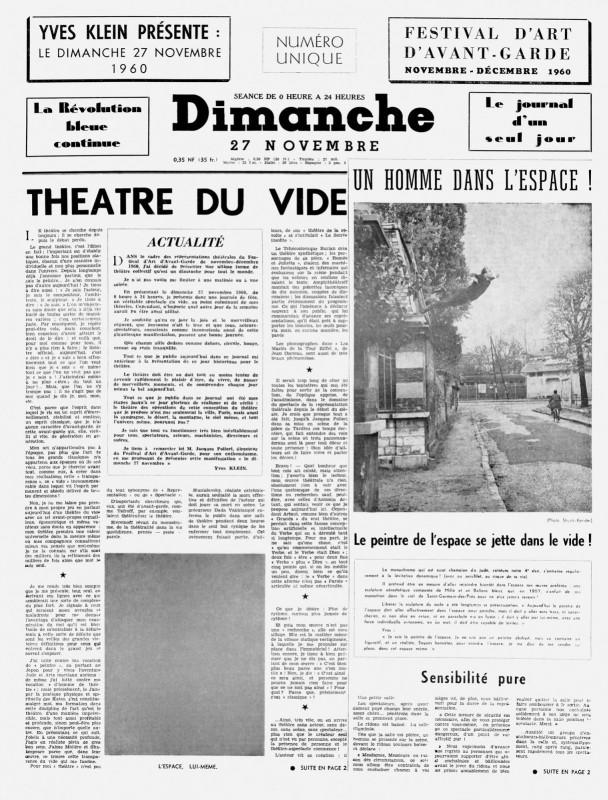
As in his carefully choreographed paintings in which he used nude female models dipped in blue paint as paintbrushes, Klein’s photomontage paradoxically creates the impression of freedom and abandon through a highly contrived process. In October 1960, Klein hired the photographers Harry Shunk and Jean Kender to make a series of pictures re-creating a jump from a second-floor window that the artist claimed to have executed earlier in the year. This second leap was made from a rooftop in the Paris suburb of Fontenay-aux-Roses. On the street below, a group of the artist’s friends from held a tarpaulin to catch him as he fell. Two negatives–one showing Klein leaping, the other the surrounding scene (without the tarp)–were then printed together to create a seamless “documentary” photograph. To complete the illusion that he was capable of flight, Klein distributed a fake broadsheet at Parisian newsstands commemorating the event. It was in this mass-produced form that the artist’s seminal gesture was communicated to the public and also notably to the Vienna Actionists.
Private: Recontextualization Painting : Exhibtion: Yves Klein ” The Blue Room”
Exhibition: The Blue Room
To enlarge each work to 10 feet by 10 feet, and place one work in each wall in a large white room
This series explores the colour blue in reflecting on art, Nature, culture. I feel blue is a colour that when presented in room has existential meaning. I have selected works with texture, with abstract expressionism, with colour field, to open the conversation to how we experience colour.

Yves Klein The Blue Room #1 , Acrylic on Canvas, photographed, 24 in x 20 in, 2016, to be reprinted gilcee on paper, 24 in x 24in, 2022, to be reprinted and enlarged, 120 in x 120 in, 2030

Yves Klein The Blue Room #2 , oil on Canvas, 33 in x 30 in, 1990, photographed, to be reprinted gilcee on paper, 24 in x 24in, 2027, to be reprinted and enlarged, 120 in x 120 in, 2030

Yves Klein The Blue Room #3 , Acrylic on Canvas, 24 in x 20 in, 2020, to be reprinted giclee on paper, 24 in x 24in, 2027, to be reprinted and enlarged, 120 in x 120 in, 2030

Yves Klein The Blue Room # 4 , Acrylic on Canvas, 40 in x 40 in, 2010, to be reprinted gilcee on paper, 24 in x 24in, 2027, to be reprinted and enlarged and framed, 120 in x 120 in, 2030
Yves Klein Blue Painting – Analyzing This Blue Monochromatic Painting
ByIsabella Meyer PostedJanuary 20, 2022 UpdatedOctober 11, 2024
https://artincontext.org/yves-klein-blue-painting/embed/#?secret=xvfzIdp4P3#?secret=jYiycTjDyl
Yves Klein Blue Painting in Context
Yves Klein was famous for his blue monochromatic paintings, more specifically in the ultramarine blue color. The French artist was remembered as creating around 200 pieces, which resulted in his blue monochromatic painting collection. IKB, or International Klein Blue, is known as his trademark color style.
Below, we take a closer look at Yves Klein’s art and IKB, starting with a brief contextual background, where we will look at what motivated this blue painter to create the artworks he did.
Following this, we will look at a blue monochromatic painting example in more detail, giving a formal analysis of the subject matter, his stylistic processes, and other meanings related to the famous blue painting.
| Artist | Yves Klein |
| Date Painted | 1959 |
| Medium | Dry pigment in polyvinyl acetate on cotton over plywood |
| Genre | Painting, Performance |
| Period / Movement | Nouveau Réalisme and Performance art |
| Dimensions | 195.1 x 140 centimeters |
| Series / Versions | Part of the artist’s blue monochromatic paintings |
| Where Is It Housed? | Tate Modern, London, England |
| What It Is Worth | Not available |
Contextual Analysis: A Brief Socio-Historical Overview
Blue ran deep for Yves Klein, and he poured out this depth onto his canvases in the lustrous ultramarine we see on his canvases today. Let us look at the beginnings of Klein’s career, and more importantly, how he started painting his monochromes.
The year 1947 was an important marker for Klein because of an often reported “epiphany” he had while lying on the beach with his two friends. Yves Klein was good friends with Armand Fernandes, as well as Claude Pascal, who was a poet.
It was recalled that the three friends “divided” the universe into three, each being in control of one piece. Arman was in control of the earth, the physical world; Pascal was in control of “language and words”, and Klein was in control of space, or “the void” as it was called. This ultimately led to Klein’s interest in the ideas of space and the void, and what was understood as infinity.
From Multi-Color to Monochrome
Klein held private and public exhibitions during the 1950s and was remembered as starting with multi-colored paintings. His private exhibition from 1949 introduces us to his play on the monotone. The exhibition was called The Monotone-Silence Symphony, which consisted of playing 20 minutes of a musical chord and then 20 minutes of silence.
Klein continued to exhibit with multi-colored monochromes, his exhibition in 1955 was a public exhibition marked by his publication titled Yves Peintures (1954). Interestingly, Klein’s “booklet” was published before he produced the monochromatic paintings.
It consisted of ten colored sheets or “plates”, however, the booklet itself had around 15 pages. The sheets were rectangles of colors, such as yellow, red, brown, green, orange, gray, ultramarine blue, turquoise, pink, and light minty green. The first exhibition was held at the Club des Solitaires in October of 1955 and the second exhibition was held at the Gallery Colette Allendy in February 1956, which was called Yves: Proposition monochromes.
The above-mentioned exhibitions displayed monochrome paintings in various colors like reds, yellows, oranges, and blues.
However, the prominent colors were reportedly gold, blue, and pink for the Yves: Proposition monochromes exhibition. Gold and pink would specifically become significant signature colors for Klein alongside his famous blue.

Klein realized the effects the above exhibition had were undesired, especially in the way the audience saw it, which was more along the lines of being decorative pieces. The audience confused the Yves Klein art with a different type of “space”.
In other words, Klein aimed to convey a deeper meaning with his 20 paintings, one of an “immeasurable existence of color”, almost like infinite space, while the audience perceived it as more decorative-type pieces suited to indoor spaces.
The Beginnings of Blue
After his monochromes of different colors and the undesirable reception of these from his exhibition in 1956, Klein started with his newer monochromes, which consisted of only blue. In 1956 he created what was to become his trademark color called International Klein Blue with the assistance of Edouard Adam who was the owner of an art supply shop in Paris,
This led to his exhibition in 1957 called Proposte Monocrome, Epoca Blue, which means “Proposition Monochrome; Blue Epoch”, at the Milan-based Gallery Apollinaire. Here Klein displayed 10 blue paintings with even spaces between each. However, some sources state Klein displayed 11 paintings. The said “blue” paintings were held in place on poles and all appeared identical in shape.
What was unique about Klein’s new exhibition was that he gave each painting a different price, which further added to how each painting would be perceived even though they were all similar. This was done to ascertain the personalized perceptions of each painting on the viewer’s, or buyer’s, part, and the effects the paintings had on them and their own unique perception of value.
Klein continued utilizing and applying blue in different ways, most notably in his Anthropométries (“Anthropometry”) series, which included female models’ bodies and paint rollers. These were not typical exhibitions, but more performances where women were in the nude and covered with blue paint, and they made imprints on large canvases or walls with their bodies.

Accompanying the performance was live music played by several musicians. It has often been reported that the above-mentioned display of blue became a performance art and there were people who attended as audience members clad in formal attire.
What is worth noting here about the above-mentioned “performance” piece was that Klein approached his artwork in a wholly different manner. Whereas he was previously involved in the process of its creation, here he seemed to orchestrate his artwork intentionally, from afar.
He is reported as saying about his blue-painted models and artwork, “I personally would never attempt to smear paint over my own body and become a living brush; on the contrary, I would rather put on my tuxedo and wear white gloves. I would not even think of dirtying my hands with paint. Detached and distant, the work of art must complete itself before my eyes and under my command”.
Klein produced numerous other works during his artistic career and was remembered as one of the leading figures or pioneers of performance art.
He also experimented with different media that played with the idea of infinity, specifically the addition of more natural materials like gravel, fire, sea sponges, and water. He created sculptures that would convey a sense of the infinite, something that was quite significant to the artist and his inner world and perceptions.
Nouveau Réalisme
It is also important to note that Klein was a part of the Nouveau Réalisme group, which means “New Realism”. The Nouveau Réalisme group originated in France during the 1960s and was led by Pierre Restany who was an art critic and Yves Klein, the latter was an important leading figure. However, both figures had differences of opinions when it came to the group and what it stood for, whether it was following in the footsteps of Dadaism or something more postmodern.
The movement was known as the French equivalent of Pop Art and utilized a variety of artistic modalities as expression. The core tenets of the group were to utilize objects and deconstruct these to convey a message. Furthermore, it was to meld objects and make something new in line with a more realistic view of reality.
The group of artists had their first exhibition in Milan at the Apollinaire Gallery in 1960. This is also when Restany used the term Nouveau Réalisme to refer to and describe the artworks of various artists, including Klein. Restany wrote the following in the exhibition’s catalog, “The passionate adventure of the real perceived in itself and not through the prism of conceptual or imaginative transcription”.
Restany also wrote the manifesto for the group who signed their names in it, the manifesto read, “The Nouveaux Réalistes have become conscious of their collective identity; Nouveau Réalisme = new perceptions of the real”. Some of the notable artists included Arman, whose full name is Armand Pierre Fernandez, Jean Tinguely, Daniel Spoerri, Raymond Hains, François Dufrêne, and others.
Yves Klein eventually broke away from the group during 1961 due to the group’s close affinity for and continuation of the Dadaist legacy. Klein’s artwork became more progressive and veered away from the seeming limited aspects that the Nouveau Réalisme group held on to.
Formal Analysis: A Brief Compositional Overview
Below we will discuss several examples of Klein’s blue monochromatic painting pieces while focusing on a selected example throughout for more context. Although many appeared almost identical, Klein created a significant number of different blue pieces. Yves Klein art is characterized by only one element, and that is blue, more specifically his International Klein Blue, which is the primary subject matter for his famous blue painting collection.
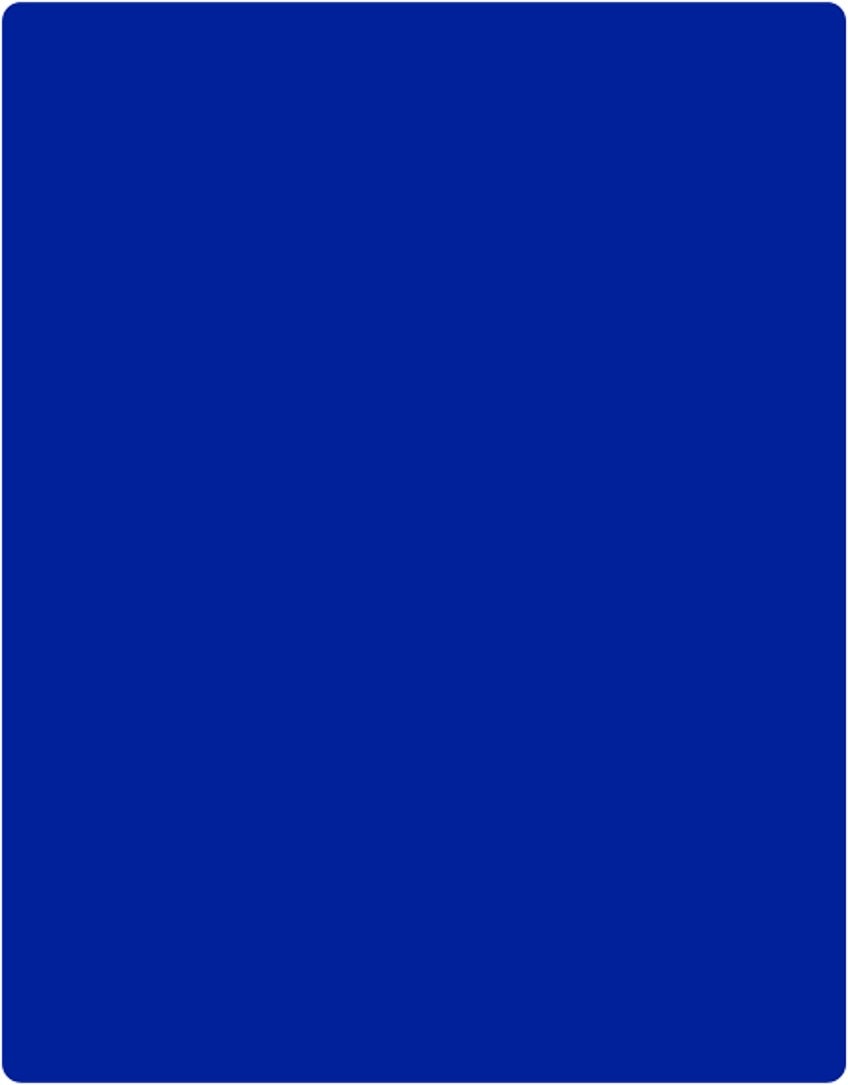 Yves Klein’s Blue Monochrome (1961); No machine-readable author provided. Solipsist~commonswiki assumed (based on copyright claims)., Public domain, via Wikimedia Commons
Subject Matter: Blue Is the Main Protagonist Here
One example from the Yves Klein blue painting collection is IKB 79, Untitled Blue Monochrome (1959). Numerous paintings are titled “IKB”, which stands for International Klein Blue. After Klein’s death his wife, Rotraut Klein-Moquay, numbered the paintings in this manner, giving each painting a specific designating number as there were almost 200 blue monochromatic painting pieces.
However, the pieces were not numbered in the order they were made in and so there has been difficulty in determining the chronological order of each Klein blue painting.
In this example, we look at number 79, which, as we would surmise, is a monochromatic canvas painted completely in the trademark blue that Yves Klein is so famous for. There is nothing else on this canvas except the blue color, filling up each corner and border.
In IKB 79 we are almost forced to stop and stare for a while longer in case something might jump out at us from the blue depths. In fact, it is this blue depth that Klein makes the focal point in this composition, and some would question whether we can call this a composition at all, is it not just a canvas painted blue?
For Yves Klein the main subject matter is blue, this is the blue paint as the medium and the blue color and what it symbolizes.
Klein places this in front of us, the viewers, and whether we question it or not is up to us. Ultimately, he is evoking a new way of seeing, a new way of stopping and understanding something that is not depicted in a traditional and conventional manner, but uniquely avant-garde.
Color
We would be remiss if we did not have a part of the formal analysis discussing color, however, maybe we are all aware by now the primary color of the composition is blue. But what blue is this and how did Klein create his signature color and ultimately, his signature subject?
This Klein blue has been called an ultramarine hue, but the artist himself worked on the color with a chemist/scientist to achieve the unique color it is now.
The process consisted of “suspending” the dry blue pigment in a blend of synthetic resin, namely polyvinyl acetate, and a binder. The color also has a matte effect, which has been a large component of its unique vividness.
The Klein blue has been a trademarked color. Yves Klein presented a Soleau envelope in 1960 to patent his blue color, however, there has been debate about the accuracy of this as some scholarly sources suggest that Klein never patented his color; the submission of the Soleau envelope preceded the patent application process. It should be noted that there is a difference between the concepts of trademark and patent.
As we mentioned earlier, Klein exhibited with other colors with his signature blue, however, he would focus on pink and gold as the other important primary colors in his artistic palette. These colors represented different ideas to Klein. He is reported as saying about his exhibition Yves: Propositions Monochromes:
“Fire is blue, gold and pink, the bases of my monochrome paintings. I see it as a universal principle for the explanation of the world”.
An example of Klein’s pink and gold can be seen in his Ex-voto (1961), which was a dedication to Saint Rita of Cascia. This was given to the monastery of the same name. It is reported that Klein made several pilgrimages to this monastery and his artwork is a testament to his devotion to his religious beliefs. In Klein’s Ex-voto, we see the primary colors, pink on the far left his signature Klein blue in the middle, and to the far right what appears to be gold leaf. The colors are set in three squares on the top part.
Texture and Line
If we look at other examples from the Yves Klein blue painting collection, we will notice his play with different textures. Some of his paintings appear with thickly applied paint and others with thinner applications like in IKB 79.
For example, in IKB 45 (1960) we see the entire canvas covered in thick strands of dried paint, seemingly applied in all sorts of directions. If we look closer, we can easily reach out our hand and touch the thick protrusions of paint.
Another example is IKB 67 (1959) where we notice a uniform application of thinner brushstrokes, which have a slight relief to them. This Klein blue almost reminds us of the calming ocean waves rippling from a light breeze. Could this be one of the effects Klein wanted to convey?

In other examples Klein utilizes sponges to create a relief effect, this we see in Blue Sponge Relief (RE 51) (Relief Eponge Bleu) (1959) and Untitled Blue Sponge Relief (RE 18) (1960). The latter is another blue canvas, but in this example, we will notice almost over 20 small natural sponges in two large, centralized, clumped groups, with one or two towards the outer edges. Klein also included pebbles in some of these compositions, which played on the ideas of the infinite world and physical world.
There is an element of line when we look at some of Klein’s more textured blue paintings. Through the texture, a sense of formal line and geometry is created, but was this Klein’s intention or merely just a stylistic consequence of the effects created by how the paint was applied and dried?
For Klein, focusing on lines in a painting did not seem as important as his focus on the monochromatic space, which ultimately represented the idea of space and the infinite, something the artist could not convey using conventional formal elements in painting like lines, shapes, and structure.
The Symbolism of Blue
For Klein blue was something deeper than just applying a color to a canvas. The artist was a deep thinker, and we see this depth of feeling and awareness depicted on the canvas, we almost become consumed by it in our seeming uncertain consumption of it. Some of the symbolic references from this painting refer to something Klein felt an affinity to, which was the idea of infinity. For him, the monochrome was a reference to infinite space.
He is often quoted as comparing his paintings to being an “open window to freedom, as the possibility of being immersed in the immeasurable existence of color”.

Klein was also impacted by the beautiful blues from frescos in Italy, he held religious beliefs in the Catholic faith and blue was religiously symbolic. We see this blue in most of the Renaissance paintings especially the meaning it holds depicted on holy figures like Jesus Christ or Mother Mary.
Klein was not only religious but he was also learned in philosophical ideals, reportedly the Rosicrucian order, an esoteric spiritual movement that believes in wisdom passed down from ancient teachings or times. Klein was also familiar with the teachings of Buddhism, teachings he would have inevitably learned more in-depth during his stay in Japan when he learned martial arts, specifically Judo.
Furthermore, the International Klein Blue resembled the sky and depths of the ocean, the infinite expanses of these natural environments. We are urged to recall when Klein and his two friends lay on the beach and Klein was the keeper, so to say, of the sky or space, or as some say, “the void”.
Always Blue and Beyond
Yves Klein art is unique, and he was one of the pioneers of performance arts, not only painting but incorporating melodies as part of his performing pieces. The blue painter also painted objects blue, whether it was a cast of a globe of the earth, La Terre Bleue (1957), or a plaster of female nude representing Venus, La Vénus d’Alexandrie (Vénus Bleue) (1961).
Whether we call it the void or infinity, either concept holds the essence of something unseen, immaterial, immeasurable, and a world beyond what we understand. These concepts are brought to life in Yves Klein’s famous blue painting collection we touched upon in the article above.
To understand even a fraction of Yves Klein, the beloved blue painter, we need to merely gaze at his artwork. He has been described along the lines of being a mystic and alchemist and we see this in his oeuvre. He understood something deeper about life, which was undoubtedly developed by his experience in martial arts and his time living in Japan. Yves Klein died of a heart attack when he was 34 years old and since his death, he has been one of the widely celebrated artists from the 20th century. He is difficult to miss and easy to spot at any art gallery – just look out for the bluest blue you have ever seen.

Frequently Asked Questions
Who Was Yves Klein?
Yves Klein was a French painter who lived and painted during the mid-1900s. He was famous for his trademark color called International Klein Blue and his blue monochromatic painting style, which was on canvases as well as sculptural objects. He was a significant artist and one of the pioneers of performance art. He was part of the Nouveau Réalisme art group and paved the way for other art movements like Minimalism and Pop Art.
What Is IKB?
IKB, also known as International Klein Blue, is a color trademarked by the French artist from the 1900s, Yves Klein. This is an ultramarine blue that Yves Klein formulated by “suspending” dry pigment in a binding solution. The effect produced was of a brilliant blue hue.
What Was the Meaning Yves Klein Blue?
Blue symbolized different things for Yves Klein, namely, religious meanings inspired by the blues from religious paintings typical of the Renaissance period. Klein also believed deeply in conveying the ideas of infinity and space, “the void”. His paintings became representations of the “immeasurable” aspects of infinity. Furthermore, Yves Klein’s paintings also represent the vastness we find in the sky and the ocean.
What Type of Artist Was Yves Klein?
Yves Klein was a painter and sculptor; however, he was one of the first artists who started performance arts and developed it further. He was also known as one of the first conceptual artists from the 20th century due to various of his performed pieces. For example, what is known as his photomontage of jumping from a building to appear like he was flying, called Saut dans le vide (Leap into the Void) (1960). Other examples include exhibiting invisible artworks in a gallery space as “seen” in his exhibition called The Void (1958), which was held at the Iris Clert Gallery located in Paris. All that was in this gallery space was an empty cabinet, a window painted blue, and a blue curtain for the entrance. Klein organized this exhibition like a real event, providing blue drinks for the guests who were reportedly around 3,000 in number.
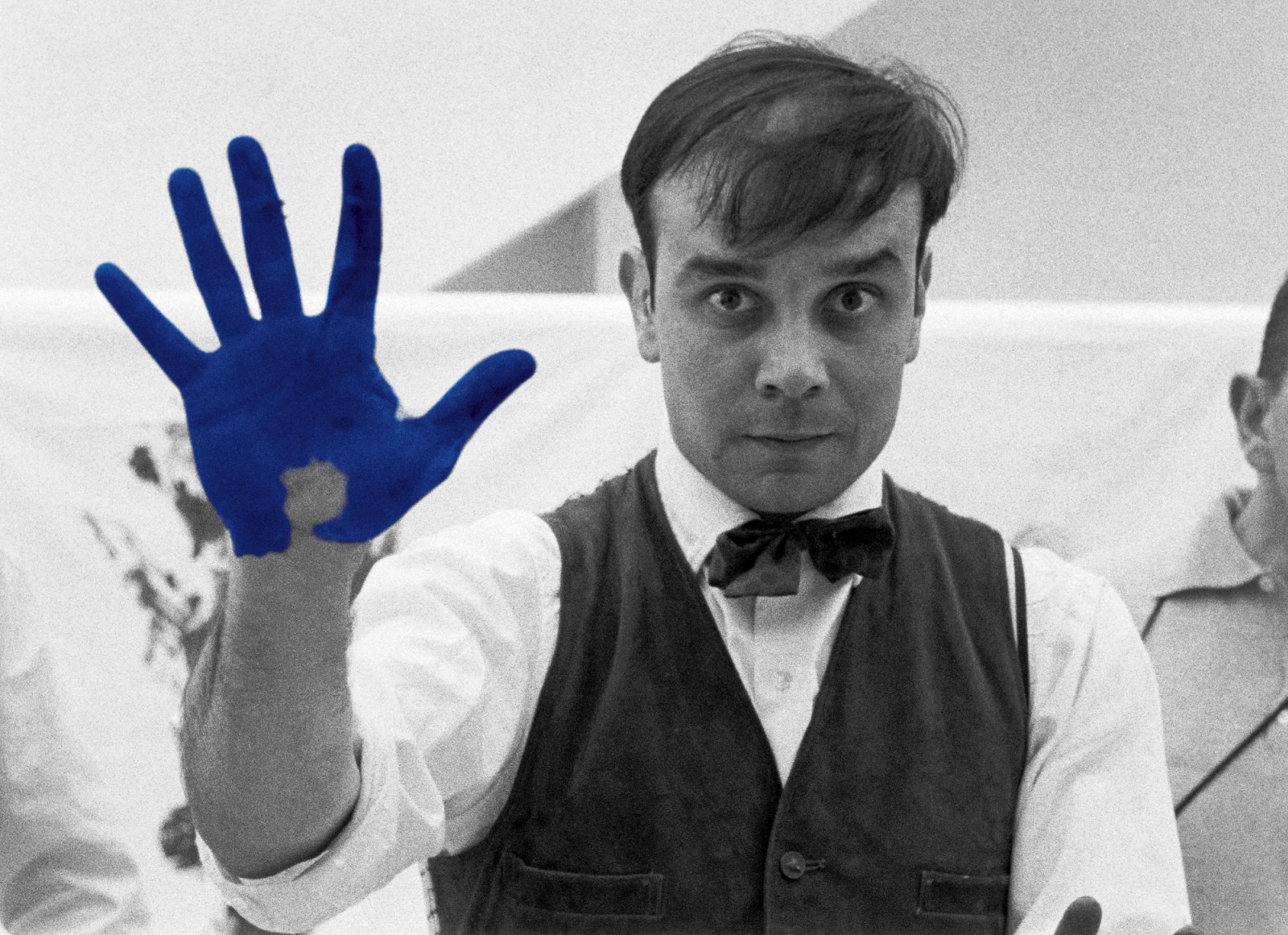
Portrait of Yves Klein made on the occasion of the shooting of Peter Morley “The Heartbeat of France”, February 1961 Studio of Charles Wilp, Düsseldorf, Germany
© Photo : Charles Wilp / BPK, Berlin
Born on April 28 1928 in Nice, Yves Klein had as a first vocation to be a judoka. It was only back in Paris, in 1954, that he dedicated himself fully to art, setting out on his ‘adventure into monochrome’.
Animated by a quest to ‘liberate colour from the prison that is the line’, Yves Klein directed his attention to the monochrome which, to him, was the only form of painting that allowed to ‘make visible the absolute’.
By choosing to express feeling rather than figurative form, Yves Klein moved beyond ideas of artistic representation, conceiving the work of art instead as a trace of communication between the artist and the world; invisible truth made visible. His works, he said, were to be ‘the ashes of his art’, traces of that which the eye could not see.
Yves Klein’s practice revealed of new way of conceptualising the role of the artist, conceiving his whole life as an artwork. According to him, beauty existed everywhere, but in a state of invisibility. His task was to to capture beauty wherever it might be found, in matter as in air.
The artist used blue as the vehicle for his quest to capture immateriality and the infinite. His celebrated bluer-than-blue hue, soon to be named ‘IKB’ (International Klein Blue), radiates colourful waves, engaging not only the eyes of the viewer, but in fact allowing us see with our souls, to read with our imaginations.
From monochromes, to the void, to his ‘technique of living brushes’ or ‘Anthropometry’; by way of his deployment of nature’s elements in order to manifest their creative life-force; and his use of gold as a portal to the absolute; Yves Klein developed a ground-breaking practice that broke down boundaries between conceptual art, sculpture, painting, and performance.
Just before dying, Yves Klein told a friend, “I am going to go into the biggest studio in the world, and I will only do immaterial works.”
Between May 1954 and June 6, 1962, the date of his death, Yves Klein burned his life to make a flamboyant work that marked his era and still shines today.
Chronology
https://www.yvesklein.com/en/yves-klein/
1928
Yves Klein was born in Nice on 28 April 1928 to painter parents – Fred Klein, a figurative painter, and Marie Raymond, an abstract painter.
1928 – 1946
During his childhood, the Klein family lived between Paris and Nice.
1947
During the summer, Yves Klein joined the judo club at police headquarters and met Claude Pascal and Armand Fernandez, the future Arman. They were united by a strong attraction to physical exercise, and all three aspired to the ‘Adventure’ of travel, creation and spirituality. For Yves, judo was the first experience of ‘spiritual’ space.
On the beach in Nice, the three friends decided to ‘share the world’: Armand would have the earth and its riches, Claude Pascal the air, and Yves the sky and its infinity.
1948 – 1954
During the summer of 1948, Klein visited Italy (Genoa, Portofino, Pisa, Rome, Capri, Naples…).
In November 1948, he left for eleven months of military service in Germany.
At the end of 1949, Claude Pascal and Yves Klein moved temporarily to London where they continued their judo activities. Yves found a job with the framer Robert Savage. His time with Savage taught him rigour in his work. Yves learned to gild with gold leaf.
During this period, Yves created a number of monochrome paintings on paper and cardboard using pastels and gouache. He also devised a Monoton-Silence Symphony and wrote film scripts about art.
In 1951, Yves Klein left for Madrid to study Spanish. Joining a judo club, Klein replaced an instructor and from then on regularly took on this role. He became very close to the headmaster of the school, Fernando Franco de Sarabia, whose father was a publisher.
With the help of his aunt, he left for Japan in 1952 and enrolled at the Kôdôkan Institute, the most prestigious judo centre. He lived in Japan for fifteen months, dividing his time between the Institute and giving French lessons to American and Japanese students. Shortly before his return, he obtained his 4th dan in judo, thus reaching the highest level in Europe.
1954 – 1957
On his return from Japan, he published Yves peintures in Spain and Les Fondements du judo in Paris. These publications reflected his dual career as a judoka and artist.
In the spring of 1955, he exhibited an orange monochrome entitled ‘Expression de l’univers de la couleur mine orange’ at the Salon des Réalités Nouvelles, which was reserved for abstract artists. The rectangular wooden panel was uniformly covered in matt orange paint. It is signed with the monogram YK and dated May 1955. The monochrome was rejected by the jury.
In October, the first public exhibition of Yves Peintures was held at the Club des Solitaires in Paris. Yves exhibited monochromes in different colours.
In 1956, Yves exhibited his works at the Galerie Colette Allendy in Paris, ‘Yves, Propositions Monochromes’. During the opening, Klein met Marcel Barillon de Murat, knight of the Order of the Archers of Saint-Sébastien, who invited him to join them. On 11 March, Yves was knighted in the Order of the Archers of Saint-Sébastien in the Church of Saint-Nicolas-des-Champs in Paris. His motto was: For colour! Against line and drawing!
Yves Klein met Iris Clert, who ran a small 20 m2 gallery at 3, rue des Beaux-Arts in Paris.
1957 marked the beginning of his ‘Époque bleue’.
During this year, Yves perfected the production of the colour he would call IKB (International Klein Blue), which was characteristic of the works of his ‘Epoque bleue’ and would be his signature until 1959.
Presented in January 1957, the exhibition ‘Yves Klein, Proposte monocrome, epoca blu’ at the Galleria Apollinaire in Milan consisted of eleven blue Monochromes of the same format suspended by a system of brackets at a distance of 20cm from the wall, saturating the limited space of this small gallery.
In May 1957, Yves presented a double exhibition at the Galerie Iris Clert in Paris: Yves, Propositions monochromes from 10 to 25 May and Pigment pur from 14 to 23 May at the Galerie Colette Allendy.
– At Iris Clert, Yves chose to present his Propositions monochromes as he had done in Milan. The advent of L’Epoque bleue was celebrated by releasing 1,001 blue balloons into the Paris sky at the inauguration. Klein described this gesture as Sculpture aérostatique
– At Colette Allendy, Yves presented a group of works that heralded his future developments: Sculptures, environnement, vats of pure pigment, paravent, the first fire painting, Feux de Bengale-tableau de feu bleu d’une minute (M 41) and the first Immatériel: a room was left entirely empty as a testimony to the presence of pictorial sensibility in its raw material state. The joint invitation to the two exhibitions bore a text by Pierre Restany and was franked with a blue stamp by Yves Klein.
In June 1957, the exhibition ‘Yves, propositions monochromes’ opened at the Schmela Gallery in Düsseldorf with monochrome paintings in different colours. At this exhibition, Yves Klein made friends with the artists of the ZERO group (Otto Piene and Heinz Mack) and with the young Düsseldorf art scene.
In July, the ‘Monochrome Propositions of Yves Klein’ exhibition was held at Gallery One in London. The exhibition featured monochrome paintings in different colours.
During the summer, Yves met Rotraut Uecker (Rerik, 1938) in Nice. She was a German artist who worked as an au pair for Arman and later became his assistant and then his wife.
1958 – 1960
Winner of an international competition launched in 1957 by the municipality of Gelsenkirchen in Germany, Yves Klein was commissioned to create a series of Reliefs Eponges and monumental monochrome panels.
At the same time, Yves Klein was seeking to go beyond an agreed definition of art: he exhibited empty spaces and made statements that had the value of a work. The Immaterial that the artist ‘specialised’ in was the subject of transactions in exchange for gold, both a noble metal and a colour, which took on a singular place in his work.
The Monogolds were produced between 1960 and 1961, using fine gold in their composition, a material as precious as it was symbolic. Some Monogolds consist of a series of rectangles assembled into grids; others are composed of mobile gold leaves fixed to a panel covered in burnished gold, which quiver at the slightest breath; finally, some are concave reliefs in which the covering gold leaves have been carefully polished until they acquire a real power of reflection.
His collaboration with the architect Claude Parent on the Architecture de l’air project was a milestone.
On 19 May 1960 Klein registered the blue formula he had developed under the name International Klein Blue (IKB).
Thanks to him, the public space (the illumination of the obelisk on the Place de la Concorde) and the media (the Sunday 27 November 1960 edition) appeared as new territories for art.
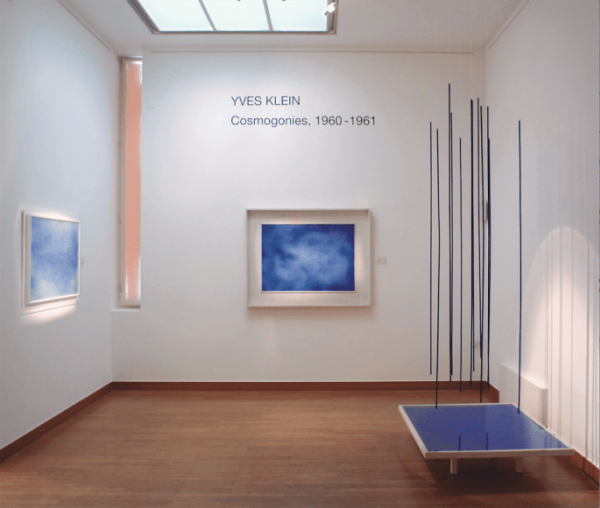
Natural forces and elements also become the raw material for his Cosmogonies, marks of the moment-states of nature.
His reflections on art led him to imagine new relationships with his models, who became the ‘living brushes’ of his Anthropometries, marks of the ‘moment-states of the flesh’.
On 19 October 1960, Yves Klein made Le Saut dans le vide, 3 rue Gentil-Bernard in Fontenay-aux-Roses, which was photographed by Harry Shunk and John Kender.
On 27 October 1960, the manifesto of the Nouveaux Réalistes was signed in his flat. The Déclaration constitutive du groupe des Nouveaux Réalistes, drafted by Pierre Restany, was signed by Arman, Dufrêne, Hains, Klein, Raysse, Restany, Spoerri, Tinguely and Villeglé. César and Rotella were invited but were absent.
1961 – 1962
A radical artist, Yves Klein was a model for the European artists of the Zero group.
In January 1961, the Museum Haus Lange in Krefeld held the first institutional retrospective of his work, entitled ‘Yves Klein: Monochrome und Feuer’. Yves Klein exhibited his blue, pink and gold monochromes, the Dessins-architecture and the Mur de Feu. On 26 February, when the exhibition closed, Klein produced the first Peintures de Feu.
In February 1961, Yves Klein travelled to Cascia in Italy to leave an ex-voto at the monastery of Saint Rita. The object was found in 1980 in the monastery’s offerings depot.
Between March and July 1961, Yves Klein produced Peintures de Feu at the Gaz de France test centre near Paris. An extension of the Cosmogonies and Anthropometries, the Peintures de Feu are the hallmark of the ‘States-moments of fire’.
He did not hesitate to use his image and his private life as material for his art,
On Sunday 21 January 1962, Yves and Rotraut were married in the church of Saint-Nicolas-des-Champs in Paris. Everything about the ceremony was meticulously orchestrated by the artist himself, with a real concern for ritual.
While working on the Portraits Reliefs of his friends Arman, Claude Pascal and Martial Raysse, he died of a heart attack at home on 6 June 1962, aged 34. His son Yves was born in Nice in August.

Photo, January 21st 1962Wedding of Yves Klein and Rotraut Uecker


Document, 1957Chamonix Journal – excerpts from journal

Exhibition, 4 janv. 1960 – 1 févr. 1960La nuova concezione artisticaGalleria Azimuth, Milan, Italy


Exhibition, 17 mai 1961 – 10 juin 1961À 40° au-dessus de DadaGalerie J, Paris, France

Exhibition, 30 avril 1960Les Nouveaux RéalistesGalleria Apollinaire, Milan, Italy

Exhibition, 31 janv. 1960 – 29 févr. 1960AntagonismesMusée des Arts Décoratifs, Paris, France

![Yves Klein and Ci-gît l'Espace [Here Lies Space] (RP 3)](https://www.yvesklein.com/files/photo_thumbnail_3694.jpg)
Photo, ca. 1960Yves Klein and Ci-gît l’Espace [Here Lies Space] (RP 3)

Book, 2015Burning Cutting Nailing


Artwork, 1957Untitled Blue Monochrome, (IKB 143)
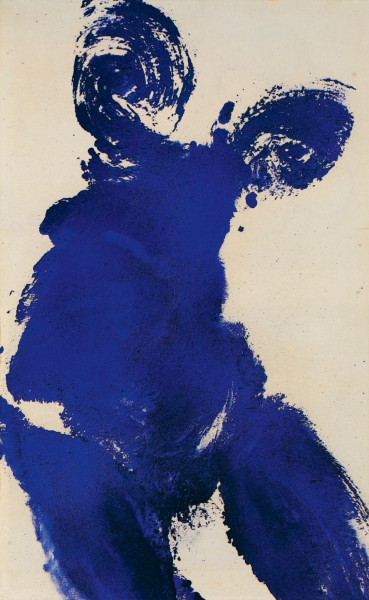
Artwork, 1962Untitled Anthropometry
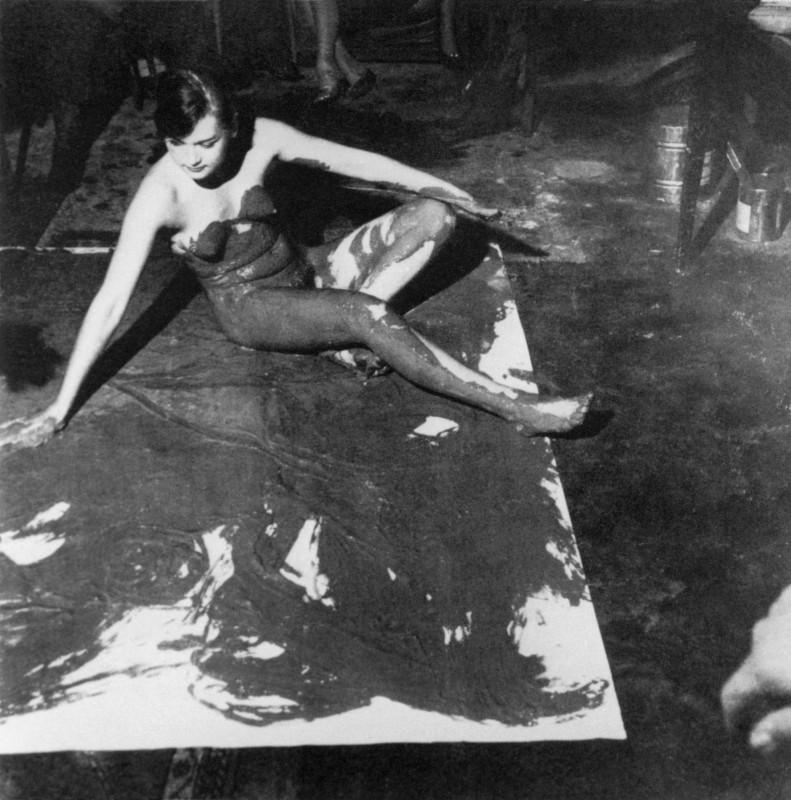
Editorial, 2017, Denys Riout”Bodies, flesh and imprints”, by Denys Riout

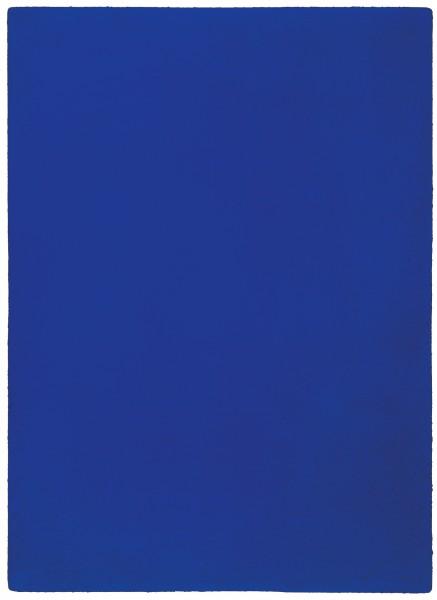
Artwork, 1961Untitled Blue Monochrome, (IKB 68)
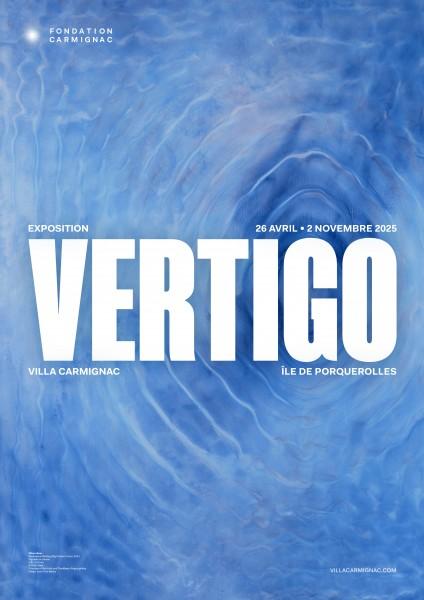
Exhibition, 26 avril 2025 – 2 nov. 2025VertigoFondation Carmignac, Porquerolles, France
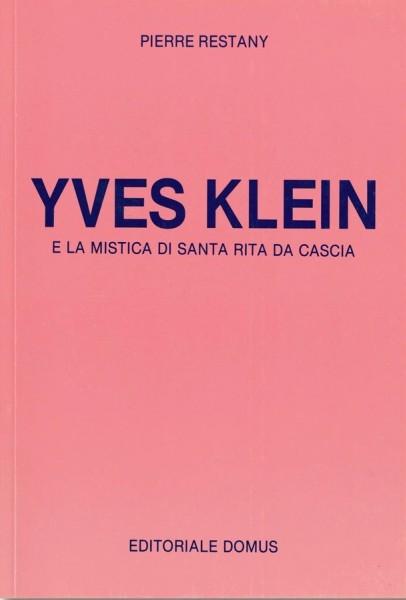
Book, 1981Yves Klein e la mistica di Santa Rita da Cascia
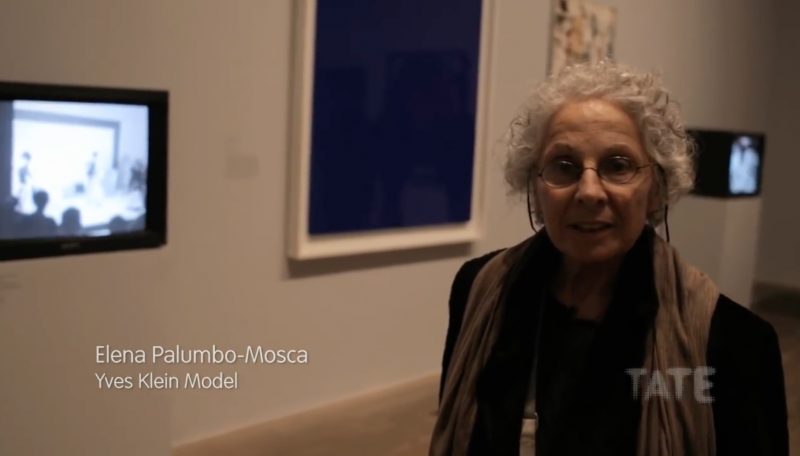
Editorial, 2012, Elena Palumbo-MoscaAnthropometries, by Elena Palumbo-Mosca, model for Yves Klein
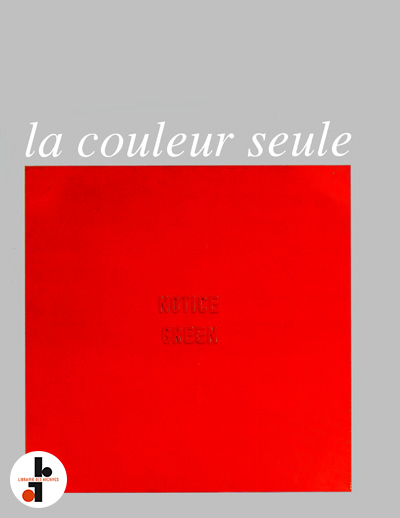
Book, 1988La Couleur seule : l’expérience du monochrome
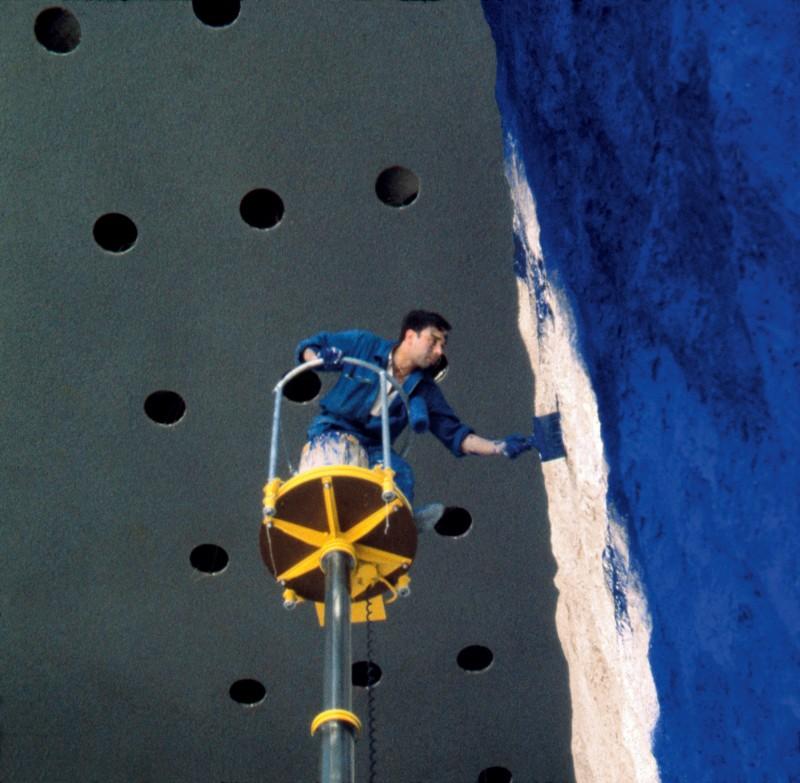
Editorial, 2013, Christelle LecœurThe “Pneumatic Rocket” as seen by Christelle Lecœur

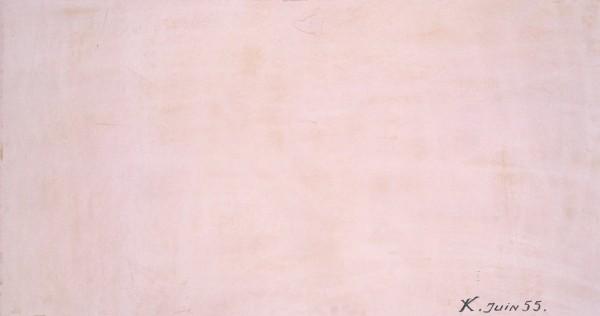
Artwork, 1955Untitled Pink Monochrome, (MP 55)
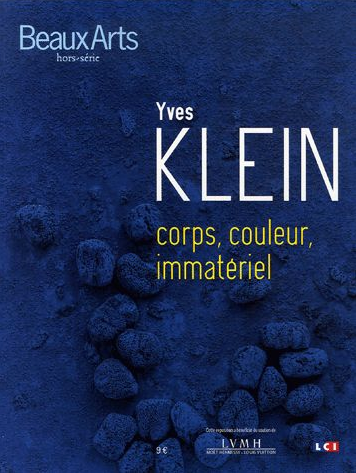
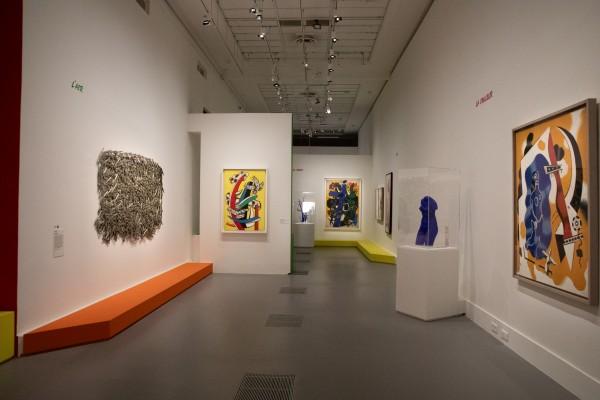
Exhibition, 19 mars 2025 – 20 juil. 2025Tous Léger !Musée du Luxembourg, Paris, France
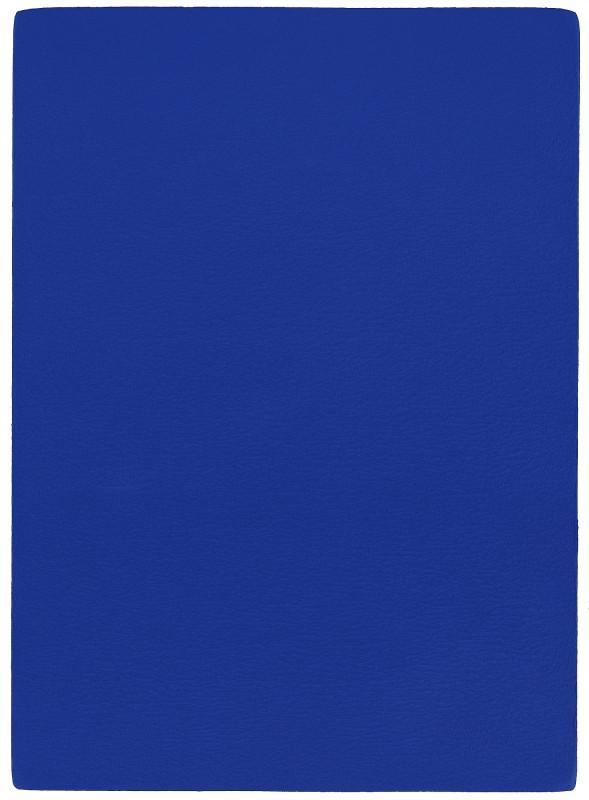
Editorial, 2022, Damien Sausset”Spirituality in Klein’s work, by Damien Sausset
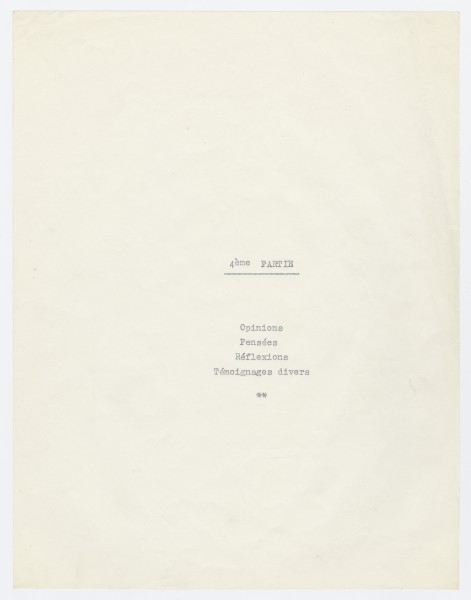
Document, 1960″Mon livre’ 4è partie’ Opinions Pensées Réflexions Témoignages…”
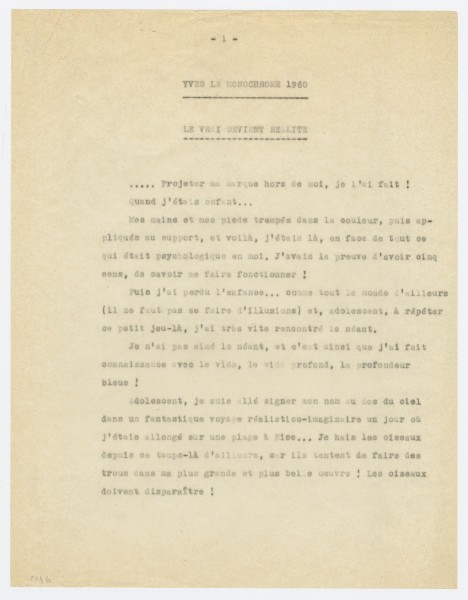
Document, 1960Yves Klein, “Yves le monochrome 1960, le vrai devient réalité”
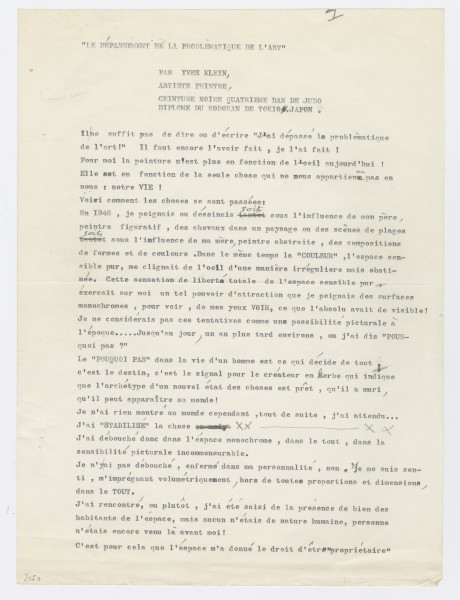
Document, 1959″Le dépassement de la problématique de l’art”
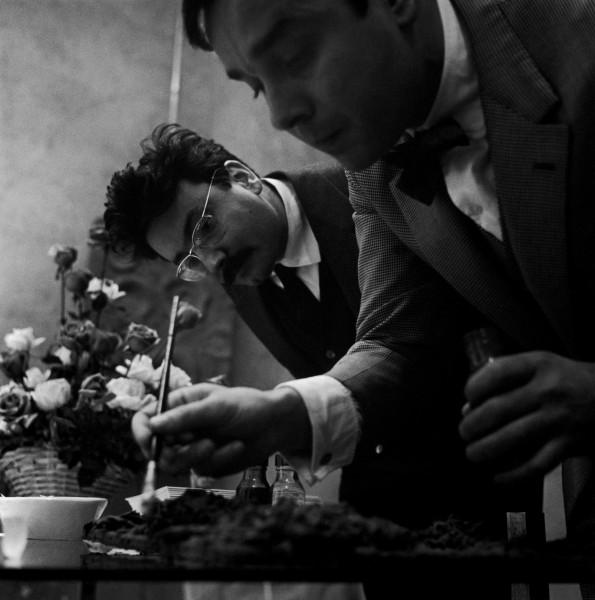
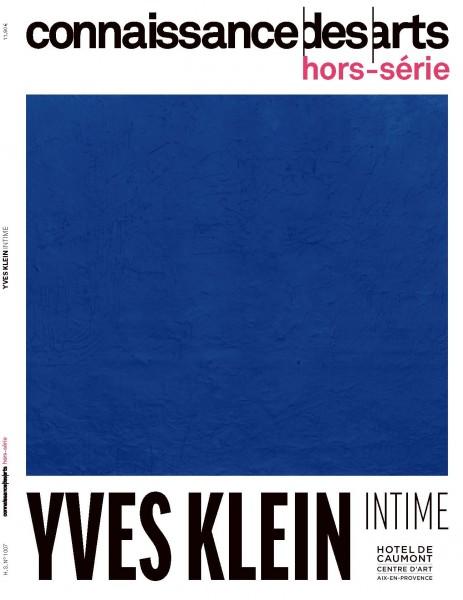
Book, 2010Yves Klein: With the Void, Full Powers Out of this world
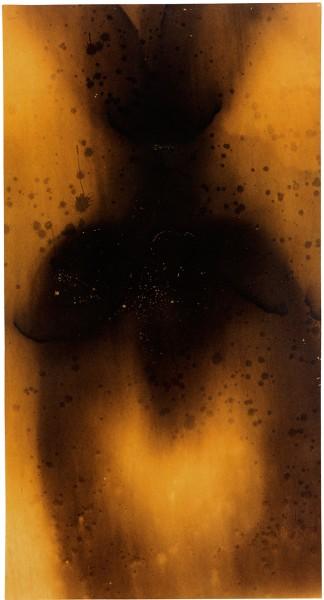
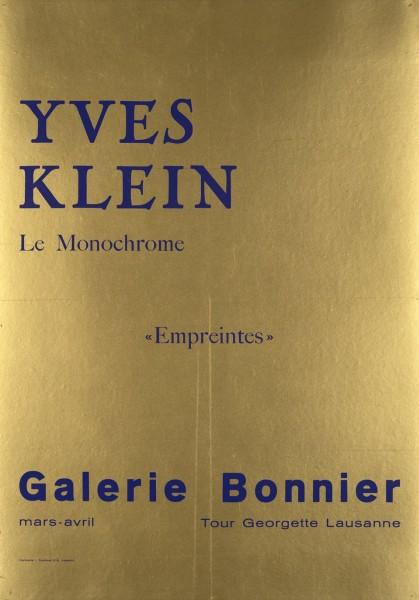
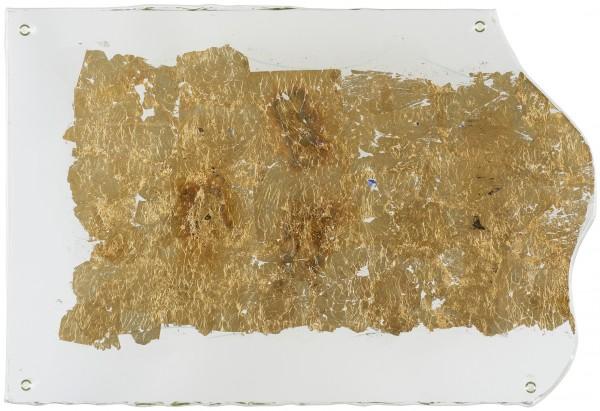
Artwork, 1959Untitled gold monochrome, (M 59)
![Valeur or [Value Gold]](https://www.yvesklein.com/files/picture_thumbnail_1513.jpg)
Artwork, 1960Valeur or [Value Gold], (MG 22)
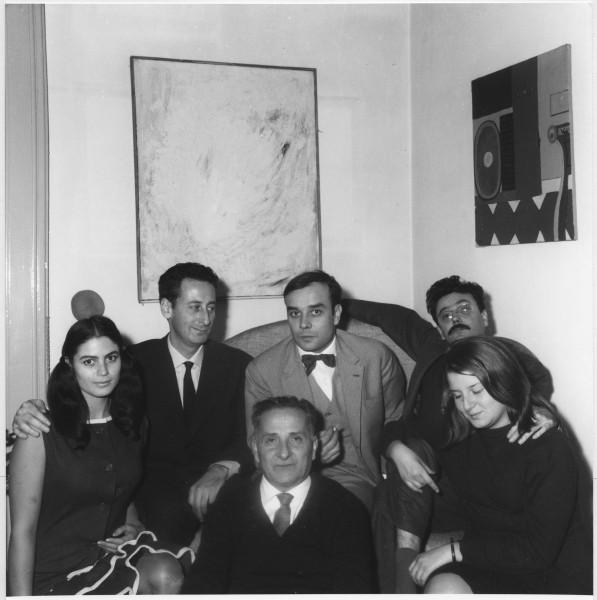
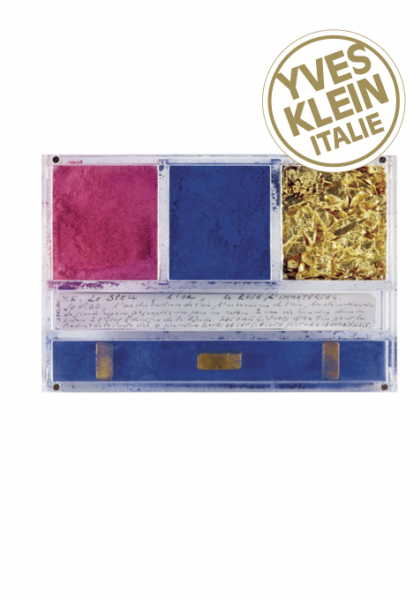
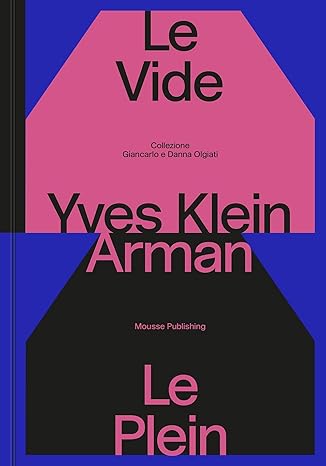
Book, 2024Iris Clert – singulièrement galeriste
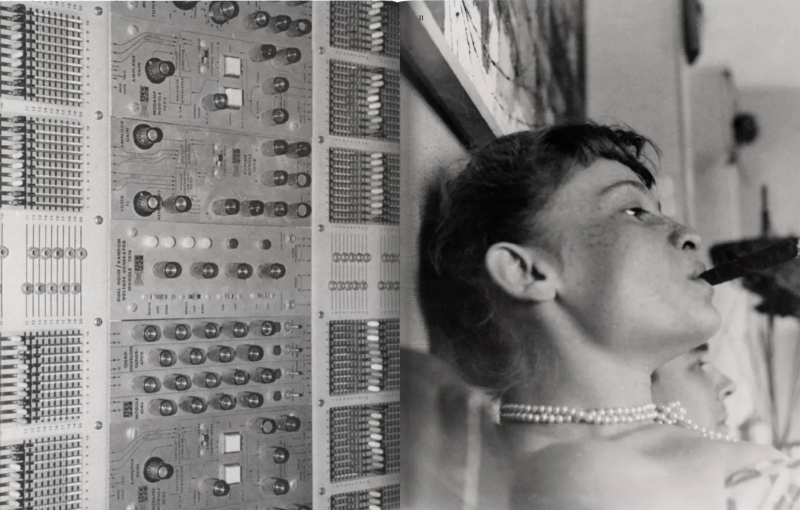
Editorial, 2007, Éliane RadigueThe “Monotone-Silence Symphony” as seen by Éliane Radigue, composer
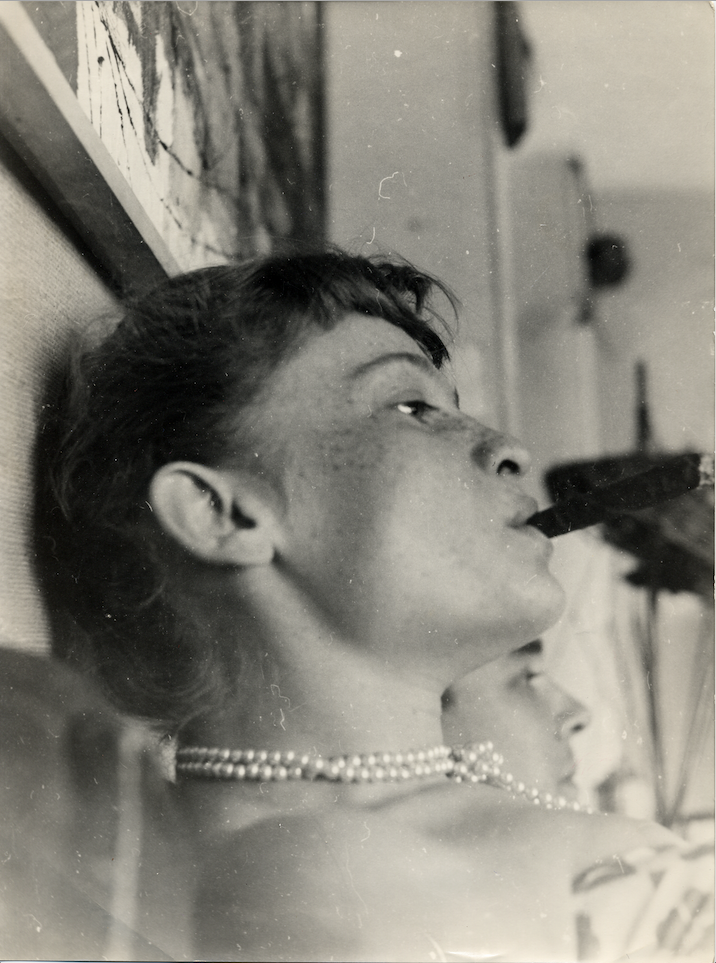
Audio, 2007‘An obvious and manifest work’, interview with Eliane Radigue by Philippe Ungar
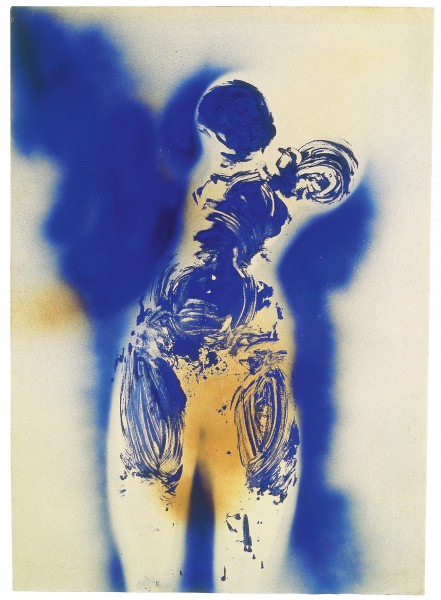
Artwork, 1960Untitled Anthropometry, (ANT 7)
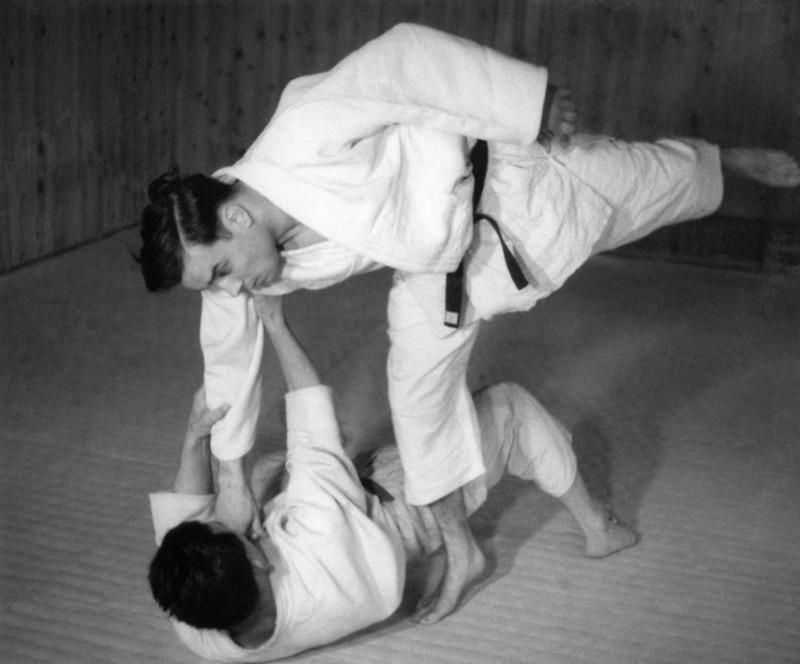
Editorial, 2012, Frédéric Prot”On Judo, Considered As One of the Fine Arts”, by Frédéric Prot
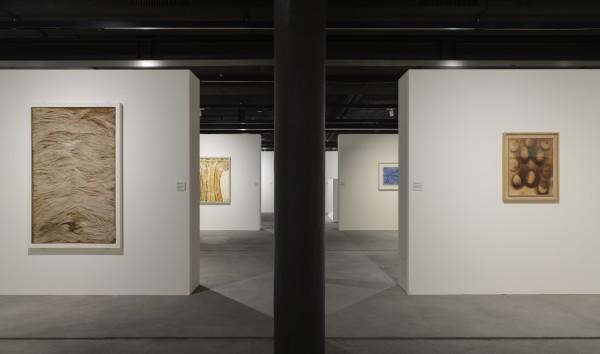
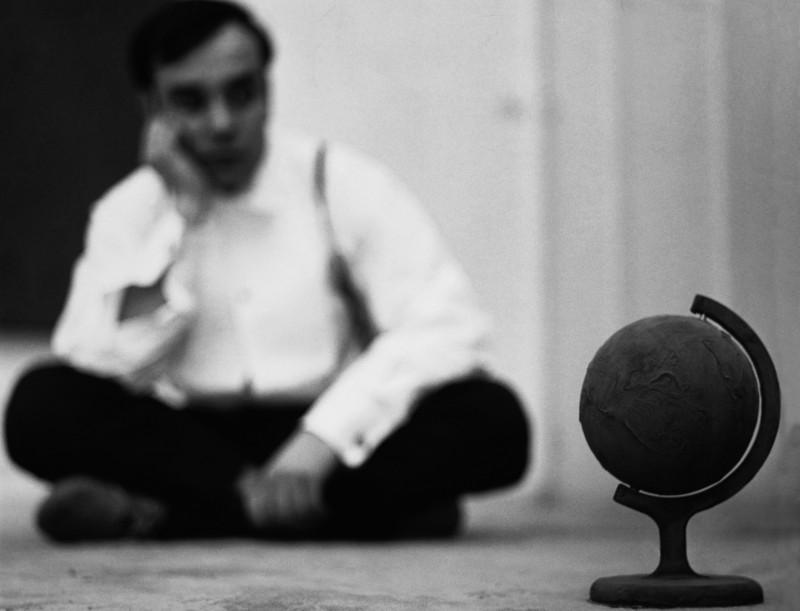
Editorial, 2020, Frédéric Migayrou”The force of universality”, by Frédéric Migayrou
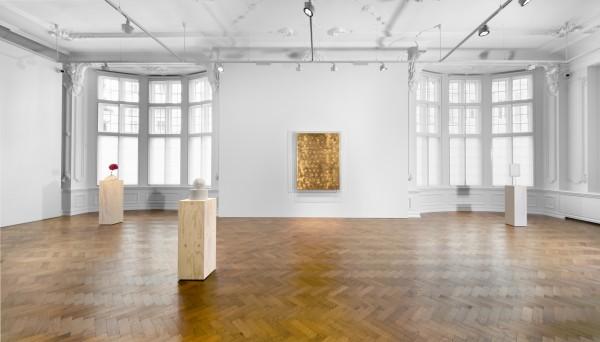
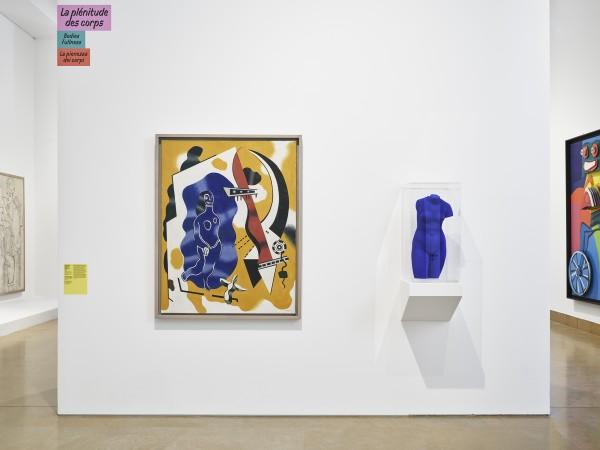
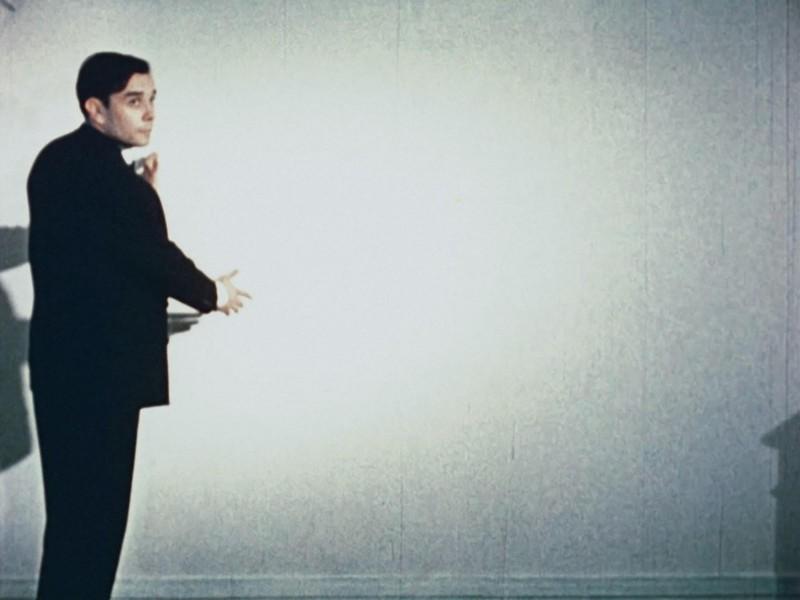
Editorial, 2017, Denys Riout”Incandescent ashes”, by Denys Riout
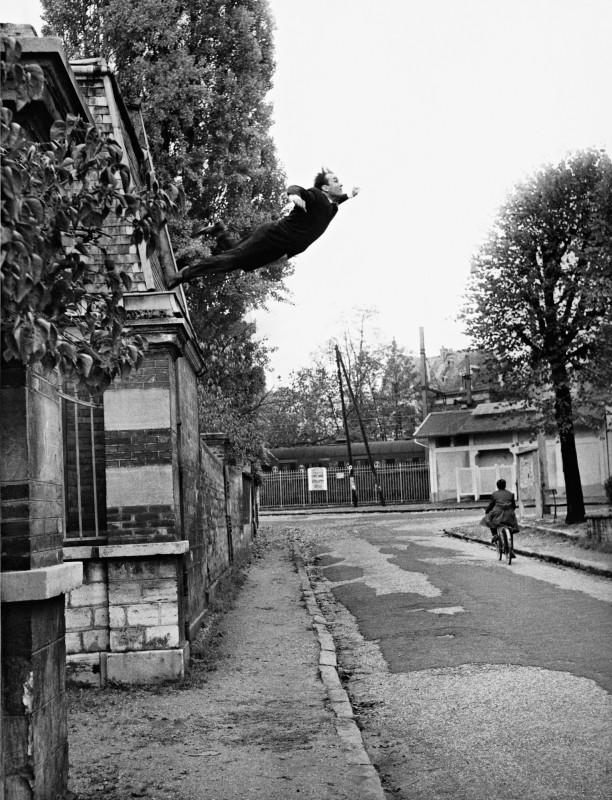
Editorial, 2022, Damien Sausset”Leap into the Void” as seen by Damien Sausset, art critic
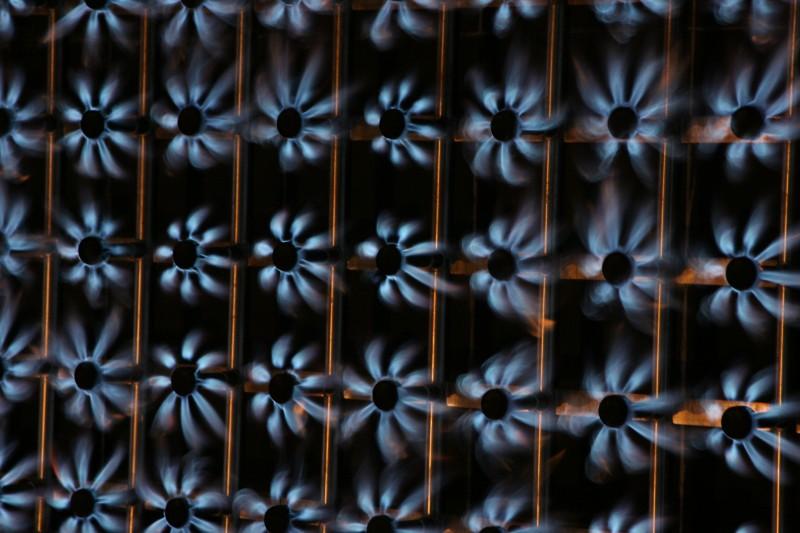
Editorial, 2020, Hélène GuéninYves Klein as seen by Hélène Guenin, Director of MAMAC Nice
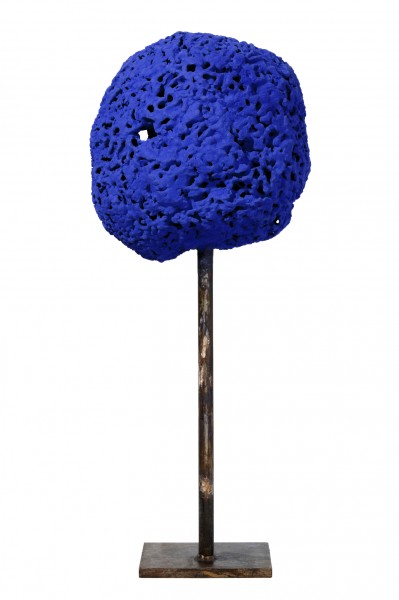
Artwork, 1960Untitled blue Sponge Sculpture, (SE 231)
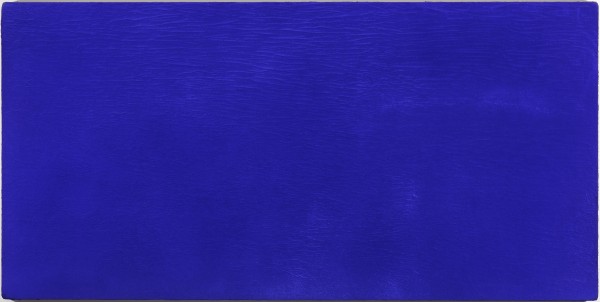
Artwork, 1957Monochrome bleu sans titre, (IKB 81)
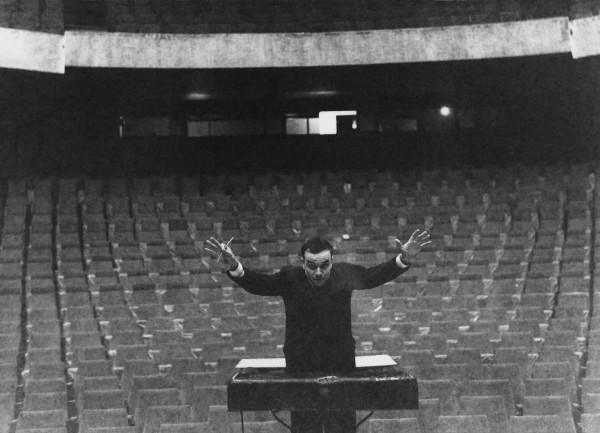
Exhibition, 1 mai 2024Monotone-Silence SymphonySt James’ Church, New York, United States
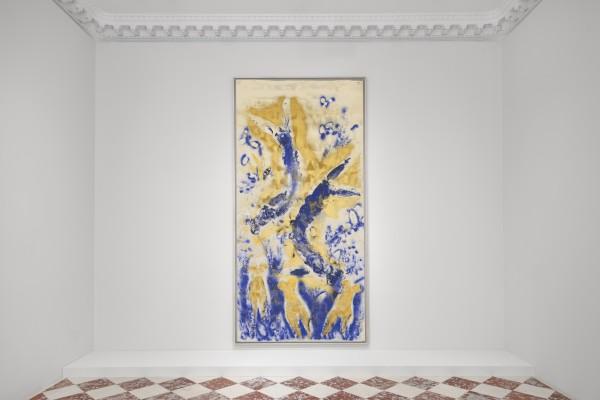
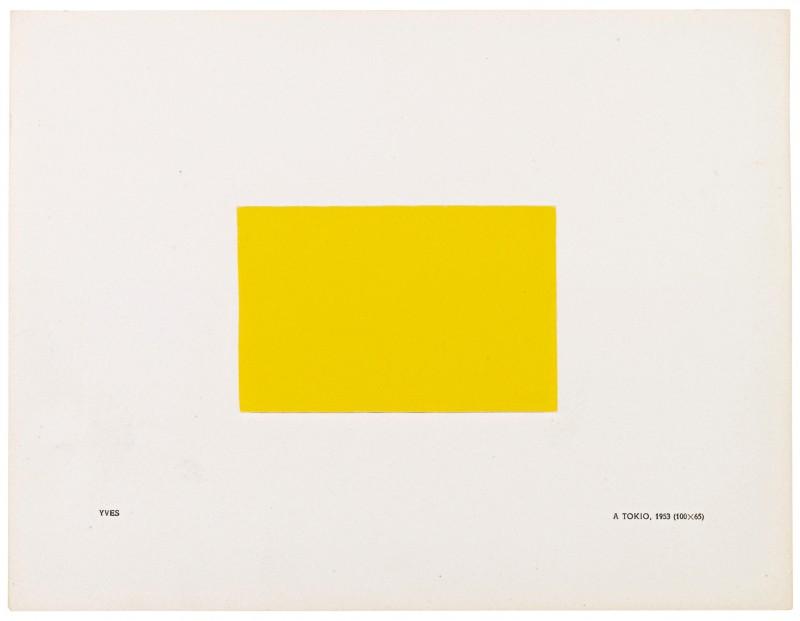
Editorial, 2022, Didier Semin”Yves Paintings” as seen by Didier Semin
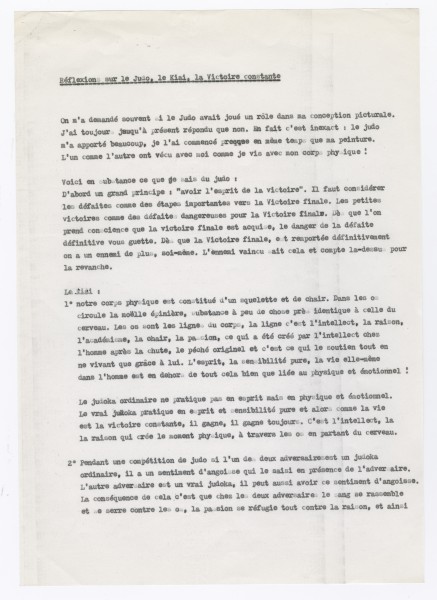
Document, 1958Yves Klein, “Reflections on Judo, Kiai and Constant Victory”
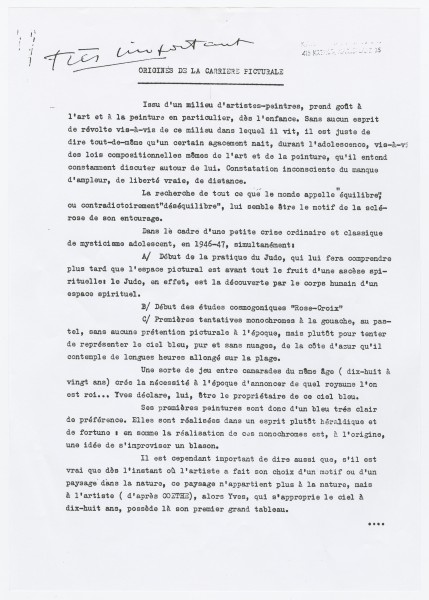
Document, 1960Origins of the Pictorial Career
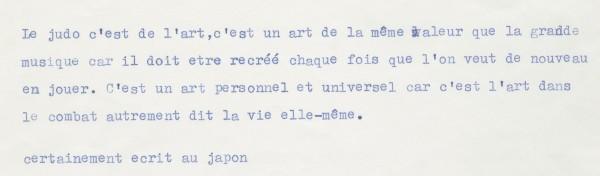
Document, 1952Yves Klein, “Judo is art…”
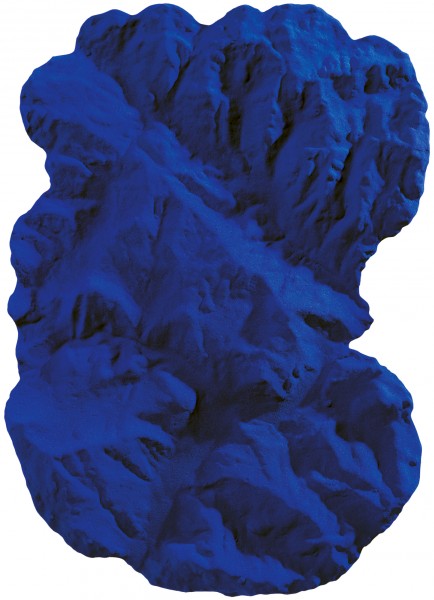
Artwork, 1961Untitled Blue Planetary Relief, (RP 4)
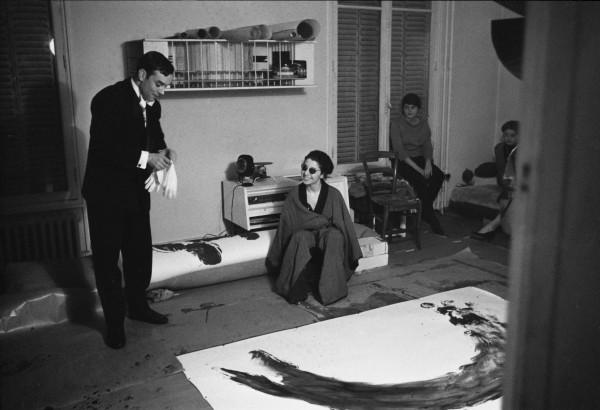
Photo, 1960Yves Klein realizing an Anthropometry with Elena in his studio (ANT 111)


CHRISTIES ( Auction House) Jan 27 2026
CHRISTIES
- Browse all
- Artists
- CHRISTIES Jan 27 2026
Yves Klein
Over the course of his tragically brief life, Yves Klein produced one of the 20th century’s most radical and esoteric bodies of work. Fascinated by the colour blue, he believed that art had the power to reveal the mysterious void underpinning human existence.
Klein was born in Nice in 1928. While sitting on the beach with his friend Arman, he symbolically ‘signed’ 6 artists have been loaded.
267 resultsSearch
Filters
Ways to Buy
- Auction (267)267 results available
- Private Sale (0)0 results available
Category
- Sculptures, Statues & Figures (145)145 results available
- Paintings (71)71 results available
- Prints & Multiples (23)23 results available
- Furniture & Lighting (16)16 results available
- Drawings & Watercolors (9)9 results available
- All other categories of objects (1)1 result available
PriceUSD
Enter low price range valueUSD
Enter high price range value
AvailabilityAll null results availableUpcoming (0)0 results availableSold (267)267 results available
Material / Medium
Date
Item Type
Origin
Yves Klein (1928-1962)
Le Rose du bleu (RE 22)Live Auction 5488 Post-War and Contemporary Art Evening Auction
.jpg?w=1)
Estimate on request
Price RealisedGBP 23,561,250
Yves Klein (1928-1962)
FC1 (Fire Color 1)
EstimateUSD 30,000,000 – 40,000,000
Price RealisedUSD 36,482,500
YVES KLEIN (1928-1962)
Anthropométrie de l’époque bleue, (ANT 124) (Anthropometry of the Blue Period), (ANT 124))
Estimate on request
Price RealisedGBP 27,197,000
Yves Klein (1928-1962)
California , (IKB 71)
Estimate on request
Price RealisedEUR 18,375,000
Yves Klein (1928-1962)
Barbara (ANT 113)
EstimateUSD 12,000,000 – 18,000,000
Price RealisedUSD 15,597,500
Yves Klein (1928-1962)
Anthropométrie “Le Buffle” (ANT 93)
EstimateUSD 8,000,000 – 12,000,000
Price RealisedUSD 12,402,500
Yves Klein (1928-1962)
Rélief éponge bleu (RE 51)
EstimateGBP 6,000,000 – 9,000,000
Price RealisedGBP 7,657,250
Yves Klein (1928-1962)
Peinture de feu couleur sans titre, (FC 27)
Estimate on request
Price RealisedGBP 5,906,500
Yves Klein (1928-1962)
Relief éponge or (RE 47 II)
EstimateGBP 5,000,000 – 7,000,000
Price RealisedGBP 5,865,250
Yves Klein (1928-1962)
Accord Bleu (Sponge Relief)
EstimateUSD 7,000,000 – 10,000,000
Price RealisedUSD 7,586,500
Yves Klein (1928-1962)
Anthropométrie (ANT 5)
EstimateGBP 1,500,000 – 2,000,000
Price RealisedGBP 4,129,250
Yves Klein (1928-1962)
Untitled Blue Monochrome (IKB 276)
EstimateGBP 4,000,000 – 6,000,000
Price RealisedGBP 3,946,250
YVES KLEIN (1928-1962)
Untitled Monogold, (MG 21)
EstimateUSD 3,000,000 – 5,000,000
Price RealisedUSD 4,980,000
Yves Klein (1928-1962)
IKB 319
EstimateUSD 1,800,000 – 2,500,000
Price RealisedUSD 4,869,000
Yves Klein (1928-1962)
Relief É ponge bleu sans titre (RE 37)
EstimateGBP 3,000,000 – 5,000,000
Price RealisedGBP 3,368,750
Yves Klein (1928-1962)
UNTITLED BLUE SPONGE SCULPTURE (SE 181)
EstimateUSD 4,000,000 – 6,000,000
Price RealisedUSD 4,645,000
Yves Klein (1928-1962)
Sculpture éponge bleue sans titre (SE 284)
EstimateGBP 2,500,000 – 3,500,000
Price RealisedGBP 3,218,500
Yves Klein (1928-1962)
Anthropométrie sans titre, (ANT 49)
EstimateUSD 3,500,000 – 4,500,000
Price RealisedUSD 4,212,500
Yves Klein (1928-1962)
SE 181
EstimateGBP 1,400,000 – 1,800,000
Price RealisedGBP 2,693,875
Yves Klein (1928-1962)
Anthropométrie sans titre, (ANT 49)
EstimateUSD 3,000,000 – 4,000,000
Price RealisedUSD 3,469,000
Yves Klein (1928-1962)
Untitled Blue Monochrome (IKB 108)
EstimateUSD 3,000,000 – 4,000,000
Price RealisedUSD 3,301,000
Recontextualization : Exhibition : Monet and Waterlilies


Water Lilies # 1 , Acrylic, gouache, felt marker, ink, watercolour, pen, watercolour pencil on canvas, 96 in x 121 in, 2011 photographed + photoshoped + reprinted , 30 in x 40 in, glicee on paper, 2019.


The Water Lilies by Claude Monet
Sections
History of the Water Lilies cycle
Texte
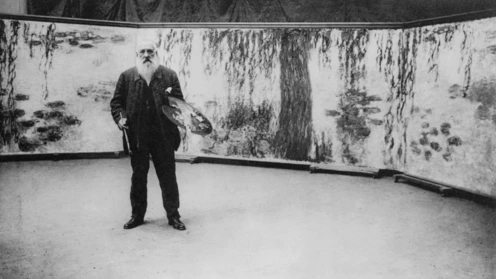
Offered to the French State by the painter Claude Monet on the day that followed the Armistice of November 11, 1918 as a symbol for peace, the Water Lilies are installed according to plan at the Orangerie Museum in 1927, a few months after his death. This unique set, a true « Sixtine Chapel of Impressionism » in the words of André Masson in 1952, testifies to Monet’s later work. It was designed as a real environment and crowns the Water Lilies cycle begun nearly thirty years before. The set is one of the largest monumental achievements of early twentieth-century painting.
Read more
© DR
Claude Monet, the impressionist of the landscape
Texte
Claude Monet was born in Paris and grew up in Normandy in the town of Le Havre. He was introduced to the representation of nature in painting through contact with the painter Eugène Boudin (1824-1898). He arrived in Paris in 1859 and entered the studio of Charles Gleyre (1806-1874), where he made the acquaintance of the painters Pierre-Auguste Renoir (1841-1919), Alfred Sisley (1839-1899) and Frédéric Bazille (1841-1870). Edouard Manet influenced him in the early 1860s, while he was developing more personal landscapes.
The eight compositions of the Water Lilies
Oeuvres Reflets d’arbres Les Nuages Le Matin clair aux saules Les Deux Saules Soleil couchant Reflets verts Matin Le Matin aux saules
Although harshly criticized at the time it appeared, Impressionism was the first art movement in history that was truly modern for its rejection of the inherited representational canons and painterly styles, as well as for the introduction of innovative tactics such as the artist’s behavior and lifestyle, important aspects that became inseparable from their artistic practices.

The founding father of this influential movement, Claude Monet introduced the fascination with the light and its changing qualities, and unusual visual angles as the main ideas expressed through en plein air landscape painting by himself and other proponents. His revolutionary style came to a peak in the early 1970s, with the iconic painting Impression, Sunrise after which the movement received its name, however, it is another work of his that made him entirely established or rather a series he has been working on for thirty years – Monet’s Water Lilies.
Giverny – The Utopia After Monet
In 1883 Monet and his large family rented the large estate located between the towns of Vernon and Gasny at Giverny that included a doubled barn used as a painting studio, orchards, and a small garden. The artist’s career rapidly grew as he started to sell his paintings, and in late 1890, Monet was able to buy the estate including the land for his gardens. The same year the family built a greenhouse and a second studio lit with skylights.
Monet’s interest in horticulture expanded after 1893 when he bought a surrounding land with a pond that eventually became the water lily garden. With the help of a small group of gardeners, the artist diverted a river, planted water lilies, along with other plants such as weeping willows, bamboo trees, and exotic flowers. Ultimately, the creation of this mesmerizingly beautiful, dreamlike landscape was affiliated with Monet’s desire to organize his property as a huge painting.
Monet started painting the water lilies in 1899, initially in vertical views with the Japanese bridge as a dominant motif and later in the series of large-scale. Throughout his lifetime, he painted more than two hundred paintings featuring this motif.

The Renowned Monet’s Water Lilies
The first Water Lilies series consisting of twenty-five canvases we shown in 1900 at the Galerie Durand-Ruel in Paris. Nine years later Monet finished the second series of forty-eight canvases. To host permanently eight water lily murals during the 1920s the French state built two oval rooms at the Musée de l’Orangerie, but the exhibit opened in 1927, just a few months after Monet’s death. In 1999 for a special exhibition at the same museum, sixty Water Lilies paintings were displayed.
The paintings can be found at museums all over the world, including the Musée d’Orsay in Paris, the Metropolitan Museum of Art, Museum of Modern Art in New York, the Saint Louis Art Museum, the Carnegie Museum of Art, the National Museum of Wales, the Musée des Beaux-Arts de Nantes, to mention a few.
The Water Lilies series set new perimeters for the modern expression, especially abstraction, and became not only Monet’s best-known works, but also the most influential series of the first half of the 20th century.
To bring you closer to the series we decided to present in chronological order ten exceptional examples of Monet’s Water Lilies that are held in the world’s leading collections.
A gorgeous new edition with the cover printed on silver. Towards the end of his life and much inspired by Japanese water gardens, Monet spent a great deal of time in his beloved Giverny. Adorned with poppies, blue sage, dahlias and irises, the waters were disturbed only by bamboos and water lilies. His water garden was originally created to satisfy a need to be near water, and to provide a visual feast that could be enjoyed from his house. The pond was fed by the river Ru, and weeping willow and silver birch hung over its edges, caressing the fronds of the greenery and blossoms below. Its famous green wooden footbridge was built across the water and it became the central focus of many of his works. He said, ‘It took me some time to understand my water lilies. I planted them for pleasure.’ and so he began to work on what is probably the most famous series of paintings the world has ever seen.
Featured image: Claude Monet – Water Lilies, between 1917 and 1919. Oil on canvas. Collection Honolulu Museum of Art. Image creative commons.

Nympheas, 1897 – 1898
One of the first paintings featuring water lilies was made between 1897 and 1898, and it set the standard for the exploration of this motif. This particular version centered on the floating water lilies and their reflections is untypical from the rest of the early works for its horizontal format.
The painting Nympheas is held at the Los Angeles County Museum of Art.
Featured image: Claude Monet – Nympheas, between circa 1897 and circa 1898. Oil on canvas. Height: 26 in (66 cm); Width: 41 in (104.1 cm). Collection Los Angeles County Museum of Art. Image creative commons.

Claude Monet

The Water-Lily Pond, 1899
The second canvas on our top list was made by the artist in 1899 when he started a series of eighteen depictions of the wooden footbridge over the pond that summer. Focused on the pond with bridge, water plants, and surrounding trees the composition is divided by a fixed horizon. As the following works will show, throughout the time Monet became less and less interested in conventional pictorial space that has become a site for experimentation.
The Water-Lily Pond is part of The Metropolitan Museum of Art collection.
Featured image: Claude Monet – The Water-Lily Pond (also known as Japanese Bridge), 1899. Oil on canvas. Height: 92.7 cm (36.4 in); Width: 73.7 cm (29 in). Collection Metropolitan Museum of Art. Image creative commons.

The Water-Lily Pond, 1900
The Water-Lily Pond is a painting produced in 1900 and is part of the first group of works devoted to this particular motif Monet devotedly explored in his garden. Like the previous work, it also features the Japanese bridge surrounded by the wisterias planted by Monet. This structure was built by a local craftsman, however, by the time the garden was restored the bridge was too damaged and had to be rebuilt.
This artwork is held at the Museum of Fine Arts Boston Collection.
Featured image: Claude Monet – The Water-Lily Pond (also known as Japanese Bridge), 1900. Collection Boston MFA. Image creative commons.

Water Lilies, 1906
This version of Claude Monet’s Water Lilies made in 1906 belongs to the second series of forty-eight canvases that Monet finished three years later. This canvas perfectly illustrates the artist’s perception and the way he focused solely on the surface of the pond amid the reflection of the sky and trees. In 1908, the artist wrote:
These landscapes of water and reflection have become an obsession. This is beyond the strength of an old man, and yet I want to express what I feel. I have destroyed some of the canvases. I begin once again. … I hope something will come of all this effort.
The Water Lilies is held at the Art Institute of Chicago collection.
Featured image: Claude Monet – Water Lilies, 1906. Oil on canvas, 89.9 × 94.1 cm (35.3 × 37 in). Collection Art Institute of Chicago. Image creative commons.

Water-Lilies, Setting Sun, circa 1907
The painting Water-Lilies, Setting Sun depicts the reflection of the yellow and pink rays of the setting sun in the still water, along with the elongated branches of a weeping willow, and lilies drifting on the water’s surface. Interestingly so, the painting was still in Monet’s studio in 1923 when he sold it to an art dealer along with a couple of other works. At the time he was preparing to undergo a cataract operation, and so he asked to keep Water-Lilies, Setting Sun for a while to observe it or perhaps work after it with renewed sight.
Water-Lilies, Setting Sun is held at the National Gallery collection.
Featured image: Claude Monet – Water-Lilies, Setting Sun, circa 1907. Oil on canvas. Height: 73 cm (28.7 in); Width: 92.7 cm (36.4 in). Collection National Gallery. Image creative commons.

Nymphéas, 1914-1917
In 1911 Monet’s second wife Alice died, and only three years later Monet was able to get back to his water lily paintings. His approach shifted, especially when it comes to the canvas size which became monumental in scale. The palette changed as well and the artist started using spots of color to accentuate the flowers. Other artists such as Paul Cezanne, the notable practitioner of Post-impressionism, and Henri Matisse, the first of the Expressionists, were dazzled by these innovations.
This version of Nymphéas is held at the National Gallery of Australia collection.
Featured image: Claude Monet – Nymphéas, c.1914-17. Oil on canvas. Height: 1,810 mm (71.25 in); Width: 2,016 mm (79.37 in). Collection National Gallery of Australia. Image creative commons.
Works by Claude Monet
(Showing 20 of 20 works)


Not on display


La Pointe de la Hève, Sainte-Adresse
Not on display


Not on display

The Petit Bras of the Seine at Argenteuil
On display elsewhere

Not on display


Private: Recontextualization Painting : Exhibition: Louis Vuitton
Thinking of Frank Llyod Wright, Gerrit Rietveld, Theo van Doesburg, Le Courbusier, and lines in Modern Early Twentieth architecture, including Modernist painting, like Mondrian, I created this series of lines flowing in a type of geometric pattern of horizontal and vertical waves. Adding primary and secondary colors, with a white background gives the work an added layer of echoing a fashion design, like Louis Vuitton or Dolce and Gabbana, hand bag or blouse. The lines also have a partial reference to a broken grid or maze.
With this series, I will make small drawings 9 in x 12 in, scan the drawings, and then enlarge them to very large giclee prints, 48 in x 60 in. Also, these studies will be repainted as 8 feet x 12 feet canvas acrylic paintings.

Louis Vuitton # 1 ( Study ), felt marker on artist paper, 9 in x 12 in, 2024

Louis Vuitton # 2 ( Study ), felt marker on artist paper, 9 in x 12 in, 2024

Louis Vuitton # 3 ( Study ), felt marker on artist paper, 9 in x 12 in, 2024

Louis Vuitton # 4 ( Study ), felt marker on artist paper, 9 in x 12 in, 2024

Louis Vuitton # 5 ( Study ), felt marker on artist paper, 9 in x 12 in, 2024

Louis Vuitton # 6 ( Study ), felt marker on artist paper, 9 in x 12 in, 2024
LOUIS VUTTON ( ON LINE WEBSITE )
https://ca.louisvuitton.com/eng-ca/homepage
Louis Vuitton x Murakami
iconic re-edition
Louis Vuitton x Murakami


Women
New In Bags
- CarryAll BB $3,450.00

$3,600.00
$3,500.00
$3,750.00
Men
Spring-Summer 2025
- Steamer 30 $12,800.00

Private: Recontextualization Painting : Exhibition: Joseph Albers
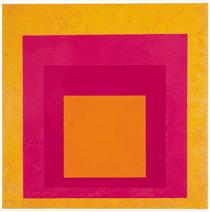
Exhibition: Square Re- Framed ( Study in the Variation of Rectangle- Joseph Albers #1 )
This is a series of prints looking at the the simplicity of square and rectangle and colour.
This is a series of prints extending the abstract artist Joseph Albers’s interest in the square, color, and abstraction. The work of Albers presents like a system, or mathematical formula, something rational and objective in one way, like a philosophical question or rational experience of line, shape, form. However, because of colour’s emotional lens, his works can also illicit emotive pleasure. However, because most of his works are small scale, under 2 feet by 2 feet, this emotive lens is limited or small. In contrast, larger colour field paintings, like a Rothko canvas of 10 feet by 8 feet, whose large paintings colour create a wave of emotion. Albers rather reveals both an intimate emotive experience mixed with the analytical , a non personal emotion, a mathematical structure. Because Albers creates squares within squares we are focused ” in” the space of the painting, whereas Rothko takes our emotive experience in and outside the edges of the painting, connecting his paintings to the world outside of the painting. Joseph Albers, on the other hand, seems to be painting objects which are more autonomous from the external everyday world, that are less connected to the world, culture, ideas, outside the painting, because our experience of the painting is more about the object, about lines, about the colours relating within the canvas, and experience inside the frame. I suggest, Alber’s painting, is more a philosophical question, than emotive or experiential, whereas Rothko is more “emotive”, “experiential”, ” visceral”, which sends our experience of the colours from his painting, out into the world, where such colours and emotions mix with our experiential lives. Albers’s colour, goes into our minds. Rothko, goes into our soul. My series, “re- framing the square”, is finding the space between an Albers internal philosophical and Rothko emotive externality

Joseph Albers Square Painting # 1, acrylic on paper, 9 in x 6 in, photoshoped + reprinted ,Giclee print on paper, 27 in x 18 in, 2024

Joseph Albers Square Painting # 2, acrylic on paper, 9 in x 6 in, photoshoped + reprinted ,Giclee print on paper, 27 in x 18 in, 2024

Joseph Albers Square Painting # 3, acrylic on paper, 9 in x 6 in, photoshoped + reprinted ,Giclee print on paper, 27 in x 18 in, 2024

Joseph Albers Square Painting # 4, acrylic on paper, 9 in x 6 in, photoshoped + reprinted ,Giclee print on paper, 27 in x 18 in, 2024

Joseph Albers Square Painting # 5, acrylic on paper, 9 in x 6 in, photoshoped + reprinted ,Giclee print on paper, 27 in x 18 in, 2024

Joseph Albers Square Painting # 6, acrylic on paper, 9 in x 6 in, photoshoped + reprinted ,Giclee print on paper, 27 in x 18 in, 2024

Joseph Albers Square Painting # 7, acrylic on paper, 9 in x 6 in, photoshoped + reprinted ,Giclee print on paper, 27 in x 18 in, 2024

Joseph Albers Square Painting # 8, acrylic on paper, 9 in x 6 in, photoshoped + reprinted ,Giclee print on paper, 27 in x 18 in, 2024

Joseph Albers Square Painting # 9, acrylic on paper, 9 in x 6 in, photoshoped + reprinted ,Giclee print on paper, 27 in x 18 in, 2024
Joseph Albers Square Painting # 10, acrylic on paper, 9 in x 6 in, photoshoped + reprinted ,Giclee print on paper, 27 in x 18 in, 2024
Joseph Albers Square Painting # 11, acrylic on paper, 9 in x 6 in, photoshoped + reprinted ,Giclee print on paper, 27 in x 18 in, 2024

Joseph Albers Square Painting # 12, acrylic on paper, 9 in x 6 in, photoshoped + reprinted ,Giclee print on paper, 27 in x 18 in, 2024

Joseph Albers Square Painting # 13, acrylic on paper, 9 in x 6 in, photoshoped + reprinted ,Giclee print on paper, 27 in x 18 in, 2024

Joseph Albers Square Painting # 14, acrylic on paper, 9 in x 6 in, photoshoped + reprinted ,Giclee print on paper, 27 in x 18 in, 2024

Joseph Albers Square Painting # 15, acrylic on paper, 9 in x 6 in, photoshoped + reprinted ,Giclee print on paper, 27 in x 18 in, 2024

Home/Artists/ Constructivism /Josef Albers
Josef Albers
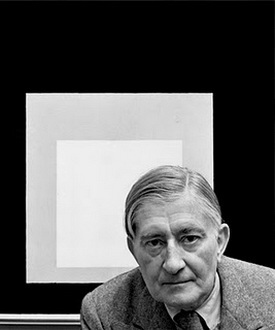
Born:March 19, 1888; Bottrop, GermanyDied:March 25, 1976; New Haven, United StatesActive Years:1915 – 1976Nationality:GermanArt Movement:Constructivism, Concrete Art (Concretism), Abstract ArtPainting School:BauhausGenre:abstractField:painting, printmaking, design, photographyInfluenced by:Piet Mondrian, Wassily Kandinsky, Kazimir Malevich, Bauhaus, Suprematism, Futurism, Constructivism, ExpressionismInfluenced on:Ad Reinhardt, Kuno Gonschior, Samia HalabyArt institution:Akademie der Bildenden Künste München (Munich Academy), Munich, Germany, Black Mountain College, Black Mountain, NC, US, Yale School of Art (Yale University), New Haven, CT, USFriends and Co-workers:Paul KleeWikipedia:en.wikipedia.org/wiki/Josef_AlbersOfficial site:albersfoundation.org
ArticleWikipedia articleReferences
Josef Albers was a painter, poet, sculptor, and theoretician, best known for his iconic series of abstract paintings, the Homage to the Square series. He also was an educator whose work, both in Europe and in the United States, formed the basis of some of the most influential and far-reaching art education programs of the 20th century.
Born on March 19, 1888, in Bottrop, Germany, Albers enrolled as a student at the newly opened Bauhaus school in Weimar in 1920. The Bauhaus, which advocated for the synthesis of fine art and craftsmanship, soon became one of the most influential design schools in Germany. In 1922 Albers became a faculty member at the Bauhaus and was promoted to professor in 1925. Around this time, he also married Anni Fleischmann, who was a student at the school. During this period, Albers explored many different media like furniture design, glasswork, metalwork, typography, and photography. Some of his notable works from the time include sandblasted flashed glass artworks like Impossibles (1931) and Rolled Wrongly (1931). After the Nazi government closed the Bauhaus in 1933, Albers and his wife immigrated to the United States.
On the recommendation of architect Philip Johnson, both Albers and Anni were offered positions at the experimental Black Mountain College in North Carolina. He served as the head of the painting department between 1939-1949, and he taught the likes of Cy Twombly and Robert Rauschenberg. While he was teaching, Albers continued to develop his artistic practice. In 1947 he began working on the series Adobe/Variants, which was inspired by Mexican architecture. The series combined two characteristics of Albers’s art: his exploration of color theory and his background in design and architecture. Paintings from the series like Variant/Adobe: Familiar Front (1948) and Red Wall (1947-1956) explored how different colors interact when placed next to one another.
In 1950, Albers left Black Mountain College to head the design program at Yale University in New Haven, Connecticut. From this point, Albers mainly focused on two key series: Homage to the Square and Structural Constellation. In the series Structural Constellation, Albers created various compositions of rotationally straight lines, that can be described as two-dimensional renderings of three-dimensional objects. Structural Constellation deals with perceptual ambiguity: the artist’s carefully planned configurations like Structural Constellation: Alpha (1954) depict a floating geometric form that can simultaneously be viewed in multiple ways. From 1949 Albers began working on his signature series of prints and paintings, Homage to the Square. Paintings from the series like Homage to the Square: Apparition (1959) and Study for Homage to the Square: Departing in Yellow (1964) are based on a compositional scheme of squares in different colors and arrangements. Through the various examples in the series, Albers examined his color theory and how colors interact when placed next to one another. Correspondingly, he documented these effects in his writings, and in 1963, he published the book Interaction of Color (1963), which provided a complex explanation of principles of color theory. The book is considered a masterwork in art education, and it remains an essential source of color theory.
In the later stages of his career, Albers also created murals. In 1959, his mural Two Structural Constellations (1959) was engraved in the lobby of the Corning Glass Building in Manhattan. His monumental mural, Manhattan (1963), that was an homage to New York, was installed in the Pan Am Building in New York City. Albers died at the age of 88, on March 25, 1976, in New Haven, Connecticut.More …
Josef AlbersArtworks
Private: Conceptual: Exhibition: Landscape: Universe Landscape

Exoplanet Kepler-186f , acrylic and gouache on paper, 9 in x 12 in, 2023 ( photographed + photoshop + reprinted giclee on paper, 18 in x 24 in, 27 in x 36 in, 36 in x 48 in, 2023)

Gliese 667Cc , acrylic and gouache on paper, 9 in x 12 in, 2023 ( photographed + photoshop + reprinted giclee on paper, 18 in x 24 in, 27 in x 36 in, 36 in x 48 in, 2023)

Exoplanet Nu2 Canis Majoris b, acrylic and gouache on paper, 9 in x 12 in, 2023 ( photographed + photoshop + reprinted giclee on paper, 18 in x 24 in, 27 in x 36 in, 36 in x 48 in, 2023)

ExoplanetGliese 433 , acrylic and gouache on paper, 9 in x 12 in, 2023 ( photographed + photoshop + reprinted giclee on paper, 18 in x 24 in, 27 in x 36 in, 36 in x 48 in, 2023)

ExoplanetHAT-P-27 , acrylic and gouache on paper, 9 in x 12 in, 2023 ( photographed + photoshop + reprinted giclee on paper, 18 in x 24 in, 27 in x 36 in, 36 in x 48 in, 2023)

ExoplanetHD 137388 / Karaka , acrylic and gouache on paper, 9 in x 12 in, 2023 ( photographed + photoshop + reprinted giclee on paper, 18 in x 24 in, 27 in x 36 in, 36 in x 48 in, 2023)

ExoplanetGJ 3470 b / Phailinsiam , acrylic and gouache on paper, 9 in x 12 in, 2023 ( photographed + photoshop + reprinted giclee on paper, 18 in x 24 in, 27 in x 36 in, 36 in x 48 in, 2023)

ExoplanetKELT-2Ab , acrylic and gouache on paper, 9 in x 12 in, 2023 ( photographed + photoshop + reprinted giclee on paper, 18 in x 24 in, 27 in x 36 in, 36 in x 48 in, 2023)

ExoplanetHD 40307 e , acrylic and gouache on paper, 9 in x 12 in, 2023 ( photographed + photoshop + reprinted giclee on paper, 18 in x 24 in, 27 in x 36 in, 36 in x 48 in, 2023)

ExoplanetHAT-P-38b/Hiisi , acrylic and gouache on paper, 9 in x 12 in, 2023 ( photographed + photoshop + reprinted giclee on paper, 18 in x 24 in, 27 in x 36 in, 36 in x 48 in, 2023)
Exoplanet Gliese 163 , acrylic and gouache on paper, 9 in x 12 in, 2023 ( photographed + photoshop + reprinted giclee on paper, 18 in x 24 in, 27 in x 36 in, 36 in x 48 in, 2023)

ExoplanetGliese 163 c , acrylic and gouache on paper, 9 in x 12 in, 2023 ( photographed + photoshop + reprinted giclee on paper, 18 in x 24 in, 27 in x 36 in, 36 in x 48 in, 2023)

ExoplanetKELT-6b , acrylic and gouache on paper, 9 in x 12 in, 2023 ( photographed + photoshop + reprinted giclee on paper, 18 in x 24 in, 27 in x 36 in, 36 in x 48 in, 2023)

Exoplanet Kepler-37 , acrylic and gouache on paper, 9 in x 12 in, 2023 ( photographed + photoshop + reprinted giclee on paper, 18 in x 24 in, 27 in x 36 in, 36 in x 48 in, 2023)

Exoplanet Kepler-138 , acrylic and gouache on paper, 9 in x 12 in, 2023 ( photographed + photoshop + reprinted giclee on paper, 18 in x 24 in, 27 in x 36 in, 36 in x 48 in, 2023)


Exoplanet LHS 1140 b, acrylic and gouache on paper, 9 in x 12 in, 2023 ( photographed + photoshop + reprinted giclee on paper, 18 in x 24 in, 27 in x 36 in, 36 in x 48 in, 2023)
Exoplanet Kepler-452b, acrylic and gouache on paper, 9 in x 12 in, 2023 ( photographed + photoshop + reprinted giclee on paper, 18 in x 24 in, 27 in x 36 in, 36 in x 48 in, 2023)
Private: Conceptual Painting: Exhibition: Landscape: Romantic Canadian Landscape
Exhibition (Recontextualization Landscape Painting): Great Canadian Landscapes
Exhibition : Landscapes of Canada
An exhibition presenting abstract landscapes, of places I would like to visit in Canada. This work emulates the Group of Seven, except I am exploring Canada through the internet and my imagination of those places, to then translate those places into abstract paintings. These landscape paintings can be seen as surrealist works. A great part of Canadian identity is our landscape and relationship to the land. There is great energy and visceral beauty in the land.

Manitoulin Island, Ontario ( Canadian Landscape) , acrylic and gouache on paper, 6 in x 9 in, 2025 ( photographed + photoshop + reprinted giclee on paper, 24 in x 36 in, 30 in x 45 in, 36 in x 54 in , 2025)

Algonquin Provincial Park( Canadian Landscape), acrylic and gouache on paper, 6 in x 9 in, 2025 ( photographed + photoshop + reprinted giclee on paper, 24 in x 36 in, 30 in x 45 in, 36 in x 54in ,2025)

Bay of Fundy, New Brunswick/Nova Scotia,( Canadian Landscape). acrylic and gouache on paper, 6 in x 9 in, 2025 ( photographed + photoshop + reprinted giclee on paper, 24 in x 36 in,30 in x 45 in, 36 in x 54 in , 2025)

The Prairies, Saskatchewan / Manitoba,( Canadian Landscape), acrylic and gouache on paper, 6 in x 9 in, 2025 ( photographed + photoshop + reprinted giclee on paper, 24 in x 36 in, 30 in x 45 in, 36 in x 54 in ,2025)

The Northwest Passage, Nunavut, ( Canadian Landscape) acrylic and gouache on paper, 6 in x 9 in, 2025 ( photographed + photoshop + reprinted giclee on paper, 24 in x 36 in,30 in x 45 in, 36 in x 54 in , 2025)

Dinosaur Provincial Park( Canadian Landscape) , acrylic and gouache on paper, 6 in x 9 in, 2025 ( photographed + photoshop + reprinted giclee on paper, 24 in x 36 in,30 in x 45 in, 36 in x 54 in , 2025)

Nahanni National Park Reserve, Northwest Territories ( Canadian Landscape) , acrylic and gouache on paper, 6 in x 9 in, 2025 ( photographed + photoshop + reprinted giclee on paper, 24 in x 36 in,30 in x 45 in, 36 in x 54 in , 2025)

Gros Morne National Park, Newfoundland ( Canadian Landscape) , acrylic and gouache on paper, 6 in x 9 in, 2025 ( photographed + photoshop + reprinted giclee on paper, 24 in x 36 in,30 in x 45 in, 36 in x 54 in , 2025)

Great Bear Rainforest, B.C. ( Canadian Landscape) , acrylic and gouache on paper, 6 in x 9 in, 2025 ( photographed + photoshop + reprinted giclee on paper, 24 in x 36 in, 30 in x 45 in, 36 in x 54 in ,2025)

Canadian Badlands, Alberta( Canadian Landscape) , acrylic and gouache on paper, 6 in x 9 in, 2025 ( photographed + photoshop + reprinted giclee on paper, 24 in x 36 in, 30 in x 45 in, 36 in x 54 in ,2025)

Niagara Falls, Ontario ( Canadian Landscape) , acrylic and gouache on paper, 6 in x 9 in, 2025 ( photographed + photoshop + reprinted giclee on paper, 24 in x 36 in,30 in x 45 in, 36 in x 54 in , 2025)

Drumheller Alberta ( Canadian Landscape) , acrylic and gouache on paper, 6 in x 9 in, 2025 ( photographed + photoshop + reprinted giclee on paper, 24 in x 36 in,30 in x 45 in, 36 in x 54 in , 2025)

Drumheller Alberta ( Canadian Landscape) , acrylic and gouache on paper, 6 in x 9 in, 2025 ( photographed + photoshop + reprinted giclee on paper, 24 in x 36 in,30 in x 45 in, 36 in x 54 in , 2025),2025)

Banff National Park, Alberta( Canadian Landscape), acrylic and gouache on paper, 6 in x 9 in, 2025 ( photographed + photoshop + reprinted giclee on paper, 24 in x 36 in, 30 in x 45 in, 36 in x 54 in ,2025)

Red Coast, Prince Edward Island ( Canadian Landscape) , acrylic and gouache on paper, 6 in x 9 in, 2025 ( photographed + photoshop + reprinted giclee on paper, 24 in x 36 in,30 in x 45 in, 36 in x 54 in , 2025)

Athabasca Sand Dunes ( Canadian Landscape) , acrylic and gouache on paper, 6 in x 9 in, 2025 ( photographed + photoshop + reprinted giclee on paper, 24 in x 36 in, 30 in x 45 in, 36 in x 54 in ,2025)

The Valley of Ten Peaks, Banff Alberta ( Canadian Landscape) , acrylic and gouache on paper, 6 in x 9 in, 2025 ( photographed + photoshop + reprinted giclee on paper, 24 in x 36 in, 30 in x 45 in, 36 in x 54 in ,2025)

Aurora Borealis, Manitoba ( Canadian Landscape) , acrylic and gouache on paper, 6 in x 9 in, 2025 ( photographed + photoshop + reprinted giclee on paper, 24 in x 36 in,30 in x 45 in, 36 in x 54 in , 2025)


CANADIAN LANDSCAPES
As the world’s second-largest country, Canada is home to many stunning locales, ranging from large metropolises and iconic national parks to quaint small towns and remote islands. With so many options, narrowing down the ultimate Great White North itinerary can feel overwhelming.
To help you make the most of your trip, Jessica Renshaw, a travel advisor at Renshaw Travel, recommends working with a professional who, like her, specializes in all things Canada. She notes, for instance, that “certain locations in Canada are best to self-drive, while others will [require] you to access remote wilderness, either by seaplane or charter plane.”
With that in mind, here’s our list of the most beautiful places in Canada, including recommendations from Renshaw and five other travel experts.
01of 25
Niagara Falls, Ontario
:max_bytes(150000):strip_icc()/TAL-niagra-falls-BEAUTYCANADA0623-81c09c5d99fe4bbeb58ba80a39effb20.jpg)
“Niagara Falls is such a quintessential travel destination, it almost feels campy,” says Fora Travel co-founder and advisor Henley Vazquez, “but the falls are incredible.“ It’s actually composed of three separate waterfalls—Horseshoe Falls (also called Canadian Falls), American Falls, and Bridal Veil Falls—and the best way to see them is by boat. Alternatively, adventure seekers can tie their laces tight and follow one of the hiking trails for postcard-worthy views of the falls.
02of 25
Joffre Lakes Park, British Columbia
:max_bytes(150000):strip_icc()/TAL-joffre-lake-park-BEAUTYCANADA0623-80703e77bd9d4aa3b9dad5ba45cd75df.jpg)
With ice-capped peaks and turquoise-hued lakes, Joffre Lakes Park in British Columbia is a sight to behold. “Hike Joffre Lakes Trail, and make sure to go to the top so you don’t miss the beauty of all three lakes,” says Fora travel advisor, Dahlia Swerdloff. In colder months, the park transforms into a snow globe-esque winter wonderland with myriad skiing and snowshoeing opportunities.
03of 25
Clayoquot Sound, British Columbiaacrylic and gouache on paper, 6 in x 9 in, 2025 ( photographed + photoshop + reprinted giclee on paper, 24 in x 36 in, 2025)

https://canadiantrainvacations.com/blog/canada-top-natural-wonders
Top 12 Canadian Natural Wonders
By Lisa Kadane
Published Feb 10, 2025
11 min read
See the natural wonders of Canada on a train vacation across the country. Many travelers come to Canada for its stunning natural beauty and pristine wilderness. Nearly every landscape on Earth can be found within its borders, from desert to rainforest to high arctic. Waterfalls, mountains, prairies, boreal forest, glacial lakes — Canada has it all.

Since 1996, the travel experts at Canadian Train Vacations have been helping guests to Canada plan their perfect trip. Each itinerary is personalized to your needs and interests — you can choose your train experiences, hotel accommodations, activities, and tours. Visits to many Canadian natural wonders, like Niagara Falls and Banff National Park, are included in our itineraries.
Unique Characteristics of Canadian Landscapes
Canada’s natural landscapes, stretching across nearly 10 million square kilometres, offer a breathtaking display of geographic diversity. From the soaring peaks of the Rocky Mountains in the west, reaching heights of over 3,000 metres, the serene lakes of the ancient Canadian Shield in the east, and the picturesque coasts of the Maritimes, each region has its own allure.
[ Read: Best Time to go to Maritimes ]
The country boasts a network of over 40 national parks and reserves, including UNESCO-listed sites like Nahanni National Park Reserve and other Canadian wonders. These protected areas safeguard the country’s rich ecosystems. In the northern parts of Canada, the Northern Lights (Aurora Borealis) grace the skies over 200 days annually.
While there are many natural attractions in Canada, some are more famous than others. Niagara Falls, the Rockies, the Cabot Trail, Nahanni National Park Reserve, the Northern Lights, and the Bay of Fundy are among the top 7 natural wonders of Canada. Landscapes in Canada are varied, so it’s worth visiting different provinces and regions.
[ Read: When did Canada become a Country ]
1. Niagara Falls, Ontario
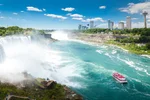
Niagara Falls is one of the most well-known natural landmarks in Canada. Straddling the border between Canada and the United States, Niagara Falls churns 7,500 bathtubs worth of water over its brink every second, making it the world’s second largest waterfall by volume. It’s not as high as Angel Falls nor as wide as Victoria Falls, but, thanks to the Great Lakes that feed it, it’s much wetter. Niagara Falls creates a constant mist, a deafening roar and an eternal rainbow that shifts between the two countries.
The spectacle is mesmerizing, and it’s easy to understand why this wonder of nature has drawn daredevils, honeymooners and tourists for the past 200 years. Get close to the falls on a thrilling Hornblower cruise or take the Journey Behind the Falls tour, which leads you to two outdoor observation decks. When you’ve had your fill of water, there are lots of other things to do in Niagara Falls like head to some of the 160 wineries on the Niagara Peninsula, go for a hike in Niagara Glen, or browse the boutiques in charming Niagara-on-the-Lake.
[ Read: How to Plan a Trip to Niagra Falls ]
Quick Facts:
- Niagara Falls is three waterfalls: American Falls, Bridal Veil Falls, and Horseshoe Falls
- During peak season, 168,000 cubic metres of water (6 million cubic feet) go over Horseshoe Falls every minute
#1 Travel tip: New Niagara Falls attraction
Get a whole new view of the falls at the Niagara Parks Power Station, where you can explore a 2,200-foot long historic tunnel to an observation deck at the river’s edge.
Carolyn Camilleri
Travel Writer
2. Banff National Park, Alberta
Some of the best nature in Canada can be found in the four Canadian Rockies national parks, including Banff National Park.
With alpine lakes as blue as Switzerland’s, and mountains to rival the Matterhorn, there’s no need to travel to the Alps when you can have a Rocky Mountain high that makes you want to yodel in Canada. It’s not just the scenery that conjures Switzerland, but Banff National Park’s history, too.
[Read: Best time to go to Banff ]
Between 1899 and 1954, the Canadian Pacific Railway recruited Swiss guides to work for its luxurious railway hotels, including the Banff Springs Hotel and the Château Lake Louise. They guided first ascents of nearby peaks, taught climbing techniques to newbie mountaineers, and led tourists on hikes and horse trips into Banff National Park. You can still join guided hikes at Lake Louise, such as the iconic trek up to the Plain of the Six Glaciers and an adorable alpine tea house built by Swiss guides in 1924. Other popular activities in Banff in the summer include canoeing, wildlife viewing, and horseback riding. During the winter season, you can go skiing, snowshoeing, ice skating, and more.
Quick Facts:
- Banff is Canada’s first National Park and was established in 1885
- There are more than 1,000 miles of hiking trails in Banff National Park
- Banff National Park covers 6,641 square kilometres (2,564 square miles)
[ Read: Facts about Banff National Park ]
Get free travel guides and tips!
Receive travel guides, travel tips, new trip details, and exclusive offersEmail
By submitting this form, you agree to our collection and use of your personal data as detailed in our Privacy Policy. Your information will be used to process your request and improve our services.
3. Aurora Borealis, Manitoba
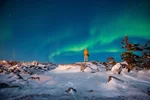
You can see many natural wonders in Canada, including the Northern Lights. Galileo named the Northern Lights after Aurora, the goddess of the dawn, and Boreas, the wind of the north. They appear as a dream in the middle of the night—a kaleidoscope of phosphorescent green, yellow, pink and magenta that shimmers and dances across the sky in what can only be described as nature’s fireworks display.
Though the Aurora Borealis can be seen in many northern countries, from Iceland to Russia, Churchill in Manitoba is considered one of the best places in the world to see the charged particles of light hitting the Earth’s atmosphere, with best viewing between November and March. In the fall, the area is also known as the Polar Bear Capital of the World.
[ Explore: Best Places to See Northern Lights in Canada ]
Quick Facts:
- Aurora activity occurs around 300 nights per year in Churchill
- You are more likely to see the Northern Lights when there are clear, dark skies
- Other top Canadian destinations for Northern Lights viewing include Yellowknife (Northwest Territories) and Whitehorse (Yukon)
4. The Cabot Trail, Nova Scotia
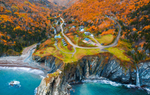
Considered one of North America’s most scenic drives, The Cabot Trail winds 298 km around Cape Breton, an island off the coast of Nova Scotia. It rolls over rounded hills, and through lush valleys and Cape Breton Highlands National Park, often hugging the coast with dramatic views of the Atlantic Ocean and rugged beaches below.
Every autumn, The Cabot Trail’s fall colours wow when the island’s forests of sugar maples, yellow birch, American beech and tamaracks turn into a quilt of vivid red, purple, orange, yellow and green. Not only are leaf peepers rewarded at every turn with postcard vistas that rival Vermont’s, there are plenty of other things to do in Cape Breton including scenic strolls, sampling craft beer or staying at a cozy inn.
Quick Facts:
- The Cabot Trail covers 298 kilometres (185 miles) on Cape Breton Island
- It takes about five hours (without stops) to drive the length of the Cabot Trail
[ Read: Best Time to visit Nova Scotia ]
5. Great Bear Rainforest, B.C.
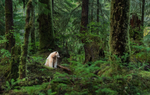
You won’t find any anacondas creeping through the undergrowth here, but you may stumble across slugs the size of chocolate bars in the Great Bear Rainforest, also called the Amazon of the North. This 21-million-acre protected coastal temperate rainforest in northern B.C. wows with 1,000-year-old Western red cedars, glacier-cut fjords and rare sightings of the cream-coloured Kermode bear or Spirit bear, which is actually a black bear with a recessive gene that turns its coat almost white. You can also spot sea otters and orcas from a kayak, or go with a guide to seek out the grizzly bears that congregate by coastal rivers to feast on Coho during the salmon run every fall. By night, slumber in a remote lodge and listen for the eerie howl of gray wolves.
Quick Facts:
- The Great Bear Rainforest stretches across 21 million acres (6.4 million hectares)
- It stretches for 402 kilometres (250 miles) along the coast of British Columbia
- It is one of the largest temperate rainforests in the world
- The region receives substantial rainfall, with some areas receiving over 2-4 metres (6-13 feet) of rain annually
6. The Northwest Passage, Nunavut
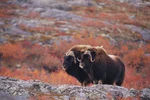
History and mystique merge along the dramatic waters of The Northwest Passage. For centuries, this fabled route — which connects the Atlantic and Pacific Oceans through the Arctic Ocean above Canada — attracted explorers looking for a shortcut to the riches in Eastern Asia. For modern-day voyagers, there’s plenty to discover along this frozen realm, with its glaciers, scenic fjords and inlets, ice caves, rocky spires and drifting icebergs. The ice-strewn waters are home to thick-billed murres, ivory gulls, beluga and bowhead whales. You may even spot a narwhal, the unicorn of the sea.
Quick Facts:
- The Northwest Passage is a historic and navigable sea route through the Arctic Ocean. It extends about 1,450 kilometres (900 miles)
- In 1906, Norwegian explorer Roald Amundsen became the first to navigate the entire Northwest Passage, a journey that took him three years
[ Read: Best Time to visit Canada ]
7. Columbia Icefields, Alberta
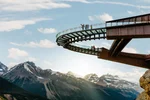
One of the amazing natural attractions in Canada is the Columbia Icefields.
Glacier-capped peaks are strung like pearls along the length of the Icefields Parkway, a 232-km drive between Lake Louise and Jasper that passes through two national parks in the Canadian Rockies. The stars of the drive are, of course, the Columbia Icefields, an enormous glacial ice cap whose frozen blue tongues lick down between the rocky spires and are easily accessible from the road. It’s the world’s largest collection of glaciers—there are more than 100—south of the Arctic Circle (no need to travel to Greenland after all).
[ Read: Things to do in Jasper National Park ]
Hike up Parker Ridge for a drones-eye view of the Saskatchewan Glacier, the region’s longest, or ride a snowcoach onto the Athabasca Glacier for a guided walk atop the shifting ice. You can also fly over the Columbia Icefields in a helicopter, or get a dizzying view from the Columbia Icefield Skywalk.
Quick Facts:
- The Columbia Icefields covers an area of approximately 325 square kilometres (125 square miles) and straddles the border between Alberta and British Columbia
- In some areas, the ice in the Columbia Icefields is estimated to be as deep as 365 metres (1,200 feet)
- The icefield is the primary source of several major glaciers and rivers in the region, including the Athabasca River, which flows eastward through Jasper National Park
#2 Travel tip: Drive the Icefields Parkway
The best way to transfer between Banff and Jasper is on a small guided tour through the Icefields Parkway. Stops include the Athabasca Glacier, the Skywalk and various waterfalls.
Katherine Foxcroft
Product Manager, Tours and Vacations
8. Nahanni National Park Reserve, Northwest Territories
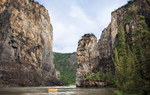
From the top of the Ram Plateau, a table of dolomite rock surrounded by the Mackenzie Mountains, you’d be forgiven for thinking you were in the Grand Canyon. Here in Nahanni National Park Reserve, one of Canada’s UNESCO World Heritage Sites, the earth gives way to a series of plunging canyons hemmed in by eroded buttes and mesas that look eerily like the American Southwest.
This incredible landscape is one reason people travel to the Northwest Territories. The other is to raft the South Nahanni, a Canadian Heritage River with rapids, a riverside hot springs, a waterfall twice the height of Niagara Falls, and the chance to see wildlife such as bears, caribou and dall sheep. Add in the towering, jagged peaks that mark the Cirque of the Unclimables, and you’ll want to add the Nahanni to your bucket list.
Quick Facts:
- One of the park’s most famous features is Virginia Falls. Virginia Falls plunges down approximately 96 metres (315 feet), making it one of the highest waterfalls in Canada
- The park is home to some of the deepest canyons in North America, with depths reaching up to 1,000 metres (3,280 feet)
Download our Brochures and Mini Guides
9. Gros Morne National Park, Newfoundland
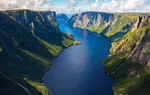
One of Canada’s most iconic views is from the top of Western Brook Pond fjord in Newfoundland. Gazing out you’ll see flat-topped mountains slope into green-robed cliffs that dramatically meet the sea. It looks just like Trolltunga, Norway’s Instagrammable fjord—minus the rock outcrop for dangerous selfies and the grueling 12-hour hike to get there. In Gros Morne, named for the province’s second highest peak, the views are a little more accessible. To get this snap it’s a short walk to the dock, a boat ride to the mouth of the fjord, and a four-hour hike to the top of the gorge—you’ll be back in time for a beer at the pub, and be ready to explore the rest of the park’s incredible landscape the following day.
Quick Facts:
- Gros Morne National Park was established in 1973, making it over 50 years old. It was designated as a UNESCO World Heritage Site in 1987
- The park covers approximately 1,805 square kilometres (697 square miles). The vast expanse of wilderness includes fjords, mountains, forests, and unique geological features
- The park’s namesake, Gros Morne Mountain, stands at an elevation of 806 metres (2,644 feet) above sea level
[ Read: Best Places to visit in Canada during Summer ]
10. Canadian Badlands, Alberta
Near Drumheller, flat prairie abruptly gives way to a surreal landscape of erosion-carved valleys called coulees and whimsical, capped rock formations called hoodoos. The region is known as the badlands, so named by French trappers who stumbled across similar geography in South Dakota and found themselves lost in dead-end box canyons—they began referring to that area as “mauvaise terres a traverser,” which translates to “bad lands to cross.” The name stuck.
Hidden beneath the rugged dunes and buttes of the Red Deer River Valley lie the fossilized remains of the dinosaurs that turned Drumheller and nearby Dinosaur Provincial Park into a tourist destination. When you get your fill of the otherworldly scenery in Horseshoe Canyon, one of the top things to do in Drumheller is to visit the Royal Tyrrell Museum of Paleontology (a.k.a. “dinosaur museum”) for a dino education.
Quick Facts:
- The Canadian Badlands are renowned for their unique geological formations. These formations, including hoodoos (tall, thin rock spires), canyons, and sedimentary layers, date back as far as 70 million years
- The Canadian Badlands span 7,700 square kilometres (3,000 square miles) in southeastern Alberta
- It’s estimated that some dinosaur fossils found in this area are 75-77 million years old
[ Read: Things to Do in New Brunwick for Free ]
11. Bay of Fundy, New Brunswick/Nova Scotia
The Bay of Fundy, situated between New Brunswick and Nova Scotia, is renowned for having the highest tides on earth, with tidal ranges rising to 16 metres (54 feet). The tides, a result of the bay’s funnel-like shape, create a dynamic ecosystem.
[ Read: Best Time to Visit Brunswick ]
You can witness the mesmerizing phenomenon of the reversing falls in Saint John, where the river flow changes direction with the tides. In St. Martins, sea kayaking adventures take you past the dramatic red rock cliffs to sandstone sea caves. At low tide, you walk along the sea floor to further explore these sea caves. Other activities in the Bay of Fundy region include whale-watching tours, bird watching, hiking along scenic coastal trails, and discovering charming fishing villages.
Quick facts:
- The Bay of Fundy is famous for having the highest tides in the world
- The Bay of Fundy is not only known for its tides but also for its rich marine biodiversity. It serves as a critical feeding and breeding ground for various species of whales, including humpback, minke, and the endangered North Atlantic right whale
[ Read: What to do in Nova Scotia ]
12. Red Coast, Prince Edward Island
With its striking red sandstone cliffs, the Red Sands Shore region of Prince Edward Island is a captivating destination that showcases the island’s distinctive charm. The rich red soil, a resort of iron oxide deposits, provides a stunning contrast to the vivid blue waters of the Gulf of St. Lawrence. The area is steeped in history, with picturesque lighthouses guiding ships along its rugged coastline. It’s one of the most beautiful natural places in Canada.
Book lovers will not want to miss a visit to the historic Green Gables Heritage Place, an inspiration for Lucy Maud Montgomery’s beloved novel. You can delve deeper into the island’s cultural heritage at museums like the Acadian Museum in Miscouche.
Quick Facts:
- Some of the cliffs on the Red Coast of Prince Edward Island rise to an impressive height of 20 metres (65 feet)
Final Thoughts
The natural features of Canada are nothing short of awe-inspiring. From the towering peaks of the Canadian Rockies and the expansive boreal forests to the rugged coastlines of the Atlantic and Pacific, Canada’s natural beauty is truly remarkable. In this article, we have covered a small selection of Canada’s natural wonders, some of which can be seen by train travel. Contact the experts at Canadian Train Vacations for more information on train trips in Canada.
Share
About the author: Lisa Kadane is a travel journalist based in Kelowna. Her writing has been published in BBC Travel, CNN Travel, enRoute Magazine, and more. Highlights of her adventures in Canada include joining a polar bear safari in Churchill, heli-hiking in the Bugaboos,… Read more
Canada’s Most Awe-Inspiring Natural Wonders
By Daniel Reid, readersdigest.ca
These sights will take your breath away—and stay with you for the rest of your life.
1/10
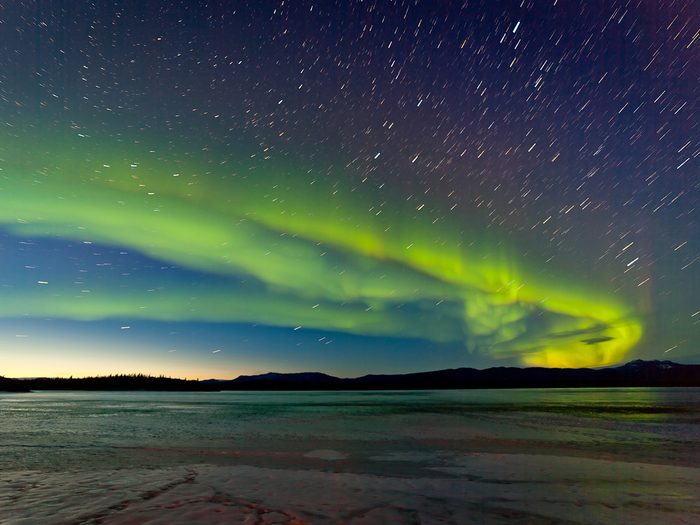
Pi-Lens / Shutterstock.com
Top 10 Natural Wonders of Canada
The Northern Lights
Like an ever-changing oil painting, with broad strokes of green coalescing with splotches of gold and pulses of red, it’s impossible not to be mystified by the northern lights. These natural wonders of Canada, also known as the Aurora Borealis, are a phenomena in which electrically charged particles collide with gases in the Earth’s atmosphere causing them to glow. And they’re just as spectacular as they sound. This otherworldly light show can be seen anywhere in the aurora oval: a region centred over each magnetic pole where the lights occur with the greatest intensity. Check out the best places to see the northern lights in Canada.
2/10
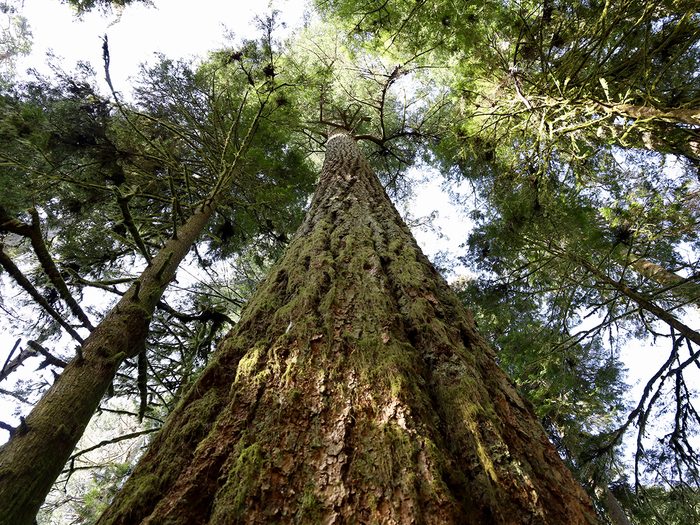
Jennifer Reeson-Ho / Shutterstock.com
Cathedral Grove
Looking for a big cuddly tree to hug? This old growth forest on Vancouver Island might be the place for you. Just don’t expect to get your arms all the way around the trunk of an ancient Douglas fir tree. Some trees in Cathedral Grove, a cluster of the giant variety of trees in MacMillan Provincial Park, are 800 years old and measure as much as nine metres in circumference. How’s that for a cuddle partner?
Here’s where you’ll find the oldest trees in Canada.
3/10
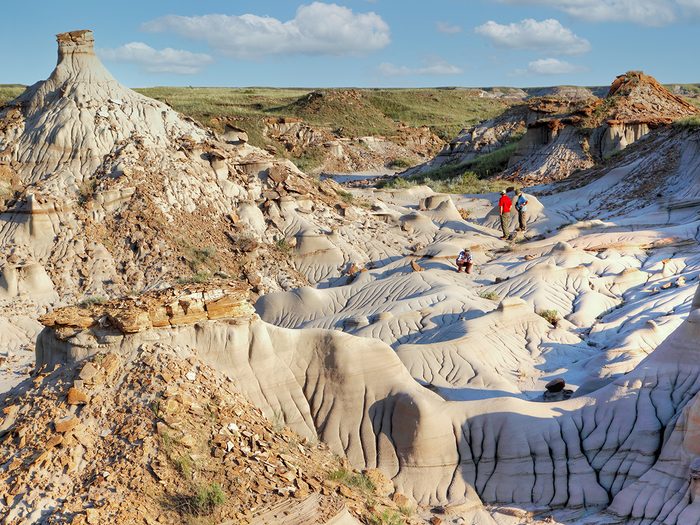
Ronnie Chua / Shutterstock.com
Dinosaur Provincial Park
Whether you’re a natural history buff or just a Jurassic Park fan, you’re bound to be thrilled by a walk through Alberta’s Dinosaur Provincial Park, also known as one of the world’s biggest dinosaur graveyards. Seventy-five million years ago, southern Alberta was a thriving hub of pre-historic life which included fish, amphibians, reptiles, primitive mammals and dinosaurs. When many of these animals died in river channels and mud flats, their bones were buried in layers of sand and mud and eventually fossilized. In addition to nearly 500 species of animal life, Dinosaur Provincial Park’s fossil assemblage includes an astounding 40 species of dinosaurs, not to mention more than 500 dinosaur specimens.
Check out more great places to see dinosaur fossils in Canada.
4/10
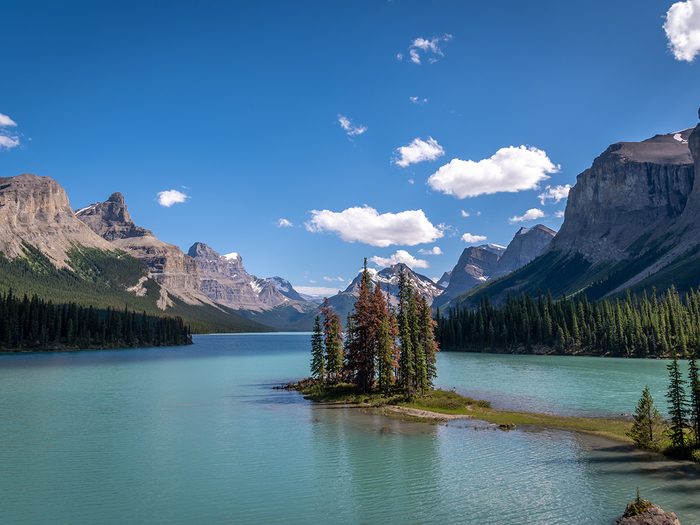
Jeff Whyte / Shutterstock.com
The Canadian Rockies
Turquoise water, vast expanses of unblemished wilderness, snow-capped mountains: there are few places more iconically Canadian than the Rockies. Whether you’re visiting one of its four national parks, skiing or snowboarding at world-renowned resorts or simply passing through on an unforgettable train ride, the beauty of this region is impossible to ignore. It’s no surprise most of the Canadian Rockies are designated a UNESCO World Heritage Site and draw millions of visitors every year.
Don’t miss our guide to all 20 UNESCO World Heritage Sites in Canada.
5/10
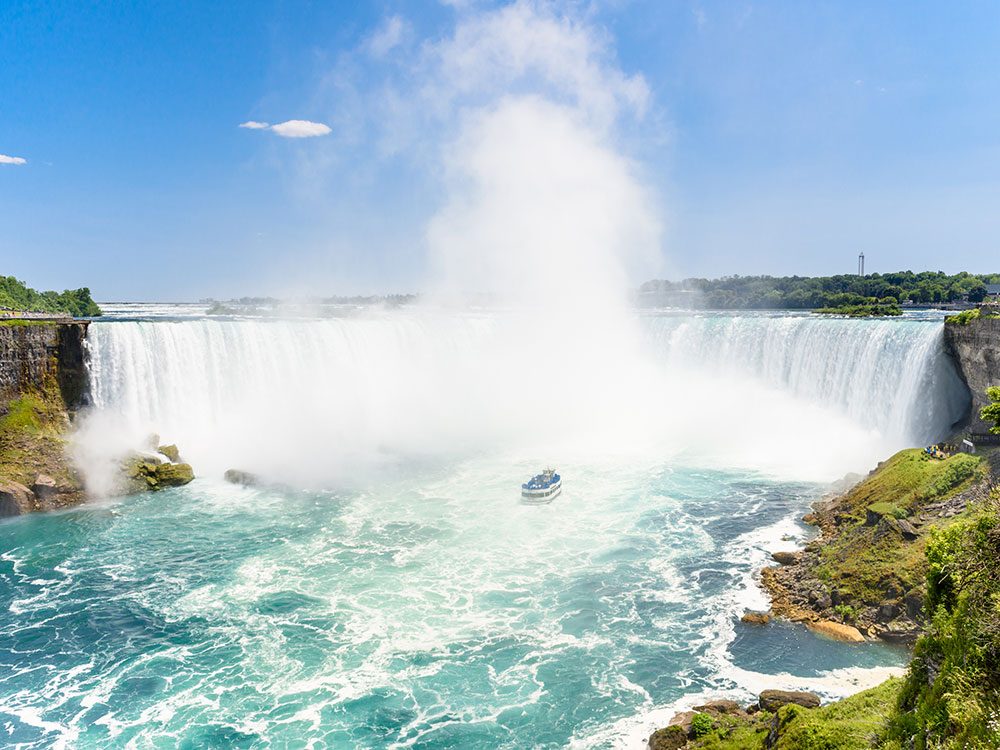
Photo: Shutterstock
Niagara Falls
If you haven’t seen North America’s most powerful waterfall with your own eyes, it’s almost impossible to imagine it. First, picture 84-million 2-litre bottles of water. Now, imagine all that water—168,000 cubic metres—flowing over the crest of the falls every minute. Mind-boggling, isn’t it? It’s no wonder Niagara Falls, which consists of three waterfalls called the Horseshoe Falls, the American Falls and the Bridal Veil Falls, is one of the most famous natural wonders in the world. The only downside? We have to share this wonder with our neighbours to the south—one-third of Niagara falls is on the American side of the border.
Discover 10 unique things to do in Niagara Falls.
6/10
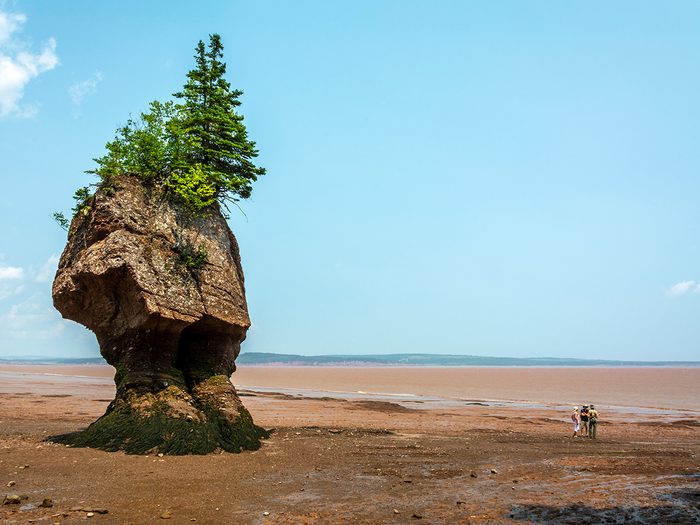
Ken Morris / Shutterstock.com
Hopewell Rocks
Not much of a swimmer? Why not explore the bottom of the ocean without the need for a scuba mask and oxygen tank? Every day, 100 billion tonnes of water empty out of the Bay of Fundy, allowing visitors the chance to walk along the ocean floor at New Brunswick’s Hopewell Rocks and admire bizarre rock formations like sculptures in a gallery. At high tide, the Atlantic’s water level rises by about 16 metres almost completely submerging everything again (save for the tips of some of the rocks), making this one of the most impressive natural wonders of Canada.
Check out more essential experiences on the east coast of Canada.
7/10
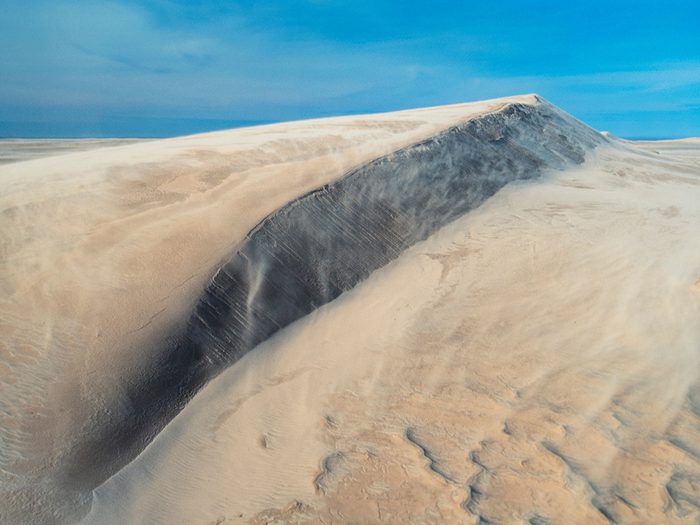
Russ Heinl / Shutterstock.com
Athabasca Sand Dunes
If it feels like you’re standing on another planet at the Athabasca Sand Dunes, it’s with good reason. The towering dunes—some as high as 30 metres—are part of the largest active sand surface in the country, extending approximately 100 kilometres along the south shore of Lake Athabasca in Saskatchewan. Protected with a provincial park designation, this other-worldly ecosystem is home to rare plants, and geological features like eskers. What makes this site even more unique in our roundup of natural wonders of Canada is that it takes a bit of determination (and wilderness camping experience) to get there: The park is only accessible by float plane. For those lucky few, be prepared for a sight like no other. —Erica Ngao
Never heard of this natural wonder? Discover more mind-boggling Canadian geography facts.
8/10
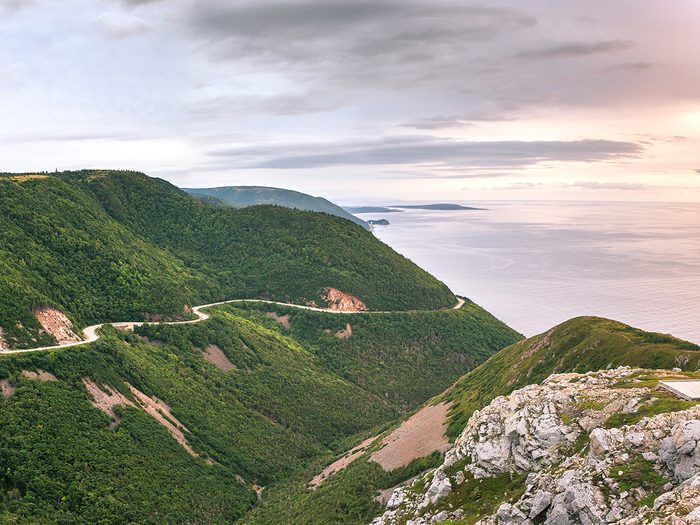
Prashanth Bala / Shutterstock.com
The Cabot Trail
Winding roads that hug the coastline, soaring cliffs, deep valleys, lush forests—the Cabot Trail really has it all. The best part? You don’t even have to get out of your car to enjoy it. The roadway takes drivers on a scenic loop around the northern tip of Cape Breton and through the Cape Breton Highlands National Park—298 kilometres in total. While this distance could easily be travelled in a short road trip, travellers often spend days on the winding route taking in the natural wonders and exploring hiking trails.
Here are 10 Canadian road trips you need to take at least once.
9/10
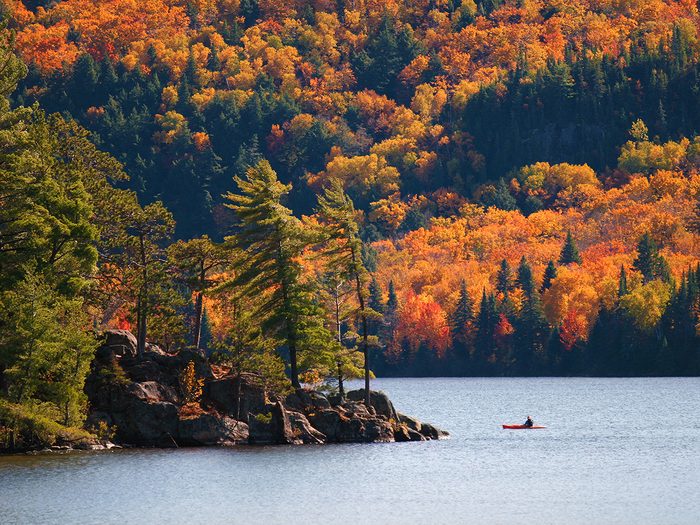
Aivoges / Shutterstock.com
Algonquin Provincial Park
With the sun poking up over a panorama of treetops, seemingly setting the skyline on fire with broad strokes of orange, and waves gently lapping against the bow of your canoe, it’s not hard to imagine why Canada’s oldest provincial park is also one of the most inspiring natural wonders of Canada. It’s the place where the Group of Seven, Canada’s most famous painters, did most of their work. It’s also an escape for millions of campers, hikers and paddlers each year, trading the bustle of city-life for utter solitude in the pristine wilderness.
Here are 10 national parks every Canadian should visit.
10/10
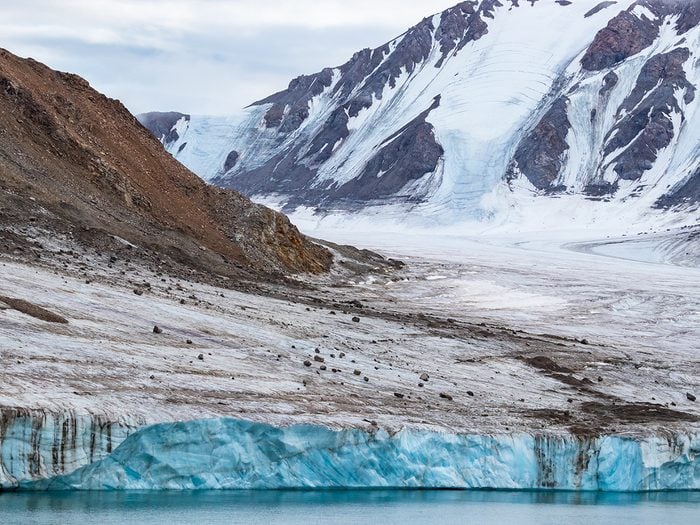
RUBEN M RAMOS / Shutterstock.com
Ellesmere Island
With an average yearly temperature of about -20 C, it’s hard to imagine Ellesmere Island being anything but cold. Really, really cold. But remarkably, about 55 million years ago, this island in Canada’s high Arctic was once home to a wetland forest with palm trees, down redwoods, bald cypress and cycads, not to mention warm temperatures. The stumps of many of these trees have been preserved in a remarkable fossil forest, helping scientist study what life was like in the Arctic just before the beginning of the Ice Age.
Now that you’ve added these natural wonders of Canada to your bucket list, take a closer look at Canada’s most beautiful waterfalls.
GROUP OF SEVEN
THE CANADIAN EN
Article
Group of Seven
Article by Christopher Varley, Russell Bingham
Updated by Andrew McIntosh
Published Online July 11, 2013
Last Edited November 14, 2019
The Group of Seven, also known as the Algonquin School, was a school of landscape painters. It was founded in 1920 as an organization of self-proclaimed modern artists and disbanded in 1933. The group presented the dense, northern boreal forest of the Canadian Shield as a transcendent, spiritual force. Their depictions of Canada’s rugged wind-swept forest panoramas were eventually equated with a romanticized notion of Canadian strength and independence. Their works were noted for their bright colours, tactile paint handling, and simple yet dynamic forms. In addition to Tom Thomson, David Milne and Emily Carr, the Group of Seven were the most important Canadian artists of the early 20th century. Their influence is seen in artists as diverse as abstract painter Jack Bush, the Painters Eleven, and Scottish painter Peter Doig. 
Group of Seven Members
Members of the Group of Seven at the Arts & Letters Club in Toronto, clockwise from the left: A.Y. Jackson, Fred Varley, Lawren Harris, Barker Fairley, Franz Johnston, Arthur Lismer and J.E.H. Macdonald.
(courtesy Art Gallery of Ontario)
Members
The original members of the Group of Seven were Franklin Carmichael, Lawren Harris, A.Y. Jackson, Franz Johnston, Arthur Lismer, J.E.H. MacDonald and F.H. Varley. Tom Thomson was a peer and a leading influence but died before the group was formed. All except Harris made their living as commercial artists. MacDonald, Lismer, Varley, Carmichael, Johnston and Thomson worked together at Grip Ltd., a graphic design firm in Toronto. Harris, as heir to the agricultural implements manufacturer Massey-Harris Co. Ltd., was independently wealthy.
In 1926, after Franz Johnston’s resignation A.J. Casson was made a member. The Group realized they could hardly call themselves a national school of painters as long as they all lived in Toronto. They admitted Edwin Holgate of Montreal in 1930 and L.L. FitzGerald from Winnipeg in 1932. This gave the organization a wider geographic base.
Emily Carr, famous for her paintings of the wilderness and Indigenous culture of the Northwest Coast, was influenced by the Group, and particularly by Lawren Harris. He once declared to her, “You are one of us.” However, she was never an official member.
Background
Four decades after Confederation, when the Group of Seven came on the scene, Canada was finding its feet as a nation — politically, socially and economically. In the realm of culture, however, it had not yet wrested its independence from Old World traditions. Canadian landscape art consisted primarily of anonymous views seen through the cloudy screen of European academia. (See also: Canadian Painting in the 19th Century.) The small community of Canadian art collectors had little interest in artistic innovation.
In this atmosphere, a group of painters and commercial artists befriended each other in Toronto between 1911 and 1913. They were drawn together by a common sense of frustration with the conservative quality of most Canadian art. They began meeting as a kind of mutual support group, often having lunch together at the Arts and Letters Club of Toronto. They would look at one another’s paintings, share ideas and discuss technique.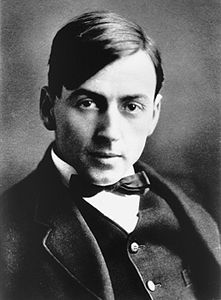
Tom Thomson
With his instinctive technical abilities and his intense love of the North, Tom Thomson had all the elements necessary to become a great painter.
(courtesy Library and Archives Canada/C-17399)
Tom Thomson
Since Thomson died in 1917, he never became a member of the Group. However, he was an important influence on the other artists and had a profound effect on the formation of the group. A fishing guide and occasional forest ranger in Algonquin Provincial Park, he was an avid outdoorsman. He encouraged the other members to paint the rugged landscape of Northern Ontario. It was here they found the imagery that would imprint itself on the Canadian consciousness.
Key Influences
Despite their emphasis on the need for a specifically “native” expression, the Group was aware of and drew inspiration from French Post-Impressionists, such as Vincent Van Gogh and Paul Gauguin. Other post-impressionists, such as Edvard Munch and Émile Bernard, were also key influences.
However, the turning point in their search for a style came in 1912, when MacDonald and Harris travelled to Buffalo to see an exhibition of contemporary Scandinavian painting. The men were struck by the approach of the Scandinavians. They used simple areas of flat, bright colour to create vivid depictions of a landscape. Macdonald and Harris realized that the subjects of these paintings could as easily have been Canada’s Northern wilderness. The synthesis of Northern subject with this new approach created the distinctive images that would become the hallmark of the Group of Seven.
Canal du Loing near Episy
A.Y. Jackson, 1909, oil on canvas.
(courtesy NGC)
Career Highlights
The members of the Group were not exclusively landscape painters. It was only after their first exhibition at the Art Gallery of Toronto (now the Art Gallery of Ontario) on 7 May 1920 that they began to identify themselves as a landscape school.
The members of the group were romantic, with mystical leanings. They zealously presented themselves as Canada’s first national school of painters. This provoked the ire of the artistic establishment, which hated their rhetoric even more than their paintings.
From the start, the Group’s exhibitions sparked controversy. (One review of their first exhibition compared the works to “the contents of ‘a drunkard’s stomach.’”) If anything, it was this heated debate that kick-started their fame. The negative reviews and letters to the editors received clever and passionate responses from the painters and their supporters. The discussion was always directed to the importance of their work as the product of true nationalistic expression.
Snow Clouds
Franklin Carmichael, 1938, oil on canvas.
(courtesy Franklin Carmichael/NGC)
Eric Brown, director of the National Gallery of Canada, always supported the Group. He began buying their paintings for the gallery’s collection several years before the Group was officially formed. In 1924 and 1925, he made sure they were well represented in Canadian art shows at the prestigious Wembley exhibition in England. This enraged many members of the Royal Canadian Academy, who felt that the Group were given an unfair advantage. However, British press reports were so favourable that both Brown and the Group felt vindicated.
Other factors also contributed to their success. Several of the Group were excellent teachers, writers and speakers. They worked energetically with the National Gallery and with other groups to mount touring exhibitions that showcased their works. Shows were held in the United States, Great Britain and Paris. Another factor in their favour was that the bright colours and bold patterning of their paintings were ideally suited to reproduction and mass distribution.
With the support of the National Gallery and friends at the Arts and Letters Club and the Canadian Forum, the Group’s influence steadily spread during the 1920s. However, by the time the group disbanded in 1933, it had become as entrenched, and in some ways as conservative, as the art establishment it had overthrown. Its influence has therefore been a mixed blessing. The next generation of significant Canadian painters emerged in Montreal, where Paul-Émile Borduas and 15 members of the Automatistes Group signed the Refus Global manifesto in 1948.
Techniques and Characteristics
The Group of Seven rebelled against the constraints of 19th-century naturalism. (See also: Canadian Painting in the 19th Century.) They tried to establish a more equitable and independent relationship between art and nature. In this sense, they were similar to European fin de siècle symbolists and post-impressionists such as Edvard Munch, Paul Gaugin and Émile Bernard. These masters were a key influence on the group’s aesthetics.
The group shifted emphasis away from similitude (the imitation of natural effects) toward the expression of their feelings for their subjects. They often painted together, both in the wilderness and in the famed Studio Building, which Harris and arts patron Dr. James McCallum built in Toronto’s Rosedale neighbourhood in 1914. As a result, their paintings developed along similar lines. Their early works usually have heavy impasto and bright colours. They are boldly summarized and draw attention to surface patterning.
Following a visit to the stark north shore of Lake Superior in 1921, Lawren Harris began to radically simplify the colour and layouts of his canvases. MacDonald, Carmichael and even Varley soon adopted similar methods. They began using thin pigment and stylized designs for many paintings. Harris went further than the others, however. By the mid-1920s, he had reduced his paintings to a few simplified and nearly monochromatic forms. Ten years later, he became the only member of the Group, and one of the first Canadian artists, to turn to abstraction.
Collections
Paintings by members of the Group of Seven can be found in most Canadian public art galleries, with notable collections at the National Gallery of Canada, the Art Gallery of Ontario and the McMichael Canadian Art Collection.
Legacy and Influence
The Group’s depictions of the rugged wind-swept forest panoramas of the Canadian Shield were eventually equated with a romanticized notion of Canadian strength and independence. By the peak of their fame in the mid-1950s, reproductions of their paintings hung on classroom walls in every school in the country. Their works held pride of place in Canadian museums. Every discussion of Canadian art inevitably acknowledged their importance to the evolution of a “national vision.”
Nationalism created the Group of Seven, but in the end, it limited their accomplishment. In time, their influence waned. The Group was so successful in presenting their art as the visual expression of nationalism that the quality of their art is often overlooked. Taken as a whole, the members of the Group varied in achievement, just as individual works varied in quality. Often the most celebrated paintings, the ones most commonly reproduced, seem overblown and stale when seen in person. Their small oil sketches, however, especially those by MacDonald, Varley and Jackson, as well as those by Thomson, include some of their most inspired paintings, full of life and feeling.
Nevertheless, The Group introduced the idea that Canadian art could be important, that it could make a noise, and that it could earn a place on the international stage. It galvanized the national art community and ultimately stimulated the development of the museums and government bodies that would pave the road for artists who followed. Harris and Jackson, in particular, influenced and encouraged the next generation of Canadian artists. Lismer, MacDonald and Varley all became distinguished and influential teachers.
See also: Contemporary Trends in Art; Artist’s Organizations; Art Writing and Criticism.
https://www.thecanadianencyclopedia.ca/en/article/group-of-seven
10 Most Famous Landscape Paintings
Sebastian WatkinsJun 27, 2022comments off
The Hay Wain by John Constable
The Hay Wain by John Constable is arguably his most well-known work. It depicts the river Stour, which separates the counties of Essex and Suffolk. In the 1820s, the painting had a relatively modest sales price, but was so successful that it was exhibited at both the Royal Academy and the British Institution. In 1822, a French Art dealer named John Arrowsmith agreed to buy it. Constable had also sold his other works to Arrowsmith, who bought The Hay Wain and View on the Stour Near Dedham for a combined PS250. The sale of these paintings pushed Constable’s popularity in France, where the work quickly achieved its current status.

Impression Sunrise by Claude Monet
The colours in Impression Sunrise by Claude Monet are subtle and restrained, but the orange sunrise stands out from the grey, brown, and black of the surrounding scene. In fact, the orange hue is almost the same value as the surrounding greens. The contrast of hues and values is evident in the boat that is dark, yet the other boat shapes are lighter. This makes the entire scene appear more crowded than it actually is.
The port at Le Havre is the subject of Impression, Sunrise. Two small rowboats stand out against the red Sun, while fishing boats float in the middle ground. In the background, tall mast clippers are visible and a misty shape is visible as the sun reflects on the water. The artist used separate brushstrokes for each of the colors in Impression, Sunrise. In doing so, he creates a hypnotic atmosphere that makes the viewer feel as if they are actually there.

Starry Night Over the Rhône by Vincent van Gogh
“Starry Night Over the Rhône” is a common title for one of Vincent van Gogh’s famous paintings. The painting depicts the nighttime sky over Arles, where the artist lived and painted on the banks of the Rhône. The work is a short walk away from his Yellow House, which was located on Place Lamartine. The Yellow House was van Gogh’s home.
While Starry Night Over the Rhône by Vincent Van Gogh is perhaps not as well-known as his more famous rendition, it is still a major masterpiece. This version is displayed at the Musee d’Orsay in Paris and has been exhibited in many major museums. The radiant color palette and brushwork of the painting will capture your attention. The scene depicted in the painting is serene, and the figures are small but present.
The painting is a striking example of the artist’s unique approach to illustrating the nighttime sky. In it, Van Gogh gives each element equal visual weight. For example, a horizontal brushstroke depicts the sky. A long vertical line might depict a road leading into town. Or a line may reflect the light of a city. These brushstrokes create a sense of motion, rhythm and unity.

Wheat Field with Cypresses by Vincent van Gogh
The composition of Wheat Field with Cypresses by Vincent Van Gogh is a study in contrasts. The warm yellow of the wheat field is offset by the cool blue of the trees, and the brushstrokes combine to create an atmospheric perspective. The artist combines both natural and man-made elements in his work, resulting in an unfailingly aesthetically pleasing painting. A study of Van Gogh’s work will reveal how he made use of these elements to depict a world of conflict and contradiction.
The July version of Wheat Field with Cypresses was completed in one sitting, while the September version was painted over a larger canvas. Van Gogh used thin paint on the cypresses, while a thick impasto was applied to the foreground wheat. Van Gogh preferred zinc white over lead white for the sky. The paint used in the painting is cobalt blue and shades of yellow. Van Gogh’s use of green and blue for the background reflects the underpainting. The pale straw superimposed on the blue is also characteristic.

The Monk by the Sea by Caspar David Friedrich
The Monk by the Sea by Casper David Friedrich is an iconic work of Romantic art. The monk appears to be a model for the artist, with his flowing beard. The artist painted the monk in his studio, using the most evocative elements to create an expressive composition. Friedrich continued to alter the painting until he achieved the finished result. He used a variety of colors to further emphasize the monk’s expression, such as white.
This masterpiece by Caspar David Friedrich explores the mystical aspects of nature. The lone wanderer is a common theme in German Romantic literature. Friedrich sought to express the mystical view of nature and claimed that the divine is everywhere. In his paintings, the artist portrayed rural landscapes and often spent long hours alone. The subject matter is often quite abstract, with no fixed object in focus.

The Spring by Nicolas Poussin
The Spring by Nicolas Poussin is a beautiful oil painting that depicts the lush wooded landscapes of Eden. Poussin painted several similar paintings, including Adam and Eve in Earthly Paradise and Eve’s Dream. These paintings are both religious and depict biblical stories. Despite their similarities, both are highly emotional, and the viewer is sure to have a hard time choosing a favorite.
The painting depicts Adam and Eve before their expulsion from Eden. The scene begins in dimly lit foreground, with luxuriantly vegetated wood. In the background, swans circle a pond, while mountains and meadows emerge from the horizon. The early morning sun filters through a patch of shrubs and rocks. The dazzling light reveals a scene that has changed into a world of pristine beauty.
This painting is part of the Genesis series and portrays the Garden of Eden during the early morning. The Creator is on the cloud at the upper right, while Eve points out the forbidden fruit. This painting is the first portrayal of the Garden of Eden before the fall, before the first sin was committed. The painting does not depict the snake, but there are several hints that this animal may have symbolic meaning. This painting is a stunning example of Poussin’s work.

WANDERER ABOVE THE SEA OF FOG
Wanderer above the sea of fog is a painting by German Romantic artist Caspar David Friedrich. It was painted in 1818. Friedrich’s work depicts a scene that evokes feelings of nostalgia and longing. It has become a classic work of art. Here are some of its most compelling features:
Although the painting dates to the 18th century, it still exhilaratingly captures the feeling of a time when art was dominated by political and social issues. It is important to recognize that this painting is not a creation of the artist’s mind. Friedrich made the painting while the country was undergoing the transition from Neoclassicism to Romanticism. For this reason, it is often referred to as a work of art by a German.
Although Friedrich emphasized landscapes in his works, Wanderer above the sea of fog displays a sense of profound contemplation. The painting’s stalwart figure and sublime scenery make it much more than a landscape. This is a painting that is truly enduring. If you love art and want to discover its true value, WANDERER ABOVE THE SEA OF FOG is a must-see.

The Oxbow by Thomas Cole
The Oxbow by Thomas Cole is perhaps the most famous landscape painting ever made. It depicts the bend in the Connecticut River and is a prime example of how westward expansion can benefit both the east and west. Its diagonal line and lush landscape are both iconic to the painting. It is also one of the earliest examples of landscape painting. While it shows the same view as many other landscape paintings, the Oxbow is particularly notable for its bold and colorful brush strokes.

View of Toledo by El Greco
Despite the painting’s gloomy mood, the View of Toledo by El Greco captures the city’s beauty and architectural detail. Although this work belongs to the genre of city views, its potency comes from the way it interprets the city and the surrounding countryside. The restless swirl and lowering sky are among the most striking features of the painting. Many art historians believe that El Greco aimed to portray mysticism with this painting. In fact, it is possible to see some aspects of mysticism in this painting. The painting also captures the authority of the God.
The View of Toledo by El Greco is one the most famous landscape paintings by the Italian artist. This work depicts a view of Toledo, Spain, from the top of a hill. Its sky and landscape are completely absorbed in the painting, a combination of which gives the painting its dramatic effect. El Greco’s clouds, however, appear to be about to unleash a storm on Toledo. The buildings, in contrast, appear to crawl across the canvas. In addition, the lines of the buildings are curved, which creates an impression that the city is in motion.

Sunlight and Shadow: The Newbury Marshes
A landscape painting from the National Gallery of Art, Sunlight and Shadow: The Newbury Marsh, by Martin Johnson Heade, is a stunning example of early impressionism. Heade acquired the painting from the National Gallery of Art. The National Gallery of Art acquired it in 1922. Heade was one of the first American artists to use the term impressionism. His work consists primarily of landscapes, and he often used natural subjects.
Heade’s paintings of salt marshes and other seascapes were influenced by his passion for the natural world. His interest in the marshlands was first sparked by the poet John Greenleaf Whittier and by Bishop Thomas March Clark. Heade painted more than 100 subjects from the marshlands, which comprise one-fifth of his entire oeuvre. While Heade did not choose to use the term “wetlands” in his paintings, his subjects and style evoke the romanticism of his time.
Private: Conceptual Painting : Exhibition: Landscape : Canadian Beaches
I have visited many beaches, and they all share the same sense of utopia, like freedom, fun, play, relaxing, recreation, in the sublime of Nature and joy of the Sun. In ancient Rome, or Greece, perhaps there was this utopic feeling too. A feeling of immense pleasure, with water, sand, sky; the colours; the smell; the movement; the sounds. The edge of beach is where 1000s of miles of ocean, meets, thousands of miles of land. This meeting of the sea and land has been the corner stone of civilization, birthing art, culture, society, and science. Like mountains, beaches are the birth place of thought and spirituality and imagination, where we first evolved as civilization, creating stories, creating social experiences, creating technology like sailing. The beach is more than sand, it is the space that inspires us, relaxes us, feeds us, and binds us, to other civilizations and history and ourselves.
This series imagines Canadian beaches through abstraction, such as vibrant colours, lines, marks. It is a space of imagination and discovery and beauty. These works specifically reference the horizon, where the water and sky meet. These works are models for large paintings 6 feet by 8 feet.

Beach # 1 – Tribune Bay , acrylic and gouache on paper, 10 in x 14 in , 2022 ( photographed + photoshop + reprinted giclee on paper, 20 in x 28 in, 40 in x 56 in, 2024 )

Beach # 2 – Tofino , acrylic and gouache on paper, 10 in x 14 in , 2022 ( photographed + photoshop + reprinted giclee on paper, 20 in x 28 in, 40 in x 56 in, 2024 )

Beach # 3 – San Josef , acrylic and gouache on paper, 10 in x 14 in , 2022 ( photographed + photoshop + reprinted giclee on paper, 20 in x 28 in, 40 in x 56 in, 2024 )

Beach # 4 – English Bay , acrylic and gouache on paper, 10 in x 14 in , 2022 ( photographed + photoshop + reprinted giclee on paper, 20 in x 28 in, 40 in x 56 in, 2024 )

Beach # 5 – Kalamalka Lake, acrylic and gouache on paper, 10 in x 14 in , 2022 ( photographed + photoshop + reprinted giclee on paper, 20 in x 28 in, 40 in x 56 in, 2024 )

Beach # 6 – Skaha , acrylic and gouache on paper, 10 in x 14 in , 2023 ( photographed + photoshop + reprinted giclee on paper, 20 in x 28 in, 40 in x 56 in, 2024 )

Beach # 7 – Haynes Point , acrylic and gouache on paper, 10 in x 14 in , 2023 ( photographed + photoshop + reprinted giclee on paper, 20 in x 28 in, 40 in x 56 in, 2024 )

Beach # 8 – Agate Beach, acrylic and gouache on paper, 10 in x 14 in , 2023 ( photographed + photoshop + reprinted giclee on paper, 20 in x 28 in, 40 in x 56 in, 2024 )

Beach # 9 – Marina Way Beach , acrylic and gouache on paper, 10 in x 14 in , 2023 ( photographed + photoshop + reprinted giclee on paper, 20 in x 28 in, 40 in x 56 in, 2024 )

Beach # 10 – Goose Spit , acrylic and gouache on paper, 10 in s 14 in , 2023 ( photographed + photoshop + reprinted giclee on paper, 20 in x 28 in, 40 in x 56 in, 2024 )

Beach # 11 – Kalamalka Lake , acrylic and gouache on paper, 10 in x 14 in , 2023 ( photographed + photoshop + reprinted giclee on paper, 20 in x 28 in, 40 in x 56 in, 2024 )

Beach # 12 – Sombrio Beach, Juan de Fuca Provincial Park, acrylic and gouache on paper, 10 in x 14 in , 2023 ( photographed + photoshop + reprinted giclee on paper, 20 in x 28 in, 40 in x 56 in, 2024 )

Beach # 13 – Botanical Beach, Juan de Fuca Provincial Park, acrylic and gouache on paper, 10 in x 14 in , 2024 ( photographed + photoshop + reprinted giclee on paper, 20 in x 28 in, 40 in x 56 in, 2024

Beach # 14 – Long Beach, Pacific Rim National Park, acrylic and gouache on paper, 10 in x 14 in , 2024 ( photographed + photoshop + reprinted giclee on paper, 20 in x 28 in, 40 in x 56 in, 2024 )

Beach # 15 – Pachena Bay, Bamfield , . acrylic and gouache on paper, 10 in x 14 in , 2024 ( photographed + photoshop + reprinted giclee on paper, 20 in x 28 in, 40 in x 56 in, 2024 )

Beach # 16 – Kinsmen Beach, Invermere . acrylic and gouache on paper, 10 in x 14 in , 2024 ( photographed + photoshop + reprinted giclee on paper, 20 in x 28 in, 40 in x 56 in, 2024 )

Beach # 17 – Sun-Oka Beach Provincial Park, Summerland . acrylic and gouache on paper, 10 in x 14 in , 2024 ( photographed + photoshop + reprinted giclee on paper, 20 in x 28 in, 40 in x 56 in, 2024 )

Beach # 18 – Carmanah Beach, Pacific Rim National Park, acrylic and gouache on paper, 10 in x 14 in , 2024 ( photographed + photoshop + reprinted giclee on paper, 20 in x 28 in, 40 in x 56 in, 2024 )
Beach # 19 – Sandspit Beach, Kokanee Creek Provincial Park, Nelson , . acrylic and gouache on paper, 10 in x 14 in , 2024 ( photographed + photoshop + reprinted giclee on paper, 20 in x 28 in, 40 in x 56 in, 2024 )

Beach # 20 – Saratoga Beach, Oyster River, , acrylic and gouache on paper, 10 in x 14 in , 2024 ( photographed + photoshop + reprinted giclee on paper, 20 in x 28 in, 40 in x 56 in, 2024 )

Beach # 21 – Rathtrevor Beach , acrylic and gouache on paper, 10 in x 14 in , 2022 ( photographed + photoshop + reprinted giclee on paper, 20 in x 28 in, 40 in x 56 in, 2024 )

Beach # 22 – Wreck Beach, acrylic and gouache on paper, 10 in x 14 in , 2022 ( photographed + photoshop + reprinted giclee on paper, 20 in x 28 in, 40 in x 56 in, 2024 )

Beach # 23 – Skaha Lake, acrylic and gouache on paper, 10 in x 14 in , 2022 ( photographed + photoshop + reprinted giclee on paper, 20 in x 28 in, 40 in x 56 in, 2024 )

Beach # 24 – Kal Beach, acrylic and gouache on paper, 10 in x 14 in , 2022 ( photographed + photoshop + reprinted giclee on paper, 20 in x 28 in, 40 in x 56 in, 2024 )

Beach # 25 – Long Beach Pacific Rim Park, acrylic and gouache on paper, 10 in x 14 in , 2022 ( photographed + photoshop + reprinted giclee on paper, 20 in x 28 in, 40 in x 56 in, 2024 )

Beach # 26 – Okanagan Lake, acrylic and gouache on paper, 10 in x 14 in , 2022 ( photographed + photoshop + reprinted giclee on paper, 20 in x 28 in, 40 in x 56 in, 2024 )

Beach # 27 – Swiws Haynes Point, acrylic and gouache on paper, 10 in x 14 in , 2022 ( photographed + photoshop + reprinted giclee on paper, 20 in x 28 in, 40 in x 56 in, 2024 )

Beach # 28 – Christine Lake, acrylic and gouache on paper, 10 in x 14 in , 2022 ( photographed + photoshop + reprinted giclee on paper, 20 in x 28 in, 40 in x 56 in, 2024 )

Beach # 29 – Agate Beach, acrylic and gouache on paper, 10 in x 14 in , 2022 ( photographed + photoshop + reprinted giclee on paper, 20 in x 28 in, 40 in x 56 in, 2024 )

Beach # 30 – Kye Bay , acrylic and gouache on paper, 10 in x 14 in , 2022 ( photographed + photoshop + reprinted giclee on paper, 20 in x 28 in, 40 in x 56 in, 2024 )

Beach # 31 Sandy Island Beach, acrylic and gouache on paper, 10 in x 14 in , 2022 ( photographed + photoshop + reprinted giclee on paper, 20 in x 28 in, 40 in x 56 in, 2024 )

Beach # 32 – Davis Bay Beach, Sunshine Coast , acrylic and gouache on paper, 10 in x 14 in , 2022 ( photographed + photoshop + reprinted giclee on paper, 20 in x 28 in, 40 in x 56 in, 2024 )

Beach # 33 – Gyro Beach, Osoyoos, acrylic and gouache on paper, 10 in x 14 in , 2022 ( photographed + photoshop + reprinted giclee on paper, 20 in x 28 in, 40 in x 56 in, 2024 )

Beach # 34 – Sand Spits Beach, acrylic and gouache on paper, 10 in x 14 in , 2022 ( photographed + photoshop + reprinted giclee on paper, 20 in x 28 in, 40 in x 56 in, 2024 )


BEACHES
https://www.hellobc.com/stories/top-12-beaches-in-bc/embed/#?secret=FPoGu8ufA0#?secret=6herXRM6qm
Tribune Bay
If you thought clear blue seas were only found in tropical destinations, think again. Tribune Bay on Hornby Island is home to soft sand and shallow, temperate waters perfect for swimming. Getting to remote Hornby, accessible via BC Ferries, is part of the adventure.Visit Hornby


Rathtrevor Beach Provincial Park | @tighnamara
Rathtrevor Beach
The flat sand at Parksville’s popular Rathtrevor Beach stretches out as far as the eye can see at low tide, creating plenty of tide pools safe for little ones. Add a shady campground with hiking and biking trails, and you have an unforgettable family getaway.Visit Parksville

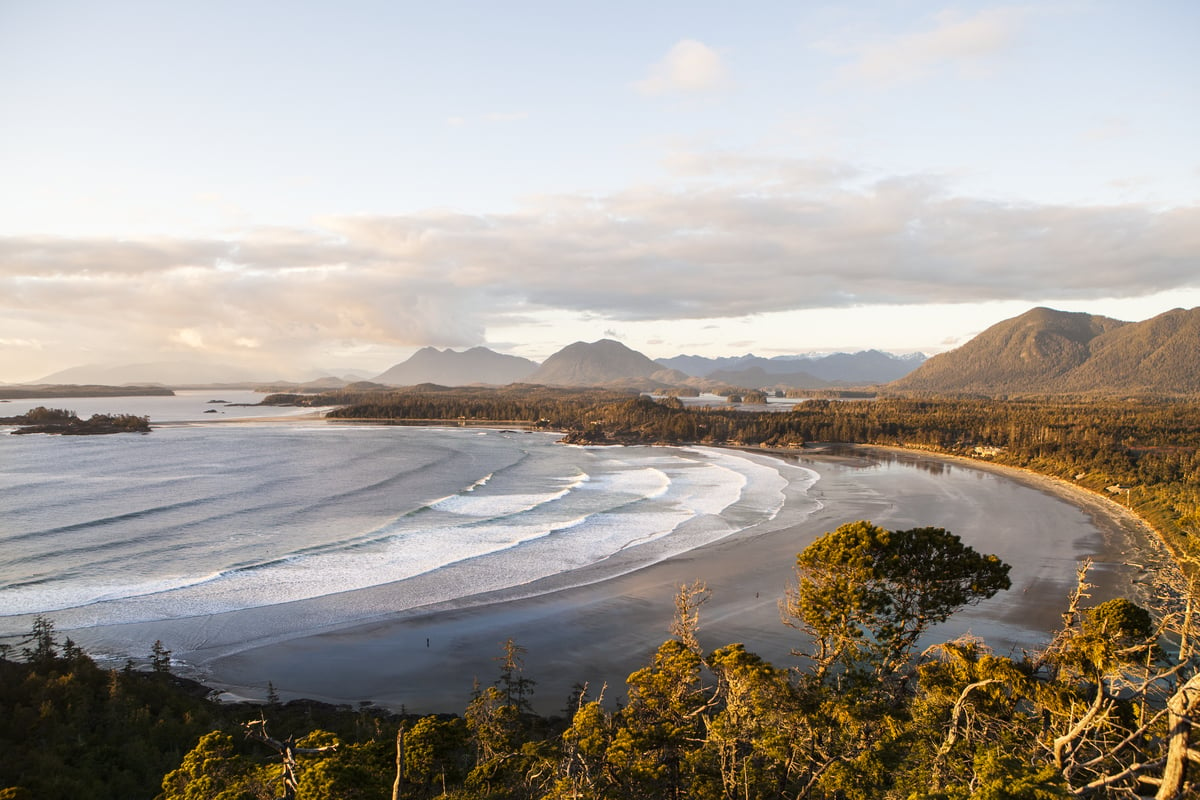
Cox Bay, Tofino | Jordan Dyck
Tofino Beaches
The pristine coastline along Vancouver Island’s west side is the stuff of dreams. Seemingly endless beaches are backed by thick temperate rainforest on one side and the open ocean on the other. The surfing here is legendary, and the sunsets are spectacular.Visit Tofino
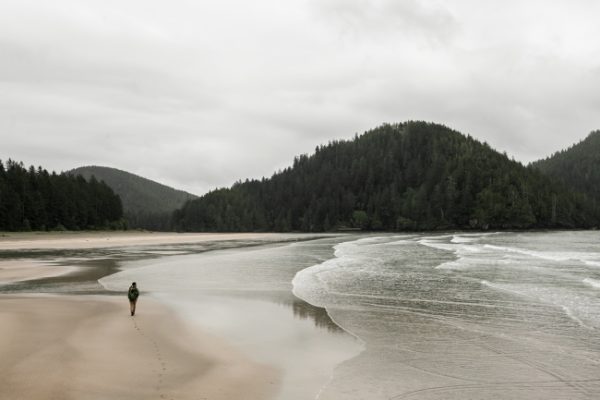
San Josef Bay | Shayd Johnson
San Josef Bay
Part of Cape Scott Provincial Park on the northwestern tip of Vancouver Island, near Port Hardy, San Josef Bay is a secluded spot made for adventurers. The bay is accessible only on foot, or by boat or helicopter, so there’s a good chance you’ll have it all to yourself.Visit Port Hardy
Vancouver Beaches

English Bay Beach | Destination Vancouver/Tanya Goehring
English Bay Beach
This popular beach in downtown Vancouver sits outside the city’s iconic Stanley Park. In addition to the usual sunbathing and swimming, kayaking and beach volleyball are popular here with busy shops and restaurants just steps away.Visit English Bay

Kitsilano Beach Pool | @courteneymichelle
Kitsilano Beach
Kitsilano Beach Park features sandy beaches, a large grassy play area, tennis courts, basketball courts, a fully accessible playground, and a huge outdoor heated saltwater pool, all with views of the downtown Vancouver skyline and the North Shore Mountains.Visit Kitsilano

Wreck Beach | @clemi.v
Wreck Beach
Located next to the University of British Columbia campus near downtown Vancouver, Wreck Beach is one of several popular urban beaches in the city. What makes Wreck unique? It is North America’s largest clothing-optional beach.Visit Wreck Beach


Okanagan Beaches

Kalamalka Lake
This warm lake in Vernon is as popular with photographers as it is with swimmers and stand-up paddleboarders in the summer months. When the water warms up, it turns a remarkable blue-green colour, a result of limestone crystals that reflect the sunlight.Visit Vernon

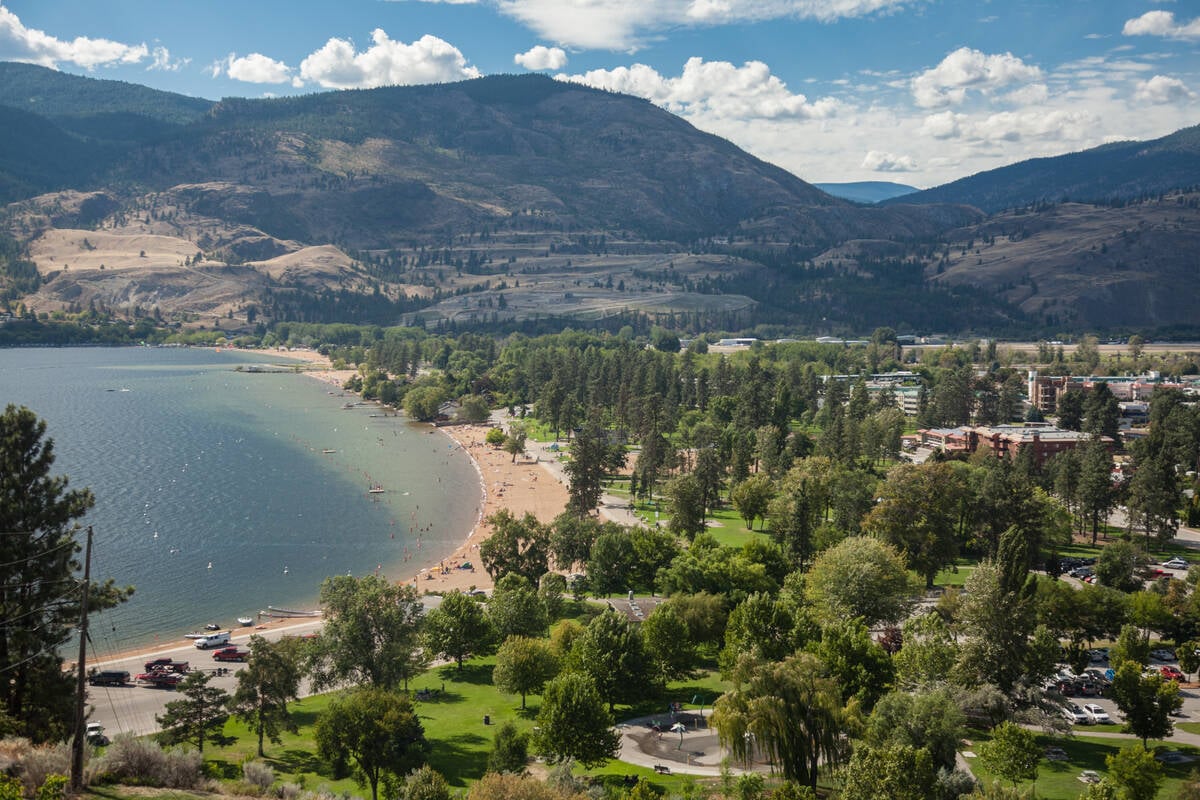
Skaha Lake | Melissa Barnes
Penticton Beaches
Situated between Okanagan Lake and Skaha Lake, Penticton has no shortage of waterfront. The soft sand of Okanagan Lake is popular for sunbathing and watersports, Skaha is a little quieter, offering respite from the sun under a row of shade trees.Visit Penticton
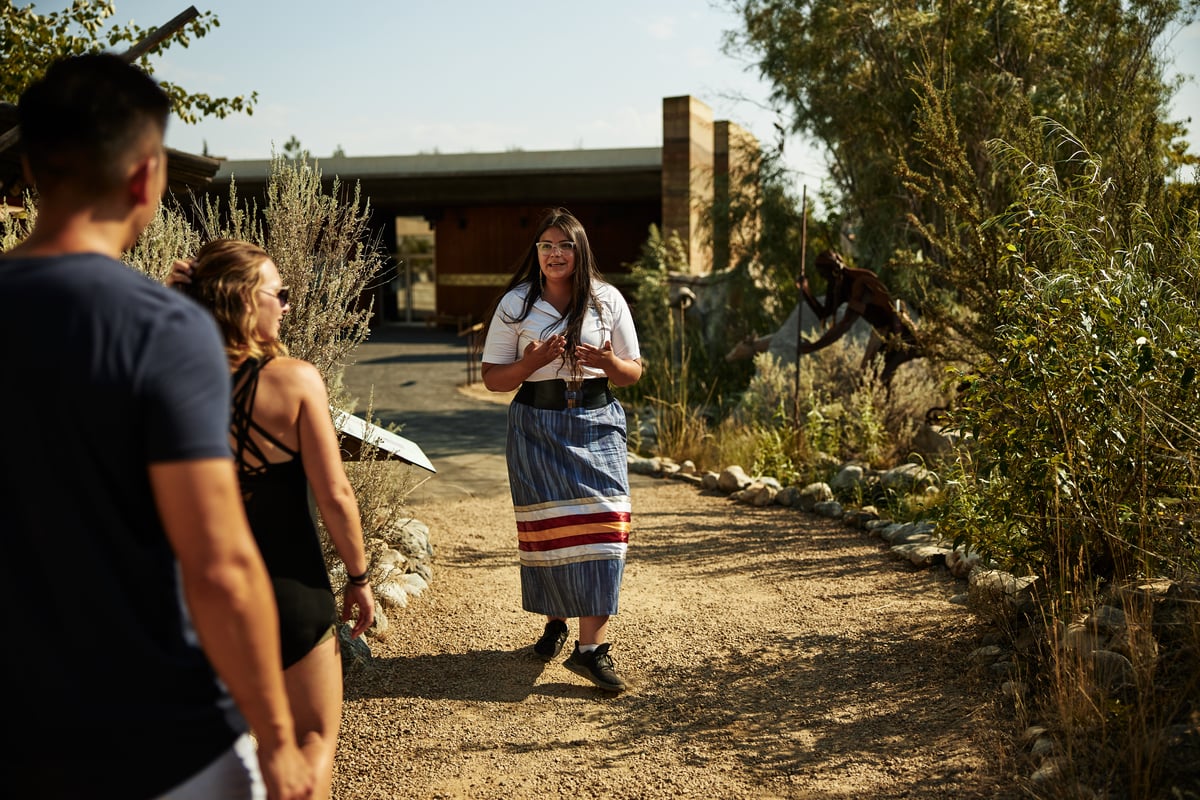
Nk’Mip Desert Cultural Centre | Hubert Kang
sẁiẁs (Haynes Point)
Operated by the Osoyoos Indian Band, sẁiẁs Provincial Park (Haynes Point) sits on a peninsula that extends into one of the warmest lakes in the province. Learn about local Indigenous culture and the area’s unique desert ecosystem.Visit Osoyoos


Christine Lake | Thompson Okanagan/Allen Jones
Christina Lake
Located close to the Canada/US border near Grand Forks, Christina Lake sits along the Trans Canada Trail. The beaches on the southern end of this warm lake are popular for swimming and with those who enjoy water sports.Visit Christina Lake
Northern British Columbia

View of Agate Beach from Tow Hill | Grant Harder
Agate Beach
One of BC’s most stunning and remote beaches, Agate Beach extends along the rugged coast of northern Haida Gwaii in Naikoon Provincial Park. Keep an eye out here for wildlife and surfers as you gaze out toward the open ocean.Visit Haida Gwaii

Originally published in August, 2015.

https://offtracktravel.ca/best-beaches-bc-canada/embed/#?secret=dpzPAru6wi#?secret=wxButRDvej
- Top 20 best beaches in BC (my top picks!)
- Kye Bay / Air Force Beach
- Goose Spit, Comox
- Jáji7em and Kw’ulh Marine Park (Sandy Island)
- Tribune Bay, Hornby Island
- Rathtrevor Beach, Parksville
- Sombrio Beach, Juan de Fuca Provincial Park
- Botanical Beach, Juan de Fuca Provincial Park
- Cox Bay, Tofino
- Long Beach, Pacific Rim National Park
- Pachena Bay, Bamfield
- Carmanah Beach, Pacific Rim National Park
- Saratoga Beach, Oyster River
- Nels Bight, Cape Scott Provincial Park
- Davis Bay Beach, Sunshine Coast
- Jericho Beach, Vancouver
- Gyro Beach, Osoyoos
- Skaha Lake Park
- Sun-Oka Provincial Park, Summerland
- Kal Beach, Vernon
- Sandspit Beach, Kokanee Creek Provincial Park, Nelson
- More BC beaches to visit
- Best Beaches in BC: before you go
Published 2023.
There are affiliate links in this post. If you make a qualifying purchase through one of these links, we may receive a small percentage of the sale.

The Best Beaches in BC
The first section of this post shares my favourite BC beaches. I have personally visited each one; most of them multiple times.
I have explained why these beaches are so special and an overview of what to expect.

I’ve concentrated on sharing coastal beaches for the most part, along with some freshwater (lake) beaches to round things out.
The below map features all the featured beaches.
These BC beaches are located on the traditional territories of many different First Nations. I’d recommend using the Native Land website to find out more.

But wait, my favourite beach in BC isn’t on this list?!
While we’ve visited a lot of beaches across British Columbia over the last decade, it would be impossible to say that we’ve visited all that exist!
That is particularly true regarding the Cariboo and Chilcotin areas as well as North BC and Haida Gwaii. Full disclosure – we haven’t visited these regions much yet (if at all, in the case of Haida Gwaii).
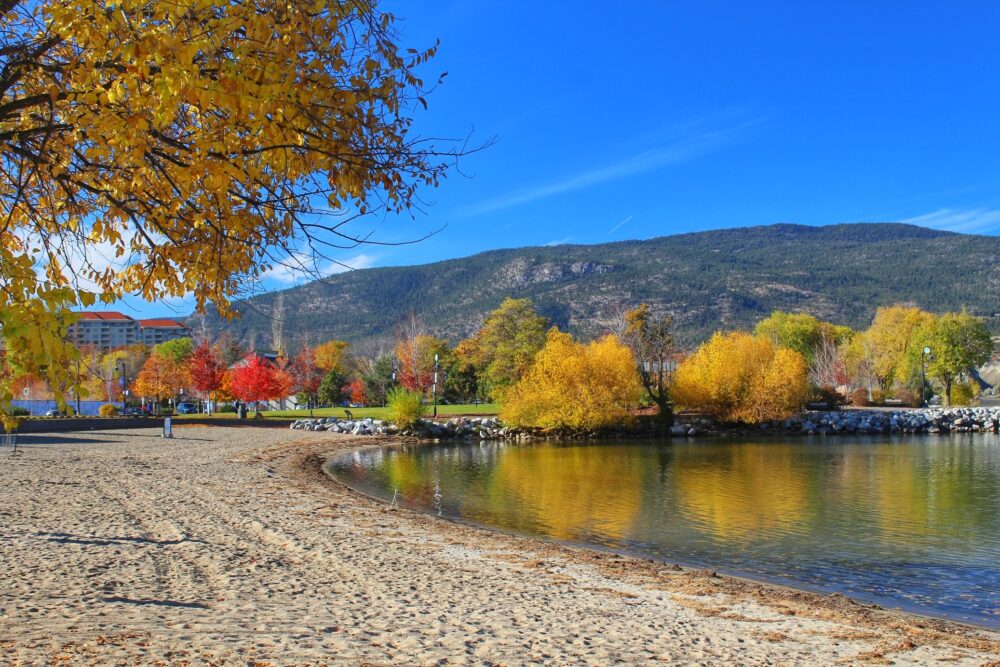
This list is also completely subjective. These are my favourite BC beaches (so far). Your top picks may be different and that’s OK!
The second section of this post features even more amazing beaches in BC, some of which didn’t make my shortlist and others I have not visited yet.

Kye Bay / Air Force Beach, Comox
Vanouver Island’s Comox Valley area is host to many incredible beaches. I managed to narrow it down to two, or rather, three.
Kye Bay is situated behind the airport in Comox, with the beach looking out towards Powell River and the snow-capped coastal mountains.
This beach is the best at low tide when the sand stretches as far as the eye can see. At high tide, the remaining mix is a mix of pebbles, sand and driftwood.
Air Force Beach is a private beach administered by CFB, the local military base (daily parking fees required). It’s located just around the corner from Kye Bay and features soft, golden sand with the same amazing Salis Sea views.
Other beautiful beaches in the Comox Valley area include Kin Beach, Goose Spit (see below), Point Holmes and Singing Sands.
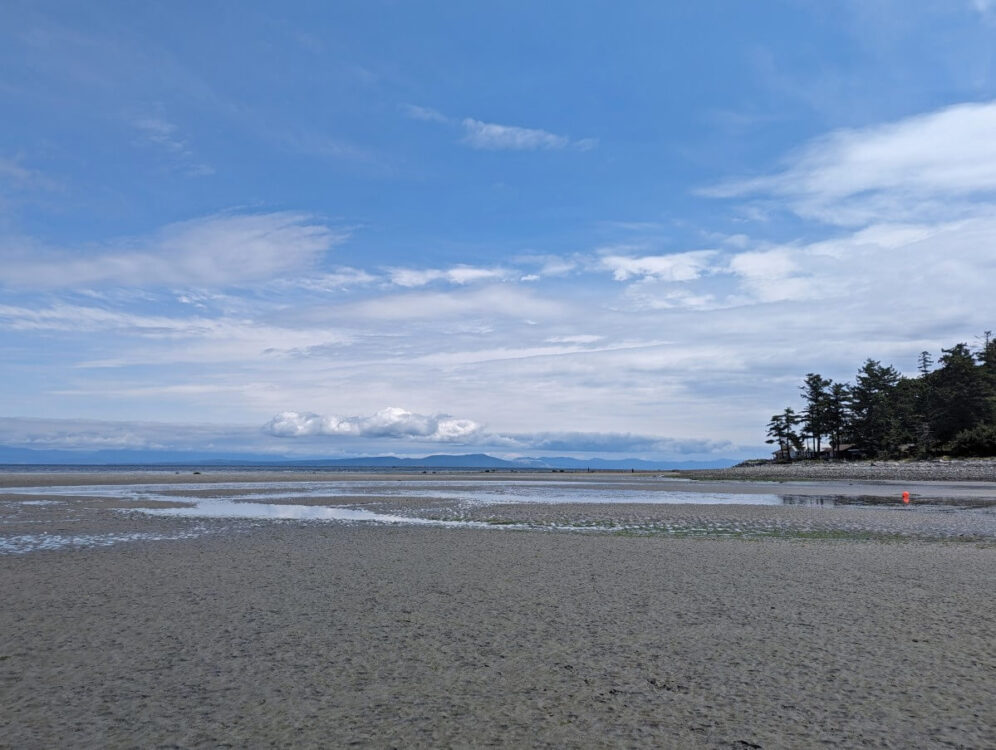
Goose Spit, Comox
A favourite with Comox locals, the sandy Goose Spit stretches a little over two kilometres long into Comox Bay.
The views are incredible, with panoramas across the Salish Sea to the Coastal Mountains and also back towards Vancouver Island. It’s a popular place for birds too, with bald eagles, loons and gulls often resident.
There are several firepits on Goose Spit beach and fires are allowed from the start of May to September, offering the opportunity for perhaps the most scenic campfire you’ve ever had.

Jáji7em and Kw’ulh Marine Park (Sandy Island)
Perched on the end of Denman Island near Vancouver Island, Sandy Island (also known as Tree Island) is only accessible by foot at low tide or by boat. We usually paddle over in our canoe or kayaks.
This little golden oasis offers sandy beaches as far as the eye can see and a whole lot of solitude, impressive for being so close to a populated area of Vancouver Island.
Please note that no fires are allowed on Sandy Island due to the delicate environment. Leave No Trace!

Tribune Bay, Hornby Island
Fine white sand, warm aquamarine waters…is this really British Columbia? Tribune Bay’s 1km long beach rolls out to meet shallow water and provides some of the warmest saltwater swimming in Canada.
A five-minute walk from the beach leads to the Ringside Market, an eclectic mix of cafes and shops selling islander and artisan-made goods.
Two short ferries are necessary to get to Hornby Island. I would say it’s definitely worth it, however!
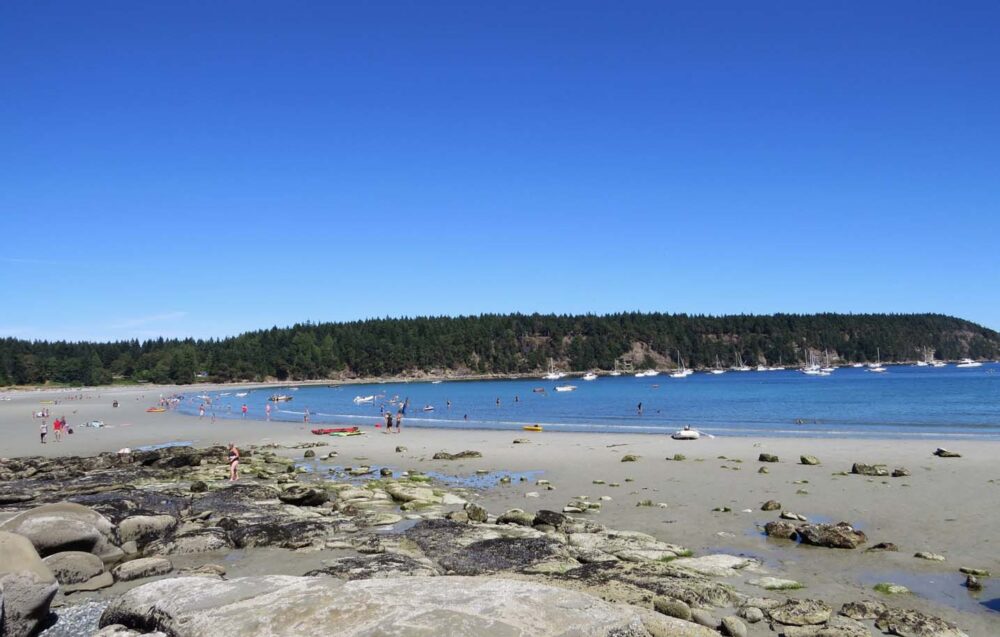
Rathtrevor Beach, Parksville
Featuring an expansive protected shoreline, tidal pools and a lush forest backdrop, Rathtrevor Beach is a must-visit when on Vancouver Island. The golden sand and pebble beach is almost 2km long.
When the tide is out, it feels like you can walk for miles. The views stretch endlessly too, towards offshore islands and distant mountain ranges.
Rathtrevor isn’t the only gorgeous beach in the Parksville area but it is very accessible from the highway and has a huge amount of parking.
There’s a huge provincial park campground behind Rathtrevor Beach – be sure to reserve as early as possible. There’s some nearby accommodation too. We stayed at Sunrise Ridge Waterfront Resort and loved walking the beach at sunset

Sombrio Beach, Juan de Fuca Provincial Park
Sombrio Beach is the longest beach along the Juan de Fuca stretch of Vancouver Island’s coastline. It’s particularly loved by surfers. The beach mostly consists of pebbles, ranging in colour from dark gray to light purple.
A must-see at Sombrio Beach is the Hidden Waterfall. Situated in a mossy canyon at the far eastern side of the beach, I don’t know any other beach in BC that has a waterfall quite like this one!
Other gorgeous beaches in this area include Mystic Beach and Sandcut Beach, both of which have waterfalls that cascade right onto the shore.
With so much to see around Sombrio Beach, I’d recommend staying in the Port Renfrew area for at least a few days. Wild Renfrew is an unforgettable place to stay, featuring private waterfront cottages, some with hot tubs

Botanical Beach, Juan de Fuca Provincial Park
Part of Juan de Fuca Provincial Park, Botanical Beach is a place for geological and wildlife discovery rather than sunbathing.
Black basalt rocks and tide pools replace sand here, providing an insight into intertidal life at the edge of the Pacific.
Visit at low tide to see the shoreline and tide pool wildlife at their best while high tide offers a chance to experience the true power of the ocean (though be sure to keep back from the surf!).
Orcas and Grey whales migrate often travel past these shores so keep an eye out while exploring the beach.
Botanical Beach is located at the very start (or end) of the 47km long Juan de Fuca Marine Trail.
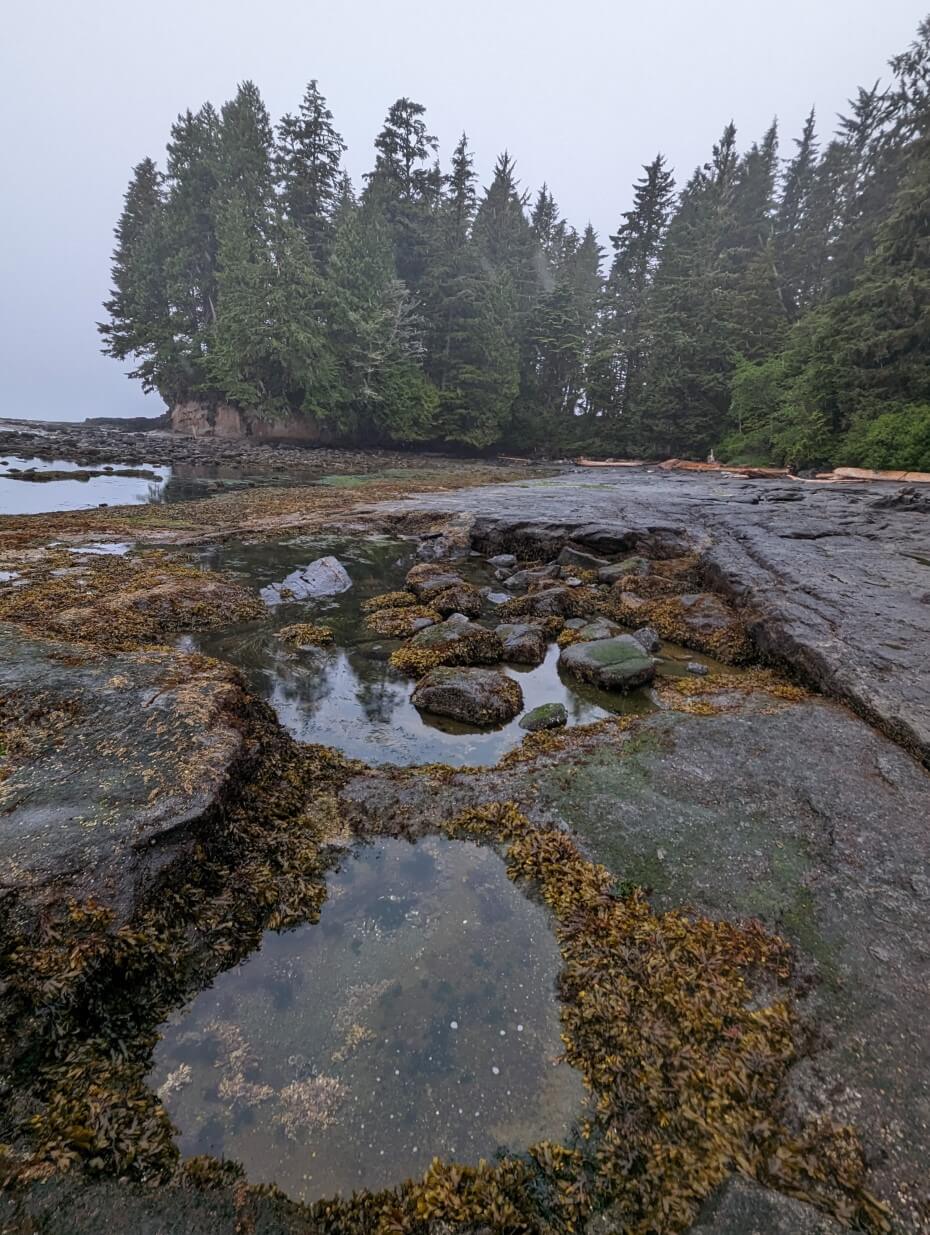
Cox Bay, Tofino
Cox Bay is a sandy, crescent-shaped beach near Tofino on Vancouver Island. The Pacific Ocean laps (and sometimes roars!) onto the beach, with tide pools appearing at both north and south ends at low tide.
There is a rugged but rewarding lookout hike starting from the south side of the beach. Panoramic views of Clayoquot Sound, the Pacific Ocean and dozens of Vancouver Island peaks await at the top.
Cox Bay is an ideal place to watch Tofino’s winter storms roll in. The beach can be hit by 12 metre high waves during storm season. As you can imagine, surfers love it!
Of course, Cox Bay isn’t the only impressive beach in the Tofino area. Mackenzie Beach is also fabulous as is Tonquin Beach and Long Beach (below).
Visiting in storm season? I’d recommend staying at one of the hotels along the beach so you can watch all the action in complete safety! The beach houses at Pacific Sands Beach Resort are incredible, with 12 foot high ceilings

Long Beach, Pacific Rim National Park
I couldn’t possibly make a list of beaches without mentioning Vancouver Island’s probably most visited. Long Beach is aptly named being 16km in length and is part of the Pacific Rim National Park
That does mean that there is a fee to visit, but be assured that is well worth every cent.
Sandwiched between the Pacific Ocean and temperate rainforest, Long Beach has that unique ‘end of the world’ feeling. The sand is pristine, the views remarkable and the surf consistently good.
It is important to note that Long Beach technically includes several other named beaches, including Schooner Cove, Wickaninnish Beach and Combers Beach.

Pachena Bay, Bamfield
Located at the northern end of West Coast Trail near Bamfield, Pachena Bay is a welcome sight after finishing this epic coastal backpacking route.
This stunning pristine white sand beach looks almost too good to be real. The only catch is that it’s not really a swimming beach as the Pacific Ocean is very cold.
It is not necessary to hike the WCT to visit Pachena Bay, since there is (unpaved) road access. The 83km journey usually takes around two hours but is worth every second. There is a campground behind the beach.

Carmanah Beach, Pacific Rim National Park
The 75km long West Coast Trail features many spectacular beach sections, with my top pick being Carmanah Beach.
This 2km+ long stretch of windswept sandy beach is the definition of remote, only being accessible by foot or boat. There is a rustic campground, but most WCT hikers do not stop here (we did and loved it!)
The beach walking experience is atmospheric with the Pacific Ocean crashing right onto the shore and mist swirling around the bordering temperate rainforest. The sandy beach disappears far into the distance.
Other beaches on the West Coast Trail include Walbran, Dare, Clo-ose Bay, Tsusiat, Klanawa and Tsocowis.
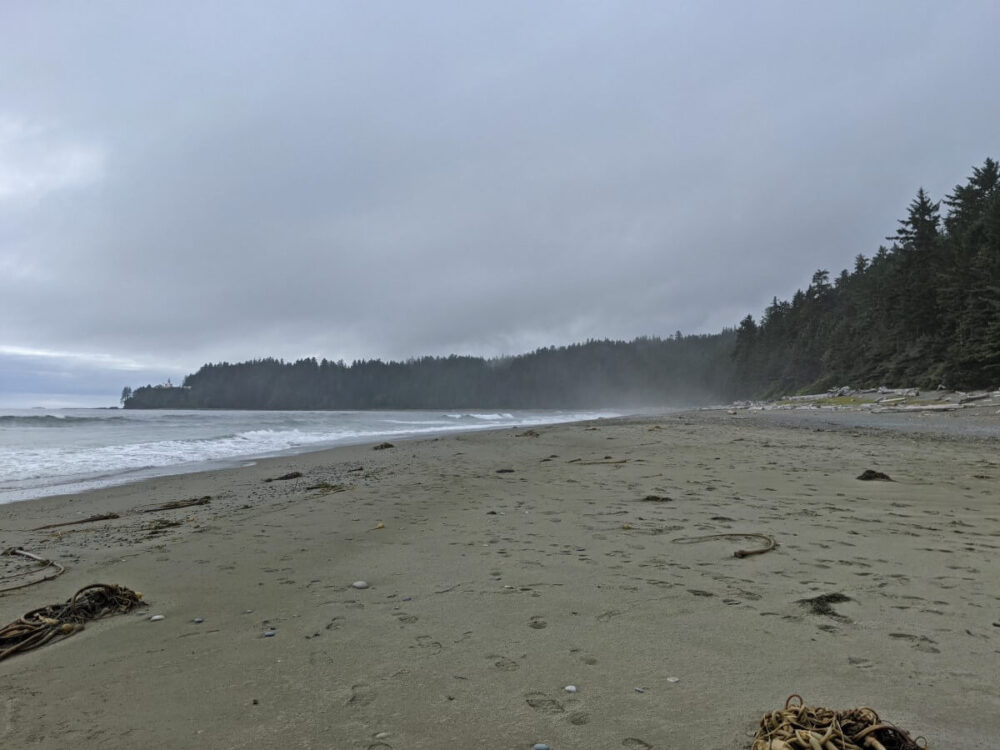
Saratoga Beach, Oyster River
Saratoga Beach is a gorgeous stretch of white sand beach located halfway between Courtenay and Campbell River. There are several public access points from Clarkson Avenue.
It’s definitely my favourite in the area – the sand is so fine and soft. There are panoramic views across the Salish Sea to the snow-capped coastal mountains.
Just to the south is Miracle Beach, which is protected by a provincial park of the same name.
Unlike Saratoga, it has no houses backing onto the beach so it does feel a little more wild. The park has some short forest trails, washrooms and picnic facilities.
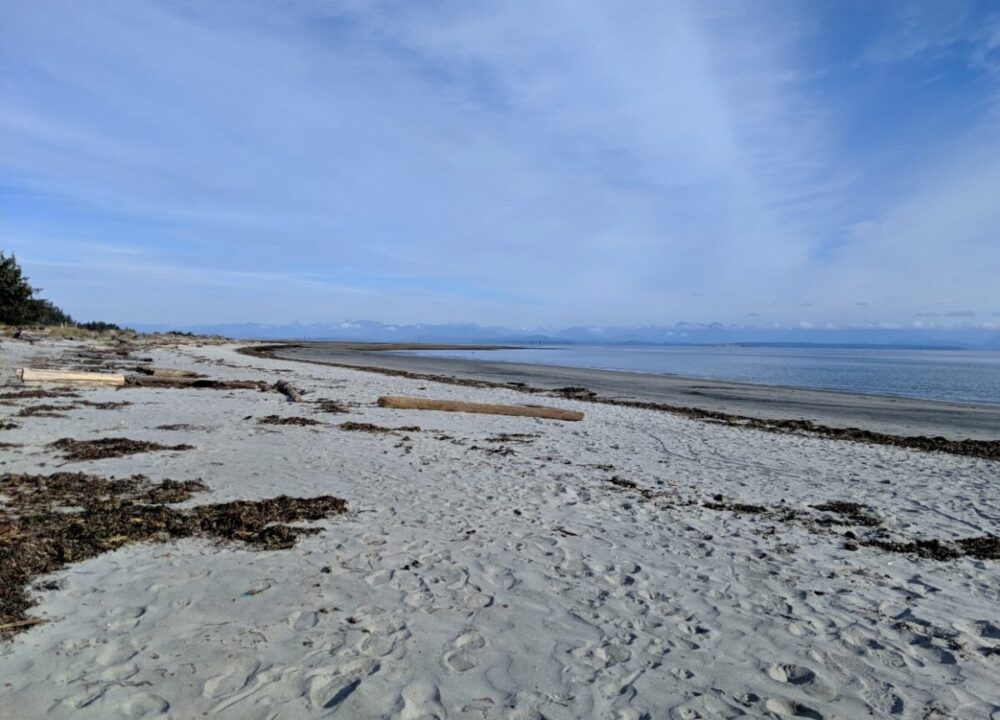
Nels Bight, Cape Scott Provincial Park
The whole northwestern Vancouver Island area offers fantastic windswept and wild sandy beaches on the edge of the Pacific.
Nels Bight is, in my opinion, one of the best as it is more than 2km long! It is only reachable by boat or a 30km return hike on the Cape Scott Trail.
A stunning sight and relief for hikers with sore (and most probably, wet) feet, Nels Bight makes for an excellent base camp location for exploring the Cape Scott Lighthouse and other surrounding beaches.
Not up for a multi-day hike? No problem. Beautiful San Josef Bay is only a 45 minute walk from the same trailhead (and is home to the flower pot rocks!) Raft Cove is another nearby option, though the hike-in is much more rugged.
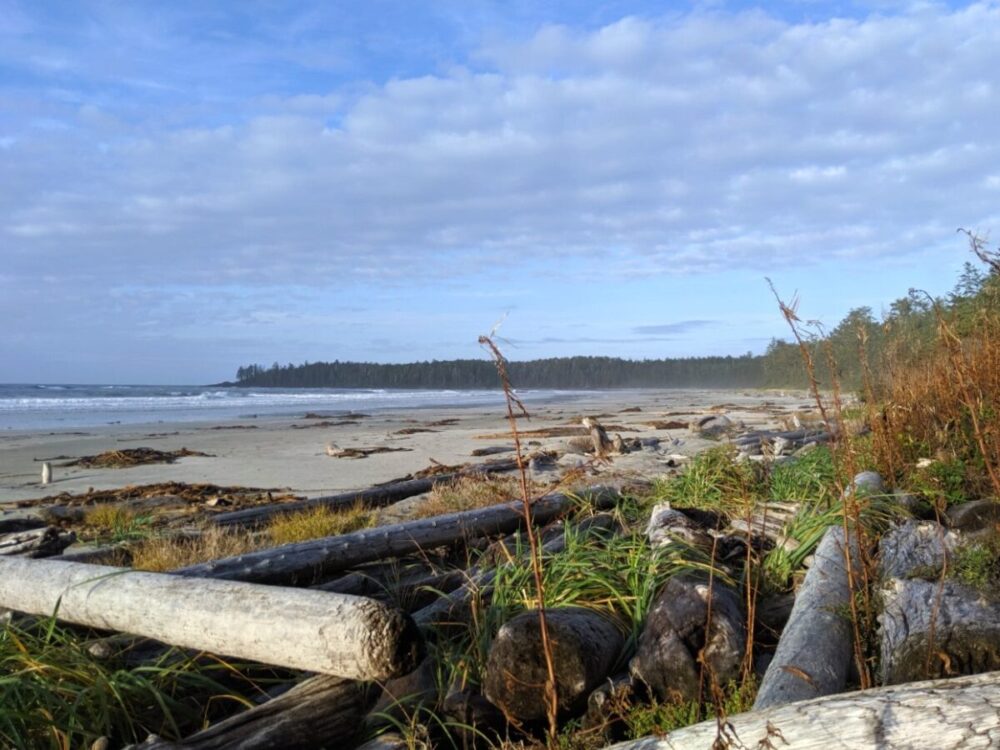
Davis Bay Beach, Sunshine Coast
The Sunshine Coast is host to many smaller beaches, with one of my favourites being Davis Bay near Sechelt.
While the pebble beach itself is quite small during most of the day, it becomes far more expansive and sandy at low tide.
A paved promenade borders the beach, which makes Davis Bay the perfect place for a scenic stroll. Sunset is the best time since the beach faces west and has uninterrupted views of the horizon.
There is a small wooden pier on the northern side of the beach. This is a very popular place to go crabbing and fishing.
The only downside to this beach is that it is right on the highway and can be a bit noisy.
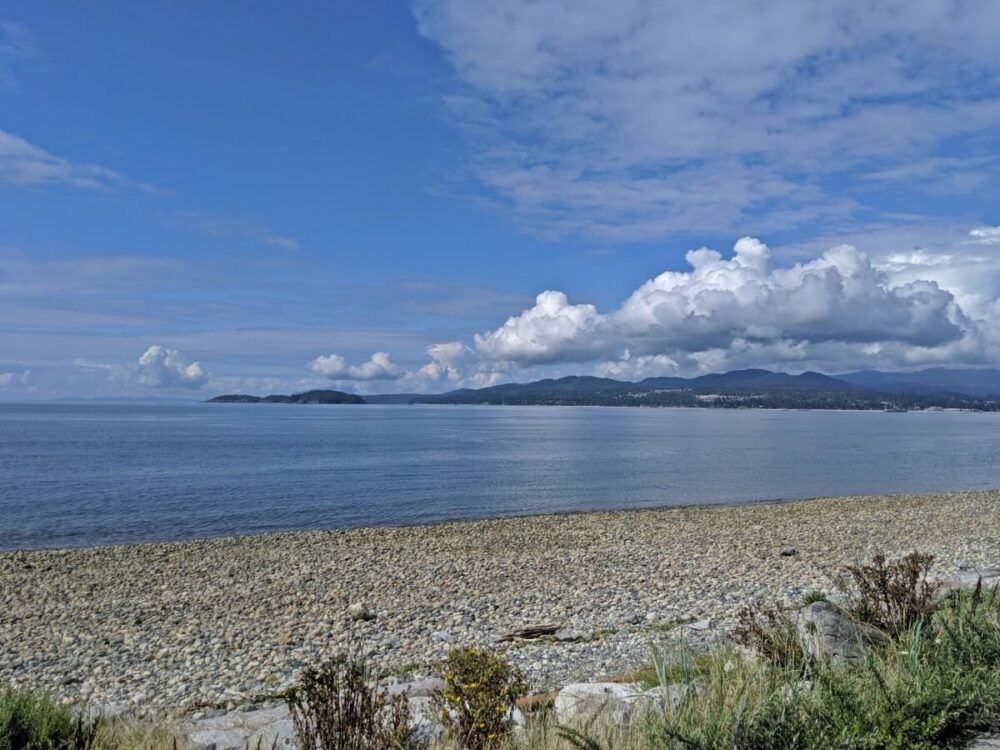
Jericho Beach, Vancouver
Vancouver is home to a somewhat surprising amount of amazing beaches for such a large city so it was hard to choose just one.
Jericho Beach has the benefit of mountain, ocean AND city views plus a bunch of great take-out places and grocery stores in nearby Kitsilano to pick up a beach picnic or barbeque supplies from.
Long, wide and with plenty of driftwood to sit and rest on, there is space on Jericho Beach for everyone to watch the sunset or just hang out.
Of course, nearby Kits Beach is a worthwhile addition to this list as well.

Gyro Beach, Osoyoos
As Canada’s warmest freshwater lake, Osoyoos Lake is THE place the swim in BC’s interior! The actual temperature varies but it averages 24°C in summer. I do find that it feels cooler though since the air temperature is often so hot (32°C+!)
Gyro Beach is the biggest in town and is also only a few minutes walk from downtown Osoyoos.
The beach is lined by grass and shady trees with a large lawn area located at the northern end as well. Gyro is usually very busy in July and August but I find it still has such a chill vibe. There’s a smaller, and typically quieter, beach at nearby Lions Park.
Free music is performed in Gyro Park on Friday evenings during the summer months. It’s also a great spot to watch the country’s second-largest fireworks display on Canada Day!

Skaha Lake Park, Penticton
Penticton’s Skaha Beach is sometimes called one of the best beaches in all of Canada! This sweeping 500m long stretch of golden sand is situated at the southern end of the city, offering spectacular views straight down Skaha Lake.
The most special aspect of Skaha Beach is that it is backed by 21 acres of parkland.
This not only provides great separation from the surrounding urban area but also means beach visitors have access to plenty of amenities including several playgrounds, a splash park, tennis courts, volleyball courts, walking paths, a baseball diamond, fire pits and more.
Neighbouring Sudbury Beach is another amazing BC beach that deserves a place on this list. Other Penticton beaches we love include Marina Way Beach (it’s just a few blocks from our house!) and Okanagan Beach.

Sun-Oka Beach Provincial Park, Summerland
135km long Okanagan Lake is lined by many sandy and rocky beaches. Sun-Oka gets my vote as one of the best beaches on Okanagan Lake as it set into a ‘natural’ location i.e. not within an urban area.
At Sun-Oka, you can fully enjoy the beauty of Okanagan Lake and truly get away from it all!
The main beach features soft golden sand is 600m long. Facing south, it receives a lot of sun all day. Sun-Oka is very popular with families and especially dog owners as there is a separate dog friendly area east of the main beach.
For a similar ‘natural’ beach feel elsewhere on Okanagan Lake, I’d recommend heading to Ellison Provincial Park in Vernon.
Kal Beach, Vernon
The city of Vernon is surrounded by three lakes – Okanagan, Kalamalka and Swan Lake. Residents therefore have easy access to many different beaches.
The most popular, however, is Kal Beach on Kalamalka Lake. Situated just a 10 minute drive from Vernon’s downtown area, Kal Beach’s main attraction is a long strip of soft golden sand. Scattered trees provide plenty of shade.
Kal Beach’s amenities are ideal for families, with restrooms, snack bars, SUP rentals, beach volleyball courts and even a wooden pier.
If Kal Beach sounds a little busy for your taste, head to Kalamalka Lake Provincial Park.
A short hiking trail from the Yellow Gate parking lot leads to Juniper and Jade beaches. These pretty twin bays are blessed with warm, crystal clear water (shining with Kal Lake’s famous green-blue hues!)
Sandspit Beach, Kokanee Creek Provincial Park, Nelson
This beach is one of my new favourites, with our first visit being in August 2023. Sandspit Beach is located on Kootenay Lake, almost half way between Nelson and the Balfour ferry.
The pebble/sand beach is huge (1km+) with plenty of space for tourists and residents alike on a sunny day. The lake is surprisingly warm and perfect for swimming.
The beach is backed by two vehicle accessible campgrounds, though there is good separation with forest and grass. There are coin operated day use showers, watersports rentals, picnic tables and a designated dog beach.
Kokanee Creek Provincial Park has another beach, Redfish Beach, situated on the other side of the park. I’e been told about many other amazing beaches along this stretch of shoreline, some accessible through private land only.
More BC beaches to visit
The following are great examples of beautiful BC lake beaches. They just didn’t quite make my shortlist!
Boyce-Gyro Beach Park, Kelowna
Located a little further south than the downtown waterfront area, Boyce-Gyro Beach Park is one of the most popular beaches in Kelowna. But for good reason!
This gorgeous stretch of golden sand has plenty of shady areas, perfect for the Okanagan heat. It has a large playground as well as an inflatable waterpark, plus volleyball courts and watersport rentals.
If you get hungry, there is an on-site concession. A number of restaurants (and a brewery) are situated within easy walking distance.
This BC beach is completely free to visit but expect to pay for parking.
Canoe Beach, Salmon Arm
Shuswap Lake features more than 1,430km of shoreline. Exploring it is a much easier prospect if you have a boat. If you don’t, beach options in this area are a little more limited.
One of the most easily accessible public beaches is Canoe Beach near Salmon Arm. This spacious sandy beach has beautiful views of forested mountains.
The water can be a little muddy but the convenience and amenities (playground, grass areas, volleyball, concession) more than make up for it.
Herald Provincial Park is great for swimming but is a longer drive from the highway. Nearby Sunnybrae Community Park is also lovely. Sicamous Beach Park is another worthwhile destination while in the area.
Christina Lake Public Beach
Despite being relatively narrow and surrounded by mountains, Christina Lake is BC’s warmest tree lined lake. The water temperature averages around 22°C on summer days.
The main public beach in Christina Lake Provincial Park is very well organised, with 350m of sand along the shoreline, a good amount of shady trees and a large parking lot.
There are some pocket beaches in Gladstone Provincial Park, accessible via the campground. The park is also host to a number of expansive boat-only beaches further up the lake.
Our favourite of these is Axel Johnson Marine Campsite. We once camped overnight ($13 per party or vessel).

Kinsmen Beach, Invermere
A beach with views of the Purcell and Rocky Mountains? Yes, please! Kinsmen Beach features a good stretch of pebble/sand on beautiful Lake Windermere.
The beach is bordered by grassy lawn, with plenty of picnic tables and shade. Families are well catered for with a playground, roped swimming area, swimming platform and slide.
The water was pretty shallow (hip deep) for a far distance when we last visited in August 2023.