
Recontextualization Painting : Moon

Before we build moon bases, or mine the moon, we should think about the problems o negatively effecting the moons orbit, which then could destroy the earths climate and weather patterns.
Moon dust to bases: New 3D laser technique could be the future of lunar bases, Ohio State University scientists are melting Moon dirt with lasers to build the foundations of lunar bases. Feb 28, 2026 06:59 AM EST , and SpaceX’s Moonbase Alpha: The Future of Lunar Living February 7, 2025 by Admin For half a century, the Moon has waited in silence. Now, humanity is finally answering its call—not just to visit, but to stay. In a historic partnership, NASA and SpaceX are embarking on humanity’s most ambitious lunar venture: establishing the first permanent moon base. At the heart of this mission stands Starship, the most powerful spacecraft ever built, designed not just to reach the Moon but to transform it into our second home. Elon Musk’s Vision for Moonbase Alpha
When Elon Musk unveiled SpaceX’s vision for Moonbase Alpha, he didn’t just present another space project—he revealed humanity’s first real shot at becoming a multiplanetary species. “We want to far exceed what NASA’s asked us to do,” Musk declared, his voice carrying the weight of this historic ambition. “We’re going to build a permanent occupied moon base.”
The name “Moonbase Alpha” resonates deeply with space enthusiasts, drawing inspiration from the iconic lunar base in Space: 1999. However, unlike its fictional counterpart, this base is becoming a reality through cutting-edge technology and human perseverance, all centered around humanity’s most ambitious spacecraft, Starship. Engineering Challenges of the Lunar Environment,Surviving the Moon’s Gravity and Radiation The lunar environment presents a complex web of hazards that must be overcome for any hope of long-term survival. One of the most immediate challenges is the Moon’s reduced gravity—just one-sixth of what we experience on Earth. This seemingly simple difference creates a cascade of complications that threaten the very stability of the base. Picture a pencil balanced on its tip—that’s essentially what a vertical Starship faces on the lunar surface.
ALSO, Mining the moon for minerals could be worth billions, but astronomers warn it’s bad news for science By Joshua Nelken-Zitser mages Feb 25, 2025, 3:20 AM PT, Moon mining could become a multibillion-dollar industry. The moon holds resources like rare earth elements, water ice, and helium-3. But astronomists say large-scale lunar mining could be bad news for scientific research.
Mining the moon for water, helium-3, and rare earth elements could become a multibillion-dollar industry in the near future, but astronomers warn it risks coming at the expense of scientific discovery.The NASA-sponsored Jet Propulsion Laboratory estimates that the moon holds untapped resources worth hundreds of billions of dollars.These include water ice, which could support lunar habitation or be converted into rocket fuel, and rare earth elements, which are a key component in modern electronics.
Interestingly, to date, America, China, Russia, have sent small space probe satellites to take moon dust from the moon, several pounds, which is actually negative, in that taking to much Moon dirt, puts the Moons orbit into jeopardy.

No moon bases. No moon Mining. Keep the Moon simple # 1, Acrylic on pape, 11 in x 8.5 in, 2024

No moon bases. No moon Mining. Keep the Moon simple # 2, Acrylic on paper, 11 in x 8.5 in, 2024

No moon bases. No moon Mining. Keep the Moon simple # 3 , Acrylic on paper, 11 in x 8.5 in, 2024

No moon bases. No moon Mining. Keep the Moon simple # 4 , Acrylic on paper, 11 in x 8.5 in, 2024

No moon bases. No moon Mining. Keep the Moon simple # 5 , Acrylic on paper, 11 in x 8.5 in, 2024

No moon bases. No moon Mining. Keep the Moon simple # 6 , Acrylic on paper, 11 in x 8.5 in, 2024

No moon bases. No moon Mining. Keep the Moon simple # 7 , Acrylic on paper, 11 in x 8.5 in, 2024

No moon bases. No moon Mining. Keep the Moon simple # 8 , Acrylic on paper, 11 in x 8.5 in, 2024

No moon bases. No moon Mining. Keep the Moon simple # 9 , Acrylic on paper, 11 in x 8.5 in, 2024

No moon bases. No moon Mining. Keep the Moon simple # 10 , Acrylic on paper, 11 in x 8.5 in, 2024

No moon bases. No moon Mining. Keep the Moon simple # 11 , Acrylic on paper, 11 in x 8.5 in, 2024
Private: Recontextualization: Barnett Newman

Barnett Newman # 1, Acrylic on paper, 9 in x 6 in , 2023 ( photographed + reprinted giclee on paper,, 27 in x 18 in, 2023)

Barnett Newman # 2, Acrylic on paper, 9 in x 6 in , 2023 ( photographed + reprinted giclee on paper, 27 in x 18 in, 2023)

Barnett Newman # 3, Acrylic on paper, 9 in x 6 in , 2023 ( photographed + reprinted giclee on paper, 27 in x 18 in, 2023)

Barnett Newman # 4, Acrylic on paper, 9 in x 6 in , 2023 ( photographed + reprinted giclee on paper, 27 in x 18 in, 2023)

Barnett Newman # 5, Acrylic on paper, 9 in x 6 in , 2023 ( photographed + reprinted giclee on paper, 27 in x 18 in, 2023)

Barnett Newman # 6, Acrylic on paper, 9 in x 6 in , 2023 ( photographed + reprinted giclee on paper, 27 in x 18 in, 2023)

Barnett Newman # 7, Acrylic on paper, 9 in x 6 in , 2023 ( photographed + reprinted giclee on paper, 27 in x 18 in, 2023)

Barnett Newman # 8, Acrylic on paper, 9 in x 6 in , 2023 ( photographed + reprinted giclee on paper, 27 in x 18 in, 2023)

Barnett Newman # 9, Acrylic on paper, 9 in x 6 in , 2023 ( photographed + reprinted giclee on paper, 27 in x 18 in, 2023)

Barnett Newman # 10, Acrylic on paper, 9 in x 6 in , 2023 ( photographed + reprinted giclee on paper, 27 in x 18 in, 2023)

Barnett Newman # 11, Acrylic on paper, 9 in x 6 in , 2023 ( photographed + reprinted giclee on paper, 27 in x 18 in, 2023)

Barnett Newman # 12, Acrylic on paper, 9 in x 6 in , 2023 ( photographed + reprinted giclee on paper, 27 in x 18 in, 2023)

Barnett Newman # 13, Acrylic on paper, 9 in x 6 in , 2023 ( photographed + reprinted giclee on paper, 27 in x 18 in, 2023)
Private: Recontextualization Painting: Exhibition: Yves Klein ” Into the Void”
Exhibition: Into the Void
Exhibition: Into the Void
To paint the following painting, 43 in x 40 in, as 10 feet x 10 feet, then exhibit eight in a large gallery room.
To exhibit eight 10 foot by 10 foot minimal black paintings in a large white gallery room with 12/15 foot high and 40 to 50 foot long walls.
Then exhibit the paintings in a matte mid red/black gallery room.
Then exhibit the paintings in a primary cad yellow gallery room.
Then exhibit the paintings in a primary mid ultramarine gallery room.
Then exhibit the paintings in a primary mid cad red gallery room.
Then exhibit the paintings in a mid matte grey gallery room.
Then exhibit the paintings in a mid magenta gallery room.
Then exhibit the paintings in a mid green gallery room.

Yves Klein Into the Void # 1 , Acrylic on canvas, 40 in x 40 in, 2016
Yves Klein Into the Void # 2 , Acrylic on canvas, 40 in x 40 in, 2016
Yves Klein Into the Void # 3 , Acrylic on canvas, 40 in x 40 in, 2016
Yves Klein Into the Void # 4 , Acrylic on canvas, 40 in x 40 in, 2016
Yves Klein Into the Void # 5 , Acrylic on canvas, 40 in x 40 in, 2016
Yves Klein Into the Void # 6 , Acrylic on canvas, 40 in x 40 in, 2016
Yves Klein Into the Void # 7 , Acrylic on canvas, 40 in x 40 in, 2016
Yves Klein Into the Void # 8 , Acrylic on canvas, 40 in x 40 in, 2016
Artist Statement
This exhibition is an exploration of Yves Klein’s work, Into the Void, where he leaps of a wall in a photo. A void is a sometimes an empty space or full space. It is an act, It is an idea. It is an expression. A void can not exist without something that is not a void. The void is an existential and romantic and idealist notion. I am painting the void, which is impossible, as the void can never be represented.
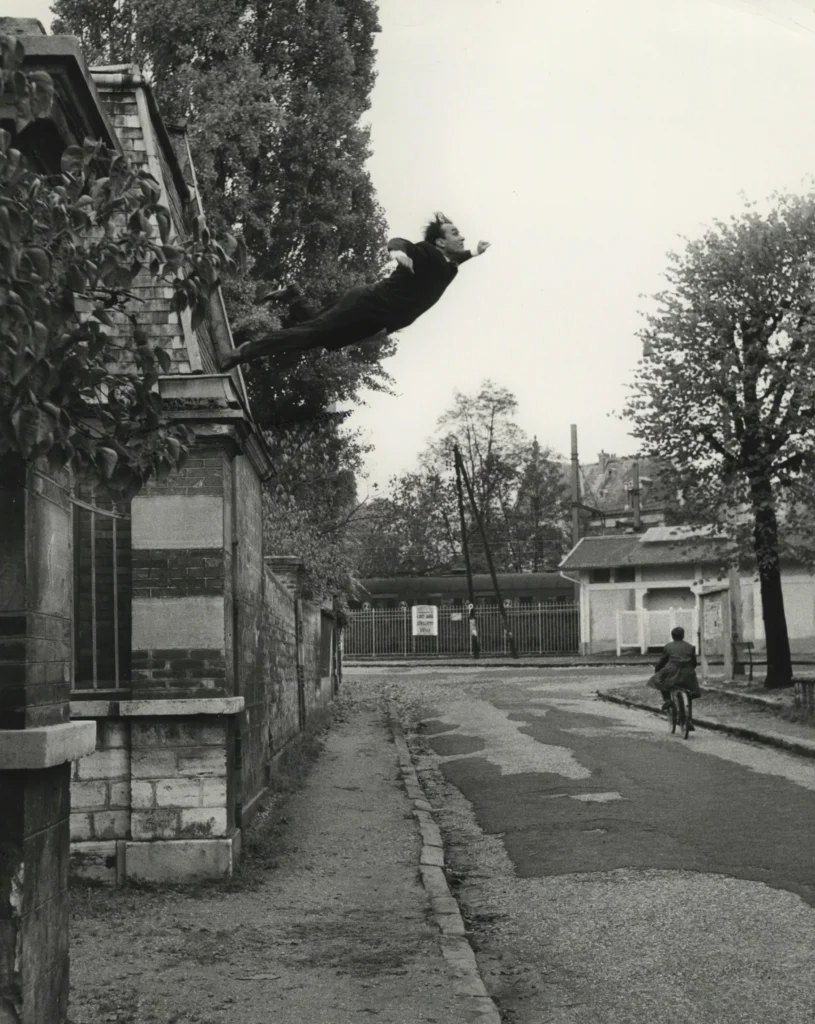
Leap into the Void
Artistic action by Yves Klein French
Photographed by Harry Shunk German
Photographed by János (Jean) Kender Hungarian
1960
Leap into the Void
Artistic action by Yves Klein French
Photographed by Harry Shunk German
Photographed by János (Jean) Kender Hungarian
1960
Not on view
As in his carefully choreographed paintings in which he used nude female models dipped in blue paint as paintbrushes, Klein’s photomontage paradoxically creates the impression of freedom and abandon through a highly contrived process. In October 1960, Klein hired the photographers Harry Shunk and Jean Kender to make a series of pictures re-creating a jump from a second-floor window that the artist claimed to have executed earlier in the year. This second leap was made from a rooftop in the Paris suburb of Fontenay-aux-Roses. On the street below, a group of the artist’s friends from held a tarpaulin to catch him as he fell. Two negatives–one showing Klein leaping, the other the surrounding scene (without the tarp)–were then printed together to create a seamless “documentary” photograph. To complete the illusion that he was capable of flight, Klein distributed a fake broadsheet at Parisian newsstands commemorating the event. It was in this mass-produced form that the artist’s seminal gesture was communicated to the public and also notably to the Vienna Actionists.
Recontextualization Painting : Exhibition: Yves Klein ” The Blue Room”
Exhibition: The Blue Room
To enlarge each work to 10 feet by 10 feet, and place one work in each wall in a large white room
This series explores the colour blue in reflecting on art, Nature, culture. I feel blue is a colour that when presented in room has existential meaning. I have selected works with texture, with abstract expressionism, with colour field, to open the conversation to how we experience colour.

Yves Klein The Blue Room #1 , Acrylic on Canvas, photographed, 24 in x 20 in, 2016, to be reprinted gilcee on paper, 24 in x 24in, 2022, to be reprinted and enlarged, 120 in x 120 in, 2030

Yves Klein The Blue Room #2 , oil on Canvas, 33 in x 30 in, 1990, photographed, to be reprinted gilcee on paper, 24 in x 24in, 2027, to be reprinted and enlarged, 120 in x 120 in, 2030

Yves Klein The Blue Room #3 , Acrylic on Canvas, 24 in x 20 in, 2020, to be reprinted giclee on paper, 24 in x 24in, 2027, to be reprinted and enlarged, 120 in x 120 in, 2030

Yves Klein The Blue Room # 4 , Acrylic on Canvas, 40 in x 40 in, 2010, to be reprinted gilcee on paper, 24 in x 24in, 2027, to be reprinted and enlarged and framed, 120 in x 120 in, 2030
Nietzsche Drager / Exhibition :Conceptual Art Painting / Recontextualization : ” Monet, Water , and Waterlilies”, 2021
Reflecting on Monet’s Waterlilies paintings and his Garden. I use photoshop to explore and expand the warm and cold colours in the Waterlilies, his flowers, to give the image of water an intense look. Focusing on the water, my fascination is in water’s texture, light, colour. Water and nature and water features such as reefs, landscape, sea life, are poetic in suggestions and hints and metaphors of images within each other, patterns, shapes, colours, as a vast array of nuance and variance.

Impressionism ( Waterlilies ) number one , acrylic on canvas, 90 in x 120 in, 2021 ( photographed + photoshop + reprinted giclee on paper, 30 in x 40 in, 60 in x 80 in, 120 in x 160 in, 2030 )

Impressionism ( Waterlilies ) number two , acrylic on canvas, 40 in x 40 in, 2021 ( photographed + photoshop + reprinted giclee on paper, 40 in x 40 in, 120 in x 120 in, 2030 )

Impressionism ( Waterlilies ) number three , acrylic on canvas, 40 in x 40 in, 2021 ( photographed + photoshop + reprinted giclee on paper, 40 in x 40 in, 120 in x 120 in, 2030 )

Impressionism ( Waterlilies ) number four , acrylic on canvas, 40 in x 40 in, 2021 ( photographed + photoshop + reprinted giclee on paper, 40 in x 40 in, 120 in x 120 in, 2030 )

Impressionism ( Waterlilies ) number five , acrylic on canvas, 90 in x 120 in, 2021 ( photographed + photoshop + reprinted giclee on paper, 30 in x 40 in, 60 in x 80 in, 120 in x 160 in, 2030 )

Impressionism ( Waterlilies ) number six , acrylic on canvas, 40 in x 40 in, 2021 ( photographed + photoshop + reprinted giclee on paper, 40 in x 40 in, 120 in x 120 in, 2030 )

Impressionism ( Waterlilies ) number seven, acrylic on canvas, 90 in x 120 in, 2021 ( photographed + photoshop + reprinted giclee on paper, 30 in x 40 in, 60 in x 80 in, 120 in x 160 in, 2030 )

Impressionism ( Waterlilies ) number eight , acrylic on canvas, 90 in x 120 in, 2012 ( photographed + photoshop + reprinted giclee on paper, 30 in x 40 in, 2016 )

Impressionism ( Waterlilies ) number nine , acrylic on canvas, 90 in x 120 in, 2021 ( photographed + photoshop + reprinted giclee on paper, 30 in x 40 in, 60 in x 80 in, 120 in x 160 in, 2030 )

Impressionism ( Waterlilies ) number ten , acrylic on canvas, 90 in x 120 in, 2021 ( photographed + photoshop + reprinted giclee on paper, 30 in x 40 in, 60 in x 80 in, 120 in x 160 in, 2030 )

Impressionism ( Waterlilies ) number ele en , acrylic on canvas, 40 in x 40 in, 2021 ( photographed + photoshop + reprinted giclee on paper, 40 in x 40 in, 120 in x 120 in, 2030 )

Impressionism ( Waterlilies ) number twele e , acrylic on canvas, 40 in x 40 in, 2021 ( photographed + photoshop + reprinted giclee on paper, 40 in x 40 in, 120 in x 120 in, 2030 )

Impressionism ( Waterlilies ) number thi een , acrylic on canvas, 90 in x 120 in, 2021 ( photographed + photoshop + reprinted giclee on paper, 30 in x 40 in, 60 in x 80 in, 120 in x 160 in, 2030 )

Impressionism ( Waterlilies ) number outeen , acrylic on canvas, 90 in x 120 in, 2021 ( photographed + photoshop + reprinted giclee on paper, 30 in x 40 in, 60 in x 80 in, 120 in x 160 in, 2030 )

Impressionism ( Waterlilies ) number iteen , acrylic on canvas, 40 in x 40 in, 2021 ( photographed + photoshop + reprinted giclee on paper, 40 in x 40 in, 120 in x 120 in, 2030 )

Impressionism ( Waterlilies ) number sixteen , acrylic on canvas, 40 in x 40 in, 2021 ( photographed + photoshop + reprinted giclee on paper, 40 in x 40 in, 120 in x 120 in, 2030 )

Water Lilies # seenteen , Acrylic, gouache, felt marker, ink, watercolour, pen, watercolour pencil on canvas, 96 in x 121 in, 2021 ( photographed + photoshop + reprinted giclee on paper, 30 in x 40 in, 60 in x 80 in, 120 in x 160 in, 2030 )

Impressionism ( Waterlilies ) number eihteen , acrylic on canvas, 90 in x 120 in, 2012 ( photographed + photoshop + reprinted giclee on paper, 30 in x 40 in, 2016 )

Impressionism ( Waterlilies ) number nineteen , acrylic on canvas, 40 in x 40 in, 2021 ( photographed + photoshop + reprinted giclee on paper, 40 in x 40 in, 120 in x 120 in, 2030 )

Impressionism ( Waterlilies ) number weny , acrylic on canvas, 90 in x 120 in, 2021 ( photographed + photoshop + reprinted giclee on paper, 30 in x 40 in, 60 in x 80 in, 120 in x 160 in, 2030 )

Impressionism ( Waterlilies ) number weny one , acrylic on canvas, 90 in x 120 in, 2012 ( photographed + photoshop + reprinted giclee on paper, 30 in x 40 in, 2016 )

Impressionism ( Waterlilies ) number weny wo , acrylic on canvas, 90 in x 120 in, 2012 ( photographed + photoshop + reprinted giclee on paper, 30 in x 40 in, 2016 )

Impressionism ( Waterlilies ) number weny hee ,acrylic on canvas, 40 in x 40 in, 2021 ( photographed + photoshop + reprinted giclee on paper, 40 in x 40 in, 120 in x 120 in, 2030 )

Impressionism ( Waterlilies ) number weny ou ,acrylic on canvas, 90 in x 120 in, 2021 ( photographed + photoshop + reprinted giclee on paper, 30 in x 40 in, 60 in x 80 in, 120 in x 160 in, 2030 )

Impressionism ( Waterlilies ) number weny ie , acrylic on canvas, acrylic on canvas, 40 in x 40 in, 2021 ( photographed + photoshop + reprinted giclee on paper, 40 in x 40 in, 120 in x 120 in, 2030 )

Impressionism ( Waterlilies ) number wenty six , acrylic on canvas, 40 in x 40 in, 2021 ( photographed + photoshop + reprinted giclee on paper, 40 in x 40 in, 120 in x 120 in, 2030 )

Impressionism ( Waterlilies ) number weny seen , acrylic on canvas, 90 in x 120 in, 2021 ( photographed + photoshop + reprinted giclee on paper, 30 in x 40 in, 60 in x 80 in, 120 in x 160 in, 2030 )

Impressionism ( Waterlilies ) number tweny eih , acrylic on canvas, 90 in x 120 in, 2012 ( photographed + photoshop + reprinted giclee on paper, 30 in x 40 in, 2016 )

Impressionism ( Waterlilies ) number weny nine , acrylic on canvas, 40 in x 40 in, 2021 ( photographed + photoshop + reprinted giclee on paper, 40 in x 40 in, 120 in x 120 in, 2030 )

Impressionism ( Waterlilies ) number hiy , acrylic on canvas, 90 in x 120 in, 2012 ( photographed + photoshop + reprinted giclee on paper, 30 in x 40 in, 2016 )

Impressionism ( Waterlilies ) number hiy one , acrylic on canvas, 40 in x 40 in, 2021 ( photographed + photoshop + reprinted giclee on paper, 40 in x 40 in, 120 in x 120 in, 2030 )

Impressionism ( Waterlilies ) number hiy wo ,acrylic on canvas, 40 in x 40 in, 2021 ( photographed + photoshop + reprinted giclee on paper, 40 in x 40 in, 120 in x 120 in, 2030 )

Impressionism ( Waterlilies ) number hiy heee , acrylic on canvas, 40 in x 40 in, 2021 ( photographed + photoshop + reprinted giclee on paper, 40 in x 40 in, 120 in x 120 in, 2030 )
Aou
The Water Lilies by Claude Monet
Sections
History of the Water Lilies cycle
Texte
Offered to the French State by the painter Claude Monet on the day that followed the Armistice of November 11, 1918 as a symbol for peace, the Water Lilies are installed according to plan at the Orangerie Museum in 1927, a few months after his death. This unique set, a true « Sixtine Chapel of Impressionism » in the words of André Masson in 1952, testifies to Monet’s later work. It was designed as a real environment and crowns the Water Lilies cycle begun nearly thirty years before. The set is one of the largest monumental achievements of early twentieth-century painting.
Read more
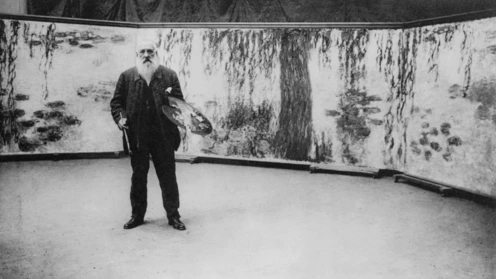
© DR
Claude Monet, the impressionist of the landscape
Texte
Claude Monet was born in Paris and grew up in Normandy in the town of Le Havre. He was introduced to the representation of nature in painting through contact with the painter Eugène Boudin (1824-1898). He arrived in Paris in 1859 and entered the studio of Charles Gleyre (1806-1874), where he made the acquaintance of the painters Pierre-Auguste Renoir (1841-1919), Alfred Sisley (1839-1899) and Frédéric Bazille (1841-1870). Edouard Manet influenced him in the early 1860s, while he was developing more personal landscapes.
The eight compositions of the Water Lilies
Oeuvres Reflets d’arbres Les Nuages Le Matin clair aux saules Les Deux Saules Soleil couchant Reflets verts Matin Le Matin aux saules
Although harshly criticized at the time it appeared, Impressionism was the first art movement in history that was truly modern for its rejection of the inherited representational canons and painterly styles, as well as for the introduction of innovative tactics such as the artist’s behavior and lifestyle, important aspects that became inseparable from their artistic practices.

The founding father of this influential movement, Claude Monet introduced the fascination with the light and its changing qualities, and unusual visual angles as the main ideas expressed through en plein air landscape painting by himself and other proponents. His revolutionary style came to a peak in the early 1970s, with the iconic painting Impression, Sunrise after which the movement received its name, however, it is another work of his that made him entirely established or rather a series he has been working on for thirty years – Monet’s Water Lilies.
Giverny – The Utopia After Monet
In 1883 Monet and his large family rented the large estate located between the towns of Vernon and Gasny at Giverny that included a doubled barn used as a painting studio, orchards, and a small garden. The artist’s career rapidly grew as he started to sell his paintings, and in late 1890, Monet was able to buy the estate including the land for his gardens. The same year the family built a greenhouse and a second studio lit with skylights.
Monet’s interest in horticulture expanded after 1893 when he bought a surrounding land with a pond that eventually became the water lily garden. With the help of a small group of gardeners, the artist diverted a river, planted water lilies, along with other plants such as weeping willows, bamboo trees, and exotic flowers. Ultimately, the creation of this mesmerizingly beautiful, dreamlike landscape was affiliated with Monet’s desire to organize his property as a huge painting.
Monet started painting the water lilies in 1899, initially in vertical views with the Japanese bridge as a dominant motif and later in the series of large-scale. Throughout his lifetime, he painted more than two hundred paintings featuring this motif.

The Renowned Monet’s Water Lilies
The first Water Lilies series consisting of twenty-five canvases we shown in 1900 at the Galerie Durand-Ruel in Paris. Nine years later Monet finished the second series of forty-eight canvases. To host permanently eight water lily murals during the 1920s the French state built two oval rooms at the Musée de l’Orangerie, but the exhibit opened in 1927, just a few months after Monet’s death. In 1999 for a special exhibition at the same museum, sixty Water Lilies paintings were displayed.
The paintings can be found at museums all over the world, including the Musée d’Orsay in Paris, the Metropolitan Museum of Art, Museum of Modern Art in New York, the Saint Louis Art Museum, the Carnegie Museum of Art, the National Museum of Wales, the Musée des Beaux-Arts de Nantes, to mention a few.
The Water Lilies series set new perimeters for the modern expression, especially abstraction, and became not only Monet’s best-known works, but also the most influential series of the first half of the 20th century.
To bring you closer to the series we decided to present in chronological order ten exceptional examples of Monet’s Water Lilies that are held in the world’s leading collections.
A gorgeous new edition with the cover printed on silver. Towards the end of his life and much inspired by Japanese water gardens, Monet spent a great deal of time in his beloved Giverny. Adorned with poppies, blue sage, dahlias and irises, the waters were disturbed only by bamboos and water lilies. His water garden was originally created to satisfy a need to be near water, and to provide a visual feast that could be enjoyed from his house. The pond was fed by the river Ru, and weeping willow and silver birch hung over its edges, caressing the fronds of the greenery and blossoms below. Its famous green wooden footbridge was built across the water and it became the central focus of many of his works. He said, ‘It took me some time to understand my water lilies. I planted them for pleasure.’ and so he began to work on what is probably the most famous series of paintings the world has ever seen.
Featured image: Claude Monet – Water Lilies, between 1917 and 1919. Oil on canvas. Collection Honolulu Museum of Art. Image creative commons.

Nympheas, 1897 – 1898
One of the first paintings featuring water lilies was made between 1897 and 1898, and it set the standard for the exploration of this motif. This particular version centered on the floating water lilies and their reflections is untypical from the rest of the early works for its horizontal format.
The painting Nympheas is held at the Los Angeles County Museum of Art.
Featured image: Claude Monet – Nympheas, between circa 1897 and circa 1898. Oil on canvas. Height: 26 in (66 cm); Width: 41 in (104.1 cm). Collection Los Angeles County Museum of Art. Image creative commons.

Claude Monet

The Water-Lily Pond, 1899
The second canvas on our top list was made by the artist in 1899 when he started a series of eighteen depictions of the wooden footbridge over the pond that summer. Focused on the pond with bridge, water plants, and surrounding trees the composition is divided by a fixed horizon. As the following works will show, throughout the time Monet became less and less interested in conventional pictorial space that has become a site for experimentation.
The Water-Lily Pond is part of The Metropolitan Museum of Art collection.
Featured image: Claude Monet – The Water-Lily Pond (also known as Japanese Bridge), 1899. Oil on canvas. Height: 92.7 cm (36.4 in); Width: 73.7 cm (29 in). Collection Metropolitan Museum of Art. Image creative commons.

The Water-Lily Pond, 1900
The Water-Lily Pond is a painting produced in 1900 and is part of the first group of works devoted to this particular motif Monet devotedly explored in his garden. Like the previous work, it also features the Japanese bridge surrounded by the wisterias planted by Monet. This structure was built by a local craftsman, however, by the time the garden was restored the bridge was too damaged and had to be rebuilt.
This artwork is held at the Museum of Fine Arts Boston Collection.
Featured image: Claude Monet – The Water-Lily Pond (also known as Japanese Bridge), 1900. Collection Boston MFA. Image creative commons.

Water Lilies, 1906
This version of Claude Monet’s Water Lilies made in 1906 belongs to the second series of forty-eight canvases that Monet finished three years later. This canvas perfectly illustrates the artist’s perception and the way he focused solely on the surface of the pond amid the reflection of the sky and trees. In 1908, the artist wrote:
These landscapes of water and reflection have become an obsession. This is beyond the strength of an old man, and yet I want to express what I feel. I have destroyed some of the canvases. I begin once again. … I hope something will come of all this effort.
The Water Lilies is held at the Art Institute of Chicago collection.
Featured image: Claude Monet – Water Lilies, 1906. Oil on canvas, 89.9 × 94.1 cm (35.3 × 37 in). Collection Art Institute of Chicago. Image creative commons.

Water-Lilies, Setting Sun, circa 1907
The painting Water-Lilies, Setting Sun depicts the reflection of the yellow and pink rays of the setting sun in the still water, along with the elongated branches of a weeping willow, and lilies drifting on the water’s surface. Interestingly so, the painting was still in Monet’s studio in 1923 when he sold it to an art dealer along with a couple of other works. At the time he was preparing to undergo a cataract operation, and so he asked to keep Water-Lilies, Setting Sun for a while to observe it or perhaps work after it with renewed sight.
Water-Lilies, Setting Sun is held at the National Gallery collection.
Featured image: Claude Monet – Water-Lilies, Setting Sun, circa 1907. Oil on canvas. Height: 73 cm (28.7 in); Width: 92.7 cm (36.4 in). Collection National Gallery. Image creative commons.

Nymphéas, 1914-1917
In 1911 Monet’s second wife Alice died, and only three years later Monet was able to get back to his water lily paintings. His approach shifted, especially when it comes to the canvas size which became monumental in scale. The palette changed as well and the artist started using spots of color to accentuate the flowers. Other artists such as Paul Cezanne, the notable practitioner of Post-impressionism, and Henri Matisse, the first of the Expressionists, were dazzled by these innovations.
This version of Nymphéas is held at the National Gallery of Australia collection.
Featured image: Claude Monet – Nymphéas, c.1914-17. Oil on canvas. Height: 1,810 mm (71.25 in); Width: 2,016 mm (79.37 in). Collection National Gallery of Australia. Image creative commons.
Works by Claude Monet
(Showing 20 of 20 works)


Not on display


La Pointe de la Hève, Sainte-Adresse
Not on display


The Petit Bras of the Seine at Argenteuil

Not on display


Recontextualization Painting
Private: Recontextualization Painting : Exhibition: Louis Vuitton
Recontextualization Painting : Exhibition: Louis Vuitton
Thinking of Frank Llyod Wright, Gerrit Rietveld, Theo van Doesburg, Le Courbusier, and lines in Modern Early Twentieth architecture, including Modernist painting, like Mondrian, I created this series of lines flowing in a type of geometric pattern of horizontal and vertical waves. Adding primary and secondary colors, with a white background gives the work an added layer of echoing a fashion design, like Louis Vuitton or Dolce and Gabbana, hand bag or blouse. The lines also have a partial reference to a broken grid or maze.
With this series, I will make small drawings 9 in x 12 in, scan the drawings, and then enlarge them to very large giclee prints, 48 in x 60 in. Also, these studies will be repainted as 8 feet x 12 feet canvas acrylic paintings.

Louis Vuitton # 1 ( Study ), felt marker on artist paper, 9 in x 12 in, 2024

Louis Vuitton # 2 ( Study ), felt marker on artist paper, 9 in x 12 in, 2024

Louis Vuitton # 3 ( Study ), felt marker on artist paper, 9 in x 12 in, 2024

Louis Vuitton # 4 ( Study ), felt marker on artist paper, 9 in x 12 in, 2024

Louis Vuitton # 5 ( Study ), felt marker on artist paper, 9 in x 12 in, 2024

Louis Vuitton # 6 ( Study ), felt marker on artist paper, 9 in x 12 in, 2024
LOUIS VUTTON ( ON LINE WEBSITE )
Louis Vuitton x Murakami
iconic re-edition
Louis Vuitton x Murakami


Women
New In Bags
- CarryAll BB $3,450.00

$3,600.00
$3,500.00
$3,750.00
Men
Spring-Summer 2025
- Steamer 30 $12,800.00

Private: Recontextualization Painting : Exhibition: Joseph Albers
Exhibition: Square Re- Framed ( Study in the Variation of Rectangle- Joseph Albers #1 )
This is a series of prints looking at the the simplicity of square and rectangle and colour.
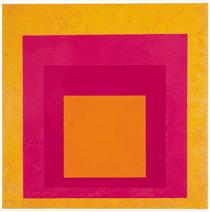
This is a series of prints extending the abstract artist Joseph Albers’s interest in the square, color, and abstraction. The work of Albers presents like a system, or mathematical formula, something rational and objective in one way, like a philosophical question or rational experience of line, shape, form. However, because of colour’s emotional lens, his works can also illicit emotive pleasure. However, because most of his works are small scale, under 2 feet by 2 feet, this emotive lens is limited or small. In contrast, larger colour field paintings, like a Rothko canvas of 10 feet by 8 feet, whose large paintings colour create a wave of emotion. Albers rather reveals both an intimate emotive experience mixed with the analytical , a non personal emotion, a mathematical structure. Because Albers creates squares within squares we are focused ” in” the space of the painting, whereas Rothko takes our emotive experience in and outside the edges of the painting, connecting his paintings to the world outside of the painting. Joseph Albers, on the other hand, seems to be painting objects which are more autonomous from the external everyday world, that are less connected to the world, culture, ideas, outside the painting, because our experience of the painting is more about the object, about lines, about the colours relating within the canvas, and experience inside the frame. I suggest, Alber’s painting, is more a philosophical question, than emotive or experiential, whereas Rothko is more “emotive”, “experiential”, ” visceral”, which sends our experience of the colours from his painting, out into the world, where such colours and emotions mix with our experiential lives. Albers’s colour, goes into our minds. Rothko, goes into our soul. My series, “re- framing the square”, is finding the space between an Albers internal philosophical and Rothko emotive externality

Joseph Albers Square Painting # 1, acrylic on paper, 9 in x 6 in, photoshoped + reprinted ,Giclee print on paper, 27 in x 18 in, 2024

Joseph Albers Square Painting # 2, acrylic on paper, 9 in x 6 in, photoshoped + reprinted ,Giclee print on paper, 27 in x 18 in, 2024

Joseph Albers Square Painting # 3, acrylic on paper, 9 in x 6 in, photoshoped + reprinted ,Giclee print on paper, 27 in x 18 in, 2024

Joseph Albers Square Painting # 4, acrylic on paper, 9 in x 6 in, photoshoped + reprinted ,Giclee print on paper, 27 in x 18 in, 2024

Joseph Albers Square Painting # 5, acrylic on paper, 9 in x 6 in, photoshoped + reprinted ,Giclee print on paper, 27 in x 18 in, 2024

Joseph Albers Square Painting # 6, acrylic on paper, 9 in x 6 in, photoshoped + reprinted ,Giclee print on paper, 27 in x 18 in, 2024

Joseph Albers Square Painting # 7, acrylic on paper, 9 in x 6 in, photoshoped + reprinted ,Giclee print on paper, 27 in x 18 in, 2024

Joseph Albers Square Painting # 8, acrylic on paper, 9 in x 6 in, photoshoped + reprinted ,Giclee print on paper, 27 in x 18 in, 2024

Joseph Albers Square Painting # 9, acrylic on paper, 9 in x 6 in, photoshoped + reprinted ,Giclee print on paper, 27 in x 18 in, 2024
Joseph Albers Square Painting # 10, acrylic on paper, 9 in x 6 in, photoshoped + reprinted ,Giclee print on paper, 27 in x 18 in, 2024
Joseph Albers Square Painting # 11, acrylic on paper, 9 in x 6 in, photoshoped + reprinted ,Giclee print on paper, 27 in x 18 in, 2024

Joseph Albers Square Painting # 12, acrylic on paper, 9 in x 6 in, photoshoped + reprinted ,Giclee print on paper, 27 in x 18 in, 2024

Joseph Albers Square Painting # 13, acrylic on paper, 9 in x 6 in, photoshoped + reprinted ,Giclee print on paper, 27 in x 18 in, 2024

Joseph Albers Square Painting # 14, acrylic on paper, 9 in x 6 in, photoshoped + reprinted ,Giclee print on paper, 27 in x 18 in, 2024

Joseph Albers Square Painting # 15, acrylic on paper, 9 in x 6 in, photoshoped + reprinted ,Giclee print on paper, 27 in x 18 in, 2024

Home/Artists/ Constructivism /Josef Albers
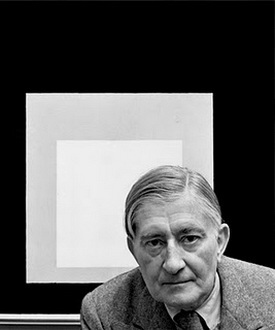
Josef Albers
Born:March 19, 1888; Bottrop, GermanyDied:March 25, 1976; New Haven, United StatesActive Years:1915 – 1976Nationality:GermanArt Movement:Constructivism, Concrete Art (Concretism), Abstract ArtPainting School:BauhausGenre:abstractField:painting, printmaking, design, photographyInfluenced by:Piet Mondrian, Wassily Kandinsky, Kazimir Malevich, Bauhaus, Suprematism, Futurism, Constructivism, ExpressionismInfluenced on:Ad Reinhardt, Kuno Gonschior, Samia HalabyArt institution:Akademie der Bildenden Künste München (Munich Academy), Munich, Germany, Black Mountain College, Black Mountain, NC, US, Yale School of Art (Yale University), New Haven, CT, USFriends and Co-workers:Paul KleeWikipedia:en.wikipedia.org/wiki/Josef_AlbersOfficial site:albersfoundation.org
ArticleWikipedia articleReferences
Josef Albers was a painter, poet, sculptor, and theoretician, best known for his iconic series of abstract paintings, the Homage to the Square series. He also was an educator whose work, both in Europe and in the United States, formed the basis of some of the most influential and far-reaching art education programs of the 20th century.
Born on March 19, 1888, in Bottrop, Germany, Albers enrolled as a student at the newly opened Bauhaus school in Weimar in 1920. The Bauhaus, which advocated for the synthesis of fine art and craftsmanship, soon became one of the most influential design schools in Germany. In 1922 Albers became a faculty member at the Bauhaus and was promoted to professor in 1925. Around this time, he also married Anni Fleischmann, who was a student at the school. During this period, Albers explored many different media like furniture design, glasswork, metalwork, typography, and photography. Some of his notable works from the time include sandblasted flashed glass artworks like Impossibles (1931) and Rolled Wrongly (1931). After the Nazi government closed the Bauhaus in 1933, Albers and his wife immigrated to the United States.
On the recommendation of architect Philip Johnson, both Albers and Anni were offered positions at the experimental Black Mountain College in North Carolina. He served as the head of the painting department between 1939-1949, and he taught the likes of Cy Twombly and Robert Rauschenberg. While he was teaching, Albers continued to develop his artistic practice. In 1947 he began working on the series Adobe/Variants, which was inspired by Mexican architecture. The series combined two characteristics of Albers’s art: his exploration of color theory and his background in design and architecture. Paintings from the series like Variant/Adobe: Familiar Front (1948) and Red Wall (1947-1956) explored how different colors interact when placed next to one another.
In 1950, Albers left Black Mountain College to head the design program at Yale University in New Haven, Connecticut. From this point, Albers mainly focused on two key series: Homage to the Square and Structural Constellation. In the series Structural Constellation, Albers created various compositions of rotationally straight lines, that can be described as two-dimensional renderings of three-dimensional objects. Structural Constellation deals with perceptual ambiguity: the artist’s carefully planned configurations like Structural Constellation: Alpha (1954) depict a floating geometric form that can simultaneously be viewed in multiple ways. From 1949 Albers began working on his signature series of prints and paintings, Homage to the Square. Paintings from the series like Homage to the Square: Apparition (1959) and Study for Homage to the Square: Departing in Yellow (1964) are based on a compositional scheme of squares in different colors and arrangements. Through the various examples in the series, Albers examined his color theory and how colors interact when placed next to one another. Correspondingly, he documented these effects in his writings, and in 1963, he published the book Interaction of Color (1963), which provided a complex explanation of principles of color theory. The book is considered a masterwork in art education, and it remains an essential source of color theory.
In the later stages of his career, Albers also created murals. In 1959, his mural Two Structural Constellations (1959) was engraved in the lobby of the Corning Glass Building in Manhattan. His monumental mural, Manhattan (1963), that was an homage to New York, was installed in the Pan Am Building in New York City. Albers died at the age of 88, on March 25, 1976, in New Haven, Connecticut.More …
Josef AlbersArtworks